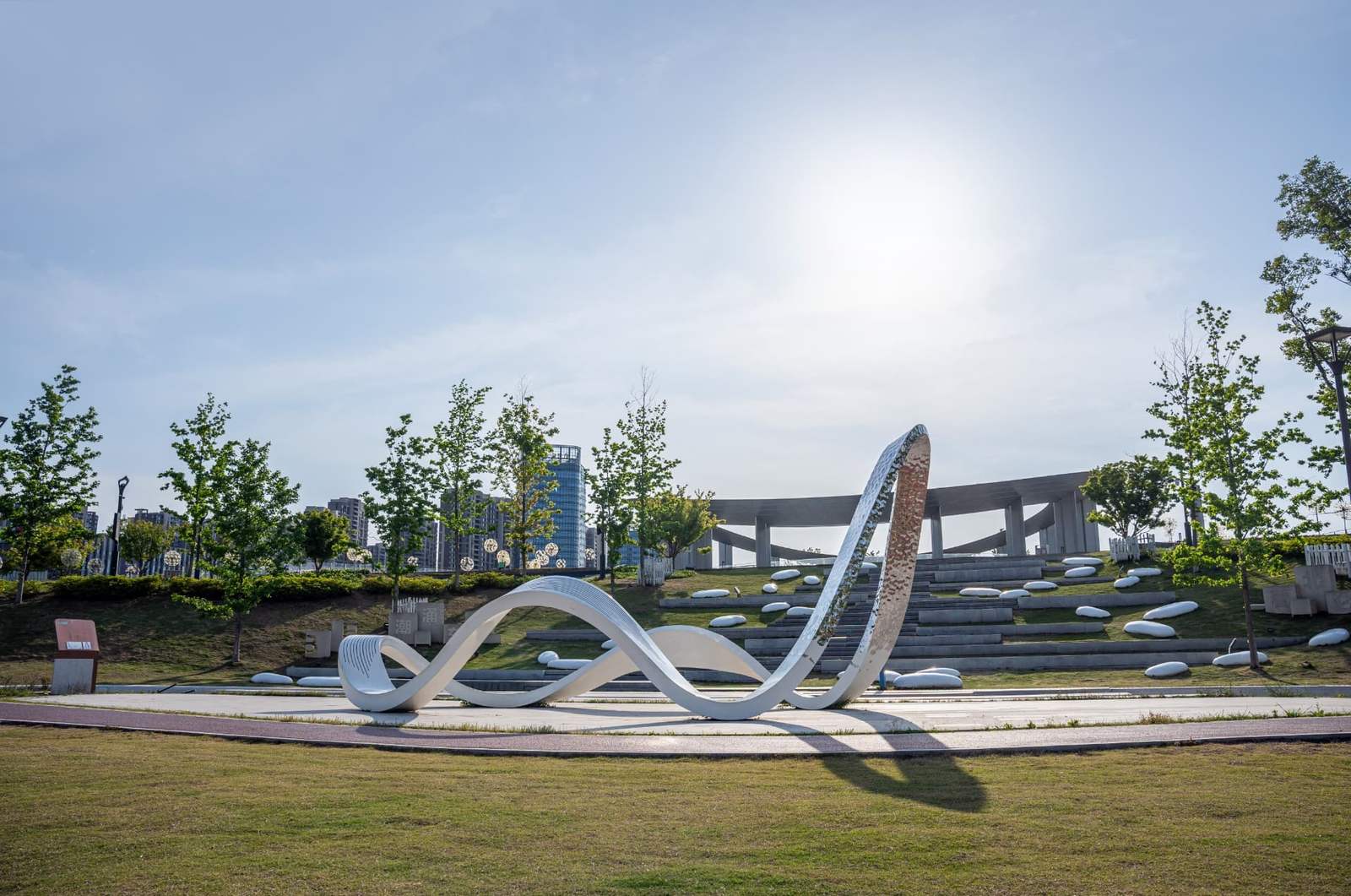
Contemporary Sculpture: A Complete Guide to Styles, Materials, Design, and Production
Contemporary sculpture has become an important part of modern architecture, public art, landscape design, commercial development, and interior environments. From abstract metal installations in urban plazas to large-scale sculptural features in hotels and corporate spaces, these artworks help define the visual identity of a place. Unlike traditional sculpture categories that are often associated with specific historical periods or artistic conventions, contemporary sculpture encompasses a broad range of forms, materials, concepts, and production techniques.
For architects, developers, landscape designers, art consultants, and project owners, selecting or commissioning a contemporary sculpture involves more than choosing an attractive shape. The artwork must relate to its surroundings, meet practical requirements, use appropriate materials, and be feasible to fabricate and install. This guide explains the main characteristics of contemporary sculpture, common styles and materials, the design and manufacturing process, and the factors buyers should consider when planning a custom sculpture project.
1. What Is Contemporary Sculpture?
Contemporary sculpture refers broadly to sculptural artworks created within the context of present-day artistic practices. It includes traditional sculptural techniques as well as experimental approaches involving industrial materials, digital modeling, mixed media, interactive elements, and architectural integration. Contemporary works may be figurative, abstract, geometric, conceptual, or functional, depending on the artist's intention and the project's purpose.
In commercial and public environments, contemporary sculpture is often commissioned to create a visual focal point, communicate an idea, complement architecture, or strengthen a site's identity. Its design is not limited to conventional statues or carved objects. It may take the form of an assembled metal structure, a suspended installation, a large outdoor artwork, or a series of sculptural elements integrated into a landscape.
1.1 Contemporary Sculpture and Modern Sculpture
The terms contemporary sculpture and modern sculpture are sometimes used interchangeably, but they do not have exactly the same meaning. Modern sculpture is generally associated with artistic movements that developed from the late nineteenth century through much of the twentieth century. Contemporary sculpture refers more broadly to current artistic practices and the diverse approaches used by artists today.
Modern sculpture helped establish many principles that continue to influence contemporary work, including abstraction, simplified forms, experimentation with materials, and a greater emphasis on space and movement. Contemporary artists build on these developments while incorporating new technologies, environmental concerns, cultural references, and site-specific concepts.
1.2 Key Characteristics of Contemporary Sculpture
One defining characteristic of contemporary sculpture is its diversity. There is no single material, shape, or visual style that defines all contemporary works. Some sculptures use simple geometric forms, while others feature complex organic structures or recognizable human and animal figures. The artistic approach may emphasize material texture, spatial relationships, movement, symbolism, or interaction with the viewer.
Another important characteristic is the relationship between artwork and context. A contemporary sculpture may be designed specifically for a building entrance, public square, landscaped garden, or interior atrium. Its scale, orientation, material, and visual impact are often developed in response to the surrounding environment rather than treated as independent design decisions.
1.3 The Role of Contemporary Sculpture in Built Environments
Contemporary sculpture can help establish a recognizable identity for a public or commercial space. In a city plaza, it may become a landmark that helps visitors identify a location. In a hotel lobby, it can create a strong first impression. In a corporate campus, it may communicate the organization's values or provide a distinctive visual connection between buildings and landscape areas.
Beyond decoration, sculpture can influence how people move through and experience a space. Its height, shape, position, and relationship with surrounding elements can create visual direction, define gathering points, or encourage people to view a familiar environment differently. These considerations make sculpture an important component of integrated architectural and landscape planning.
2. Common Styles of Contemporary Sculpture
Contemporary sculpture includes many artistic approaches, and a single project may combine several styles. Understanding the main visual characteristics helps buyers communicate their preferences and evaluate whether a proposed artwork suits the project's architectural language and intended audience.
2.1 Abstract Sculpture
Abstract sculpture uses shapes, lines, volumes, and spatial relationships that do not necessarily represent recognizable objects or figures. It may simplify natural forms into basic geometric structures or develop entirely non-representational compositions. Curved metal ribbons, intersecting planes, irregular volumes, and open frameworks are common examples of abstract sculptural approaches.
Abstract works are frequently used in public plazas, commercial developments, museums, and contemporary landscapes because they can create a strong visual identity without relying on a specific narrative. Their interpretation may vary among viewers, allowing the artwork to become part of an ongoing visual conversation within the space.
2.2 Geometric Sculpture
Geometric sculpture is based on recognizable mathematical forms such as spheres, cubes, cylinders, cones, polygons, and intersecting planes. The design may use repetition, symmetry, proportion, or controlled asymmetry to create a clear visual structure. Some works emphasize precise edges and solid volumes, while others use open frameworks to make the geometry appear lighter.
Metal, stone, concrete, and fiberglass are frequently used for geometric sculptures. Their relatively defined shapes can be suitable for architectural entrances, landscaped courtyards, public squares, and commercial spaces. Manufacturing accuracy is important because small dimensional inconsistencies may affect the alignment and visual balance of repeated geometric components.
2.3 Organic and Nature-Inspired Sculpture
Organic sculpture draws inspiration from natural forms such as plants, flowers, leaves, shells, waves, animals, and geological structures. These works often use flowing lines, irregular contours, layered surfaces, or asymmetrical compositions. They may reproduce recognizable natural subjects or reinterpret them through abstract shapes.
Nature-inspired contemporary sculpture is often used in parks, gardens, resorts, waterfront developments, and landscaped commercial properties. The design can establish a visual connection between built structures and natural surroundings. Material selection should consider the site's climate, vegetation, maintenance requirements, and the way the sculpture will appear under changing natural light.
2.4 Minimalist Sculpture
Minimalist sculpture uses simplified forms and restrained visual elements. Rather than relying on elaborate details, it emphasizes proportion, material quality, surface, volume, and the relationship between the artwork and surrounding space. A simple metal ring, a group of repeated vertical elements, or a precisely arranged series of geometric blocks can create a strong sculptural effect.
Minimalist works are often suitable for contemporary architecture, corporate environments, hotels, and landscaped public spaces. Their simplicity can make material defects or poor finishing more noticeable, so fabrication accuracy and surface consistency are important. The artwork should also be positioned carefully because its visual impact may depend heavily on the surrounding architecture and available viewing distance.
2.5 Figurative and Conceptual Sculpture
Figurative sculpture represents recognizable subjects such as people, animals, or objects. Contemporary approaches may simplify these subjects, exaggerate proportions, combine realistic details with abstract forms, or use unexpected materials. This allows figurative artwork to communicate familiar ideas while maintaining a contemporary visual language.
Conceptual sculpture places greater emphasis on the idea or message behind the artwork. The physical form may be relatively simple, but its meaning can relate to culture, identity, technology, social issues, or the history of a particular location. For public and commercial projects, buyers should understand the intended interpretation and consider whether the concept is appropriate for the audience and setting.
3. Materials Used in Contemporary Sculpture
Material selection has a direct influence on a sculpture's appearance, weight, manufacturing process, durability, and maintenance requirements. Contemporary artists and manufacturers work with a wide range of materials, from traditional bronze and stone to stainless steel, aluminum, fiberglass, and mixed-media combinations. The best material depends on the artistic concept and the conditions in which the sculpture will be displayed.
3.1 Stainless Steel
Stainless steel is widely used in contemporary sculpture because it can be fabricated into complex forms and finished in several ways. Mirror polishing creates reflective surfaces that interact with surrounding buildings, people, and landscapes. Brushed and satin finishes offer a more subdued appearance, while colored surface treatments can introduce additional visual effects.
Manufacturing may involve laser cutting, bending, rolling, welding, grinding, and polishing. Large stainless steel sculptures often require internal frames or reinforced connections to maintain structural stability. Buyers should confirm the stainless steel grade, material thickness, welding requirements, and surface finish before production, particularly when the artwork will be installed outdoors.
3.2 Corten Steel
Corten steel is an atmospheric corrosion-resistant steel that develops a characteristic weathered appearance under suitable environmental conditions. Its warm brown surface can complement concrete, stone, timber, and natural landscaping. Contemporary sculptures made from corten steel often use large plates, folded surfaces, cutout patterns, and geometric assemblies.
Its appearance changes as the surface develops over time, which can be an important part of the artistic concept. However, buyers should consider drainage, runoff staining, surrounding paving, and the site's exposure conditions. The manufacturer should explain how the material will be prepared and whether additional surface treatment is required for the intended application.
3.3 Bronze
Bronze remains relevant in contemporary sculpture because it supports detailed casting and offers a distinctive material character. It can be used for figurative artworks, abstract compositions, textured surfaces, and sculptural details. Patination allows manufacturers to create different colors and surface effects, making bronze suitable for both traditional and contemporary visual styles.
The production process may include sculpting, mold making, casting, chasing, welding, grinding, and patination. Large bronze sculptures may require internal reinforcement and careful assembly. Buyers should review the casting method, expected surface texture, and finish sample before approving production.
3.4 Aluminum
Aluminum is relatively lightweight compared with many other structural metals and can be used for large sculptural forms where weight reduction is beneficial. It is suitable for fabricated panels, curved structures, geometric assemblies, and certain suspended installations. Its natural appearance can be retained or modified through polishing, brushing, anodizing, and coating processes.
Although aluminum offers advantages in handling and corrosion behavior, its strength, thickness, connection details, and fabrication characteristics must be evaluated for each project. The manufacturer should consider the sculpture's dimensions and support requirements rather than selecting aluminum solely because it is lightweight.
3.5 Fiberglass and Resin
Fiberglass and resin materials allow manufacturers to create complex curved surfaces, organic forms, and customized sculptural shapes. They are commonly considered for decorative installations, themed environments, commercial displays, and large lightweight artworks. Molds can be used to reproduce consistent forms, which may be useful when a project requires multiple similar components.
Outdoor applications require appropriate resin systems, reinforcement, protective coatings, and UV resistance. Buyers should ask about the construction method, surface thickness, internal support, and repair procedures. The finished artwork should be evaluated according to the environmental conditions and expected service requirements.
3.6 Mixed Materials
Mixed-media contemporary sculpture combines two or more materials to create visual contrast or achieve different functional properties. A sculpture may combine stainless steel with glass, stone with metal, or concrete with timber. Some designs also incorporate lighting components, reflective surfaces, or other architectural elements.
Mixed-material projects require careful coordination because each material may respond differently to temperature, moisture, movement, and maintenance procedures. Connections between dissimilar materials should be designed to accommodate their physical characteristics. The manufacturer should also clarify how the materials will be assembled and how the finished artwork will be maintained.
4. How to Design a Contemporary Sculpture for a Specific Space
A successful contemporary sculpture should respond to the location where it will be installed. Its dimensions, form, materials, color, and orientation need to work with the surrounding architecture and landscape. A sculpture that looks impressive in a studio rendering may appear too small, too dominant, or visually disconnected when placed in the actual environment. Site analysis should therefore be part of the design process.
4.1 Define the Purpose and Artistic Concept
The first step is to identify what the sculpture should achieve. It may serve as a landmark, create a focal point, express a cultural theme, reinforce a brand identity, or improve the visual experience of a public space. The purpose influences the artwork's scale, style, subject matter, and relationship with visitors.
Buyers should also consider whether the artwork needs to communicate a specific message or whether a more open-ended abstract concept is appropriate. A clear project brief helps designers and manufacturers understand the intended outcome and reduces the risk of developing a sculpture that is visually attractive but unsuitable for the site's purpose.
4.2 Study the Surrounding Architecture and Landscape
Site analysis should consider nearby buildings, circulation routes, planting, paving, lighting, water features, and existing artworks. The sculpture should complement the environment without unnecessarily competing with important architectural elements. Its visual relationship with the site may change depending on the direction from which visitors approach it.
Designers should review photographs, site plans, elevations, and, where possible, three-dimensional views of the surrounding area. These references help determine suitable dimensions and viewing positions. For outdoor projects, the design should also account for weather exposure, drainage, ground conditions, and maintenance access.
4.3 Determine Scale and Proportion
Scale influences how a sculpture is perceived in relation to people and nearby structures. A small sculpture may be appropriate for an interior lobby or garden setting, while a public plaza may require a much larger artwork to remain visually prominent. The sculpture's height, width, depth, and overall volume should be evaluated in relation to the available space.
Three-dimensional renderings or scaled models can help buyers understand the proposed proportions before production. For large installations, designers should also consider viewing distances, pedestrian movement, and the visual effect from surrounding buildings. These factors help prevent a sculpture from appearing disproportionately small or overwhelming after installation.
4.4 Consider Light, Shadow, and Viewing Angles
Light can significantly change the appearance of contemporary sculpture. Reflective stainless steel may capture images of the surrounding environment, while perforated or open structures can produce changing shadows. Sculptures with curved or layered surfaces may look different depending on the time of day and the viewer's position.
For outdoor projects, designers should consider sunlight direction and nighttime lighting. For interior projects, the relationship between the sculpture and architectural lighting should be reviewed. If the artwork is intended to be viewed from several directions, its form should be developed as a three-dimensional composition rather than as a single frontal image.
4.5 Coordinate Artistic Design with Manufacturing Feasibility
Some sculptural forms are visually simple but technically difficult to produce. Large curved surfaces, thin unsupported elements, complex intersections, and highly reflective finishes may require specialized fabrication methods. Design development should therefore include discussions about material thickness, component sizes, connection details, and assembly procedures.
Manufacturing feedback can help identify practical alternatives without changing the essential artistic concept. For example, a large sculpture may be divided into transportable sections, or a complex form may use an internal support structure that is concealed after assembly. These decisions should be confirmed before production drawings are finalized.
5. Contemporary Sculpture Manufacturing Process
The manufacturing process depends on the selected material, design complexity, dimensions, and intended installation method. Some sculptures are produced through casting, while others rely on sheet-metal fabrication, machining, molding, or assembly. Regardless of the method, a clear workflow helps maintain consistency between the approved design and the finished artwork.
5.1 Design Development and 3D Modeling
Manufacturing usually begins with concept drawings, reference images, or a three-dimensional design. The manufacturer reviews the form and identifies information needed for production, such as dimensions, material specifications, component divisions, surface finishes, and connection details. Where necessary, the concept is developed into a more detailed three-dimensional model.
Digital modeling helps clarify complex geometry and allows the buyer to review the sculpture from multiple angles. It can also support the preparation of production drawings and the planning of individual components. Changes to the design should be reviewed carefully because they may affect fabrication time, material consumption, and installation requirements.
5.2 Engineering and Structural Planning
Structural planning is important for sculptures with significant height, weight, cantilevered sections, suspended components, or outdoor exposure. The manufacturer should identify the main structural elements and coordinate with qualified engineers when calculations or project-specific assessments are required. Relevant considerations may include self-weight, wind loads, seismic requirements, connection strength, and foundation conditions.
The engineering process should also consider how the sculpture will be transported and installed. A structure that is stable in its final position may require temporary supports during lifting or assembly. Buyers should confirm who is responsible for structural calculations, foundation design, connection details, and installation approval.
5.3 Fabrication and Component Production
Metal sculptures may involve cutting, bending, rolling, welding, grinding, and machining. Bronze artworks may require mold preparation, casting, chasing, and joining. Fiberglass sculptures may use molds, reinforcement layers, resin application, and surface preparation. The manufacturer selects the production method according to the material and geometry.
For large or complex artworks, the sculpture may be divided into multiple sections that can be fabricated and inspected separately. Component identification and dimensional checks help ensure that the parts fit together correctly during final assembly. The manufacturing plan should also define which joints will remain visible and which will be concealed or finished after assembly.
5.4 Surface Finishing and Color Treatment
Surface treatment has a major influence on the final appearance of contemporary sculpture. Common processes include polishing, brushing, grinding, painting, powder coating, patination, and protective coating. The correct finish depends on the selected material, artistic concept, environmental conditions, and maintenance expectations.
Buyers should review physical samples or clearly documented finish references before full production. This is especially important when the sculpture uses reflective surfaces, special colors, or textured coatings. The manufacturer should also explain how the finish will be protected during packaging, transportation, and installation.
5.5 Trial Assembly and Final Inspection
Large sculptures may require factory trial assembly to confirm component alignment, connection positions, and overall dimensions. This can help identify fitting problems before the artwork is shipped to the installation site. Where full assembly is impractical, critical interfaces and representative components should be checked according to the approved inspection plan.
Final inspection should cover the sculpture's appearance, dimensions, structural components, surface quality, and packaging condition. The buyer may request progress photographs, inspection records, or a factory visit depending on the project's requirements. Any outstanding issues should be resolved before shipment.
6. Contemporary Sculpture for Indoor and Outdoor Applications
Indoor and outdoor environments create different requirements for material selection, structural design, surface treatment, and maintenance. A sculpture designed for a protected interior space may not be suitable for an exposed outdoor location without changes to its materials or construction. Buyers should identify the intended environment at the beginning of the project.
6.1 Indoor Contemporary Sculpture
Indoor sculptures are commonly installed in hotel lobbies, shopping centers, office reception areas, museums, galleries, and residential developments. These artworks often emphasize visual detail, material texture, proportion, and compatibility with interior finishes. The sculpture may serve as a central focal point or as part of a broader interior design concept.
Practical considerations include floor loading, ceiling height, delivery access, lifting arrangements, fire and building requirements where applicable, and the ability to clean and maintain the artwork. Large interior sculptures may need to be assembled inside the building because doorways, elevators, and corridors can restrict the movement of completed components.
6.2 Outdoor Contemporary Sculpture
Outdoor sculptures are used in parks, public plazas, gardens, waterfront developments, campuses, commercial landscapes, and building entrances. They must be designed to withstand the environmental conditions expected at the site. Material selection, corrosion protection, drainage, connection details, and structural stability all influence long-term performance.
Outdoor projects also require attention to public access and potential interaction. Sharp edges, accessible openings, low-level projections, and climbing opportunities should be reviewed according to the intended location and applicable safety requirements. The installation method should provide a stable connection between the sculpture and its foundation.
6.3 Large-Scale Contemporary Sculpture
Large-scale contemporary sculptures can become landmarks within urban developments, public spaces, and commercial properties. Their dimensions create opportunities for strong visual impact, but also increase the importance of structural engineering, fabrication planning, transportation, and lifting arrangements.
Manufacturers may need to divide the sculpture into sections that can be transported separately and assembled on site. The design should account for connection positions, internal reinforcement, lifting points, and installation sequence. These details should be coordinated with the site contractor before production is completed.
7. How to Choose a Contemporary Sculpture for a Commercial or Public Project
Choosing a contemporary sculpture for a development project requires balancing artistic objectives with budget, site conditions, durability, and project schedules. Buyers should establish clear selection criteria and involve relevant stakeholders before commissioning the artwork. This helps ensure that the sculpture contributes to the overall environment and can be delivered within the project's practical constraints.
7.1 Match the Artwork to the Project Identity
The sculpture should relate to the identity and purpose of the site. A corporate campus may require an artwork that reflects innovation or organizational values, while a cultural destination may benefit from a sculpture connected to local history or community identity. A resort or landscape development may prioritize forms that complement natural surroundings.
The relationship does not need to be literal. Abstract shapes, materials, and spatial arrangements can communicate an idea without directly illustrating it. Buyers should discuss the concept with designers and stakeholders to determine whether the proposed artwork fits the project's intended character.
7.2 Evaluate Durability and Maintenance
Public and commercial sculptures may remain in place for many years, so maintenance requirements should be considered before material selection. Stainless steel may require periodic cleaning to maintain its appearance, painted surfaces may need inspection and recoating, and bronze may develop changes in patina over time. Different materials require different care procedures.
Buyers should ask for maintenance recommendations and identify whether the sculpture will require periodic inspections, surface cleaning, coating repairs, or replacement of specific components. Maintenance access should also be considered during design, particularly for tall structures or artworks installed above water features and landscaped areas.
7.3 Consider Public Interaction and Safety
Sculptures installed in accessible public environments may be approached, touched, photographed, or interacted with by visitors. The design should consider edges, projections, openings, stability, and the possibility of unintended climbing or contact. The applicable safety requirements depend on the location, ownership, and intended use of the space.
For interactive or illuminated sculptures, additional coordination may be needed for electrical systems, controls, access panels, and maintenance. Buyers should define these requirements early so that the manufacturer can coordinate the artwork's physical construction with any additional systems.
7.4 Review the Total Project Cost
The cost of a contemporary sculpture includes more than the fabrication price. Design development, engineering, materials, finishing, packaging, transportation, foundations, lifting equipment, installation, and maintenance may all contribute to the total project budget. Some of these costs may be handled by separate contractors and should still be included in the overall financial plan.
When comparing proposals, buyers should confirm that each quotation covers the same scope. A lower manufacturing price may exclude important installation or engineering work. A detailed cost breakdown helps identify differences and provides a more realistic basis for procurement decisions.
8. Common Challenges in Contemporary Sculpture Projects
Contemporary sculpture projects often involve creative concepts that are not based on standard product dimensions or manufacturing methods. This creates opportunities for distinctive designs but can also introduce technical and coordination challenges. Identifying these issues early helps buyers avoid unnecessary changes during production and installation.
8.1 Translating Complex Artistic Concepts into Manufacturable Designs
Artists may develop forms that are difficult to describe through conventional two-dimensional drawings. Complex curves, irregular intersections, thin elements, and unusual proportions can create challenges for fabrication and structural planning. A concept may need to be refined into a detailed three-dimensional model before the manufacturer can prepare an accurate quotation.
Early collaboration between the designer and manufacturer helps identify which parts of the artwork require special processes. The objective is not to simplify the concept unnecessarily but to understand how it can be produced while maintaining its intended visual character.
8.2 Managing Material and Finish Consistency
Some contemporary sculptures combine several materials or use finishes that are difficult to reproduce consistently across large surfaces. Differences in polishing, color, texture, or patination may become visible when separate components are assembled. This is particularly important for artworks with repeated elements or highly reflective surfaces.
Physical samples, written finish specifications, and inspection procedures can help manage these differences. For large projects, buyers should confirm whether sample approval is required before the manufacturer proceeds with the remaining components.
8.3 Coordinating Transportation and Installation
Large or irregularly shaped sculptures may exceed standard transport dimensions or require specialized lifting equipment. Even when an artwork can be manufactured as one piece, it may not fit through the available site access routes. These limitations can affect the design, component divisions, and installation sequence.
Transportation planning should therefore begin during design development. Buyers should provide site access information and coordinate with the installation contractor to confirm vehicle access, lifting capacity, foundation readiness, and working space. This helps reduce the risk of unexpected modifications after fabrication.
8.4 Maintaining the Artwork Over Time
Environmental exposure, pollution, moisture, physical contact, and regular cleaning can gradually affect a sculpture's surface and components. Some materials may change appearance naturally, while others require periodic protective treatment. The expected maintenance approach should be discussed before the final material and finish are selected.
Manufacturers should provide practical guidance on cleaning, inspection, and repair where this information is available. For public projects, the owner or facility manager should establish a maintenance plan that identifies inspection intervals and the person responsible for addressing defects.
9. Working with a Custom Contemporary Sculpture Manufacturer
Working with a manufacturer is an important part of turning an artistic concept into a completed sculpture. Buyers should look for a supplier that understands the intended design, can explain relevant production methods, and communicates clearly about technical limitations and project responsibilities. The manufacturer's role may extend from fabrication to design coordination, assembly, and delivery, depending on the agreed scope.
9.1 Information to Prepare Before Requesting a Quotation
Before contacting a manufacturer, buyers should prepare available concept drawings, reference images, three-dimensional models, approximate dimensions, material preferences, and the intended installation location. It is also helpful to explain the project's purpose, budget range, required delivery date, and whether the sculpture needs to be installed by the manufacturer or a local contractor.
If some details are not yet confirmed, buyers should identify them as preliminary rather than presenting assumptions as final specifications. This allows the manufacturer to distinguish between a conceptual estimate and a production quotation. More complete information generally leads to more useful technical feedback and cost evaluation.
9.2 Review the Manufacturer's Project Portfolio
A manufacturer's portfolio can show its experience with different sculptural styles, materials, scales, and project environments. Buyers should pay attention to projects that are technically comparable to their own requirements. For example, a portfolio of small decorative artworks may not demonstrate experience with large outdoor installations or complex metal fabrication.
Where possible, request information about the manufacturing scope behind selected projects. Understanding whether the company handled design, production, finishing, and installation provides a clearer picture of its capabilities. Buyers should also review the quality of visible joints, surface treatments, and component alignment in completed work.
9.3 Confirm Project Responsibilities and Approvals
Before production begins, the buyer and manufacturer should agree on the approved drawings, material specifications, finish references, inspection requirements, and delivery scope. Responsibilities for engineering, foundations, electrical systems, transportation, and installation should be documented. This is particularly important when several contractors are involved in the same development project.
Yifeng Sculpture works with custom sculpture projects involving different forms, materials, and applications. Buyers can review our sculpture project examples and learn more about our sculpture services. For a project-specific discussion, share your design references, dimensions, preferred materials, and installation requirements through our contact page.
10. Conclusion: Planning a Successful Contemporary Sculpture Project
Contemporary sculpture offers a wide range of possibilities for public art, architecture, landscape design, commercial developments, and interior environments. Its diversity of styles and materials allows designers to create artworks that respond to specific locations, communicate ideas, and establish memorable visual identities. However, a successful project depends on more than artistic concept development. Site conditions, material performance, structural planning, fabrication accuracy, transportation, installation, and maintenance all need to be considered.
For project owners and design professionals, the most effective approach is to define the purpose of the artwork, study its surroundings, confirm suitable materials, and coordinate design decisions with manufacturing requirements from the beginning. If you are planning a custom contemporary sculpture, contact Yifeng Sculpture with your concept drawings, reference images, dimensions, material preferences, and project location. We can review the available information and discuss practical fabrication options for your project.
Frequently Asked Questions About Contemporary Sculpture
Q1. What makes contemporary sculpture different from traditional sculpture?
Contemporary sculpture is associated with present-day artistic practices and includes a wide range of forms, materials, and concepts. It may use traditional techniques such as carving and casting, as well as modern fabrication, digital modeling, mixed media, and interactive elements. Traditional sculpture is often discussed in relation to established historical styles and techniques, while contemporary work is generally more diverse in its approaches and subject matter.
Q2. What materials are commonly used in contemporary sculpture?
Common materials include stainless steel, corten steel, bronze, aluminum, fiberglass, resin, stone, concrete, glass, and timber. Some artworks combine several materials to create visual contrast or meet specific structural requirements. Material selection should consider the sculpture's design, installation environment, durability, appearance, budget, and maintenance needs.
Q3. Is contemporary sculpture suitable for outdoor public spaces?
Yes. Contemporary sculpture is frequently used in parks, plazas, campuses, waterfront developments, and commercial landscapes. Outdoor artworks should be designed according to local weather conditions, structural requirements, public access, and maintenance needs. Appropriate materials, protective finishes, internal supports, and foundation connections help improve the suitability of a sculpture for outdoor installation.
Q4. How is a custom contemporary sculpture manufactured?
The process generally includes concept development, three-dimensional modeling, technical drawing preparation, structural planning, material procurement, fabrication, surface finishing, assembly, quality inspection, and delivery. The specific methods depend on the selected material and design. Metal sculptures may involve cutting, bending, and welding, while bronze and fiberglass artworks may require casting or molding processes.
Q5. How do I choose a manufacturer for contemporary sculpture?
Evaluate the manufacturer's experience with comparable styles, materials, dimensions, and installation environments. Review its project portfolio, production processes, quality control methods, technical communication, and ability to coordinate design and engineering requirements. You should also confirm the quotation scope, delivery responsibilities, inspection procedures, and installation arrangements before placing an order.
.png?imageMogr2/format/webp)

