
Features
Why Choose Us?
Full In-House Control
Design, engineering, fabrication and installation under one roof — one team, one contact, no outsourcing gaps.
Verifiable Engineering
Engineers calculate load, wind and anchoring; every steel and alloy batch ships with mill certificates.
Any Scale, Any Material
Stainless steel, bronze, aluminium, forged and cast metal — from a single plaza piece to landmark scale.
Worldwide Installation
Fully insured door-to-door logistics, our own crew on site, and material certificates with a maintenance guide.
We Have The Best Solutions for Your Business
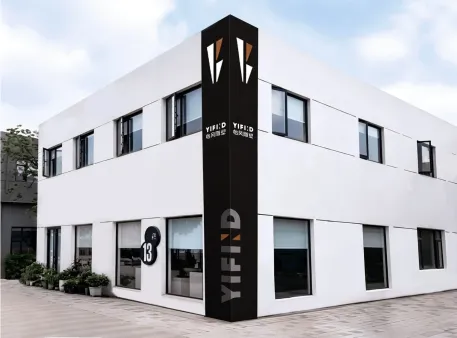
Yifeng Sculpture is a public art studio based in Ningbo, China, producing large-scale sculpture since 2003. We are one accountable team from first sketch to final bolt — creative planning, detailed design, engineering, fabrication and installation all happen in-house, so the artwork you approve is the artwork you receive. Our studio pairs sculptors with structural and mechanical engineers who calculate load, wind resistance and anchoring before a single panel is cut, and our founder is a Member of the Royal Society of Sculptors (UK).
We fabricate in stainless steel, bronze, aluminium, forged and cast metal, delivering monumental, kinetic, memorial and custom commissions for urban parks, commercial districts, transit hubs and campuses — from a single plaza piece to landmark works tens of metres in scale. For overseas clients we manage fully insured door-to-door logistics, send our own installation crew to site, and back every work with material certificates, a care guide and after-sales conservation.
Why an Art Installation Is Engineered Before It Is Made
Most art installation failures we are asked to correct are not artistic failures. A frame that was never checked against wind load, a driver box with no ventilation, a sensor that counts the same visitor twice, a joint that holds water behind a panel: each of these is cheap to design and expensive to discover. We treat the artwork as the visible half of a system and we document the other half before the first sheet is cut, which is the only moment when a change costs nothing.
That changes the questions we ask in the first meeting. Instead of asking only what the piece should look like, we ask how many people will touch it, whether power and drainage already reach the site, how the public will be kept clear during commissioning, and who will open the control cabinet in five years' time. The answers usually simplify the design rather than complicate it, and they decide which components can be replaced by two people instead of a crane.
| Aspect | Freestanding sculpture | Art installation | What the client gains |
|---|---|---|---|
| Visitor experience | Read from one or two angles | Entered, circled or activated | A memory of taking part |
| Engineering scope | Base plate and anchor design | Structure, power, data and controls | One party answerable for the system |
| Power and data | Normally none | Supplies, drivers and protection planned early | No cables run across finished paving |
| Testing | Inspection after fixing | Operating cycles before handover | An opening day without surprises |
| Routine service | Cleaning and surface checks | Cleaning plus control and sensor checks | A service routine written for the system |
The Interfaces an Art Installation Has to Survive
An installation lives or dies at its interfaces. Water finds any joint that only looks tight, an unreserved cable route gets chased into finished paving, and a fixing nobody can reach turns a ten-minute inspection into a scaffolding job. None of this is exotic engineering, but all of it has to be settled while the drawing can still be changed, because after handover a correction is always more visible to the public than the artwork ever was.
- Public safety: moving parts, hot surfaces and crush points are guarded so a child cannot reach them from the ground.
- Power and protection: drivers and control boards sit in outdoor-rated enclosures with isolation where a technician can safely work.
- Control logic: sensors are calibrated on site against real footfall and real light, never against a workshop test rig.
- Touch and wear: hand-contact zones take a finish and a fixing type chosen for abrasion rather than for the photograph.
- Service access: every part likely to be replaced can be released without dismantling the artwork around it.
Interfaces are also where the visual idea is protected. A cable that must run somewhere and a control cabinet that must open somewhere will reshape the composition if they arrive late, and the usual result is a box bolted to the side of a form that was designed to be clean. When we detail them at concept stage, they disappear into the base, the plinth or a planted edge, and the public sees only the gesture the client paid for.
How We Take an Art Installation From Drawing to Opening
- Survey and setting out: we measure the real ground, note the services, falls and sightlines, and fix the datum before anything is fabricated.
- Trial assembly: the piece is built once in the workshop so the site sees a repeat performance instead of a first attempt.
- Structural fixing: lifting points and rigging are engineered with the artwork, and the base is installed to the structural detail.
- Power and control: circuits, drivers and sensors are wired to a tested panel and run through full cycles before opening.
- Records and handover: as-built drawings, spare parts and a written service routine go to the team who will look after the site.
Sequencing matters more than most clients expect, because an installation is usually one trade among several on the same square. We agree the order with the main contractor early: civils and base first, structure and artwork next, electrical and controls after the paving is protected, then a quiet week for calibration with the public held back. Arriving in the right order costs nothing; arriving at the wrong time costs a return visit and a damaged finish.
The Studio Behind the Work
Working with artists, architects and developers since 2003
More than 3000 completed works delivered
Projects installed in 23 countries
Interactive and kinetic systems engineered in house
Materials and Controls That Keep an Art Installation Reliable
Material choice follows exposure and handling rather than taste. Grade 316 stainless steel is the sensible baseline within roughly a kilometre of salt water, with 304 stainless or correctly protected painted steel serving well inland. Aluminium suits large light forms but needs isolation at every steel connection, and a bead-blasted or brushed grain hides fingerprints and site repairs far better than a mirror polish, which is worth remembering for anything within reach of a hand.
On the control side we keep the specification deliberately ordinary. Proven outdoor-rated drivers, standard communication protocols, printed wiring numbering inside the cabinet and one clear isolation point mean a local electrician can service the work without a specialist flying in. We also build in a manual override so the installation can still be lit, still and safe if a sensor or a network fails, because dead public art is remembered far longer than a clever interaction.
One habit saves an installation from its most common problem, which is not a failure but a slow drift. Light output falls away, a moving element slows down, a finish dulls, and the piece slides from striking to tired without anyone noticing the day it happened. We photograph the work at handover from fixed positions and in fixed lighting, then pass those images to the maintenance team as the reference standard for the site. Repeat the same shot each season and a change in surface or intensity becomes obvious in seconds, long before a visitor would describe the piece as looking old.
What an Art Installation Asks of Its Owner After Opening
The first year tells you what the piece needs. Touchable surfaces show where the public gathers, moving parts settle, and the seasons test every drain and every seal. A short written routine is worth more than an elaborate one nobody reads: a monthly visual pass, a seasonal clean with the correct products, an annual check of fasteners, seals and electrical enclosures, and a record of anything that was replaced. That record is what tells the next technician how the piece behaves.
We hand over as-built drawings, a materials schedule, the control logic and touch-up materials as standard, so the facilities team is never guessing at which grade of stainless a bracket is made from. Clients who commission a second piece from us usually say the same thing: the handover pack, not the ceremony, is what decided whether the work still looked new three years later.
Choosing a Partner for an Art Installation
Ask who carries the structural and electrical responsibility. A studio that engineers its own frames and issues stamped calculations removes a risk from the architect's desk; a studio that hands those interfaces to other trades leaves a question mark in the middle of the programme. Ask too for the survey method, the sample protocol and the name of the site lead, because those three answers predict finished quality far better than a portfolio of photographs.
Academic and craft credentials still help here. Our team draws on training links with Tsinghua Academy of Fine Arts, China Academy of Art and the Royal Society of Sculptors, which matters less as a badge than as a working habit: people who have studied material behaviour tend to solve an installation at the drawing stage instead of on site with a grinder. Combined with more than a decade of overseas deliveries, that habit is what makes a difficult square buildable.
You can see how the four-step process from consultation to installation works on our services page, and a ten-metre illuminated structure built for a public plaza is documented as Wisdom Tree. Kinetic and light works sit alongside large freestanding pieces in the project gallery.
Send us the site plan, the way people will move through the space and the effect you want them to remember, and we will tell you honestly whether an art installation is the right answer here, what the structure must carry and how it should be looked after. Brought in while the square is still on paper, an art installation stops being something added to a finished place and becomes the reason people describe that place to someone else.
Featured Products
Collection about Us
User Reviews
What users say about Us
Frequently Asked Question
Do you have any question?
Site power and data routes, drainage, night-time visibility and who will maintain the piece after opening. Buyers should also confirm how the interaction behaves at different visitor volumes, because a piece that delights ten people can overwhelm a crowd of a hundred.
Electrical components sit in IP-rated enclosures, cable entries are sealed, drainage paths are built into the structure, and materials are selected for UV and corrosion resistance. We design the drainage and ventilation first, because water is what ends most outdoor installations early.
Every component is inspected against the approved drawings before assembly, control systems are run through full test cycles in the workshop, and the complete installation is powered and operated before packing. Nothing should be tested for the first time on site.
Component complexity, control-system development and the engineering reviews the site requires. A static sculptural form moves quickly; an interactive installation with lighting and programmed behavior needs more engineering and a longer test period, and the schedule should reflect that from the start.