
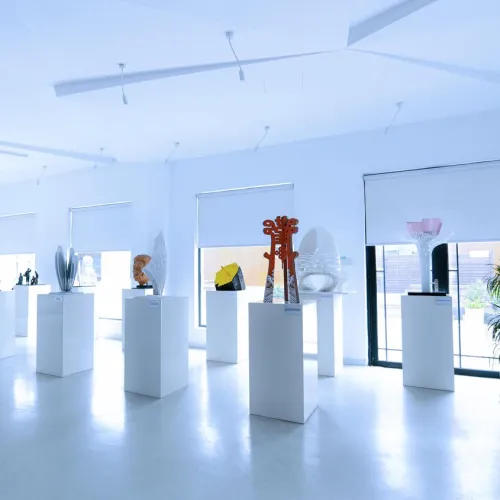
Features
Why Choose Us?
Full In-House Control
Design, engineering, fabrication and installation under one roof — one team, one contact, no outsourcing gaps.
Verifiable Engineering
Engineers calculate load, wind and anchoring; every steel and alloy batch ships with mill certificates.
Any Scale, Any Material
Stainless steel, bronze, aluminium, forged and cast metal — from a single plaza piece to landmark scale.
Worldwide Installation
Fully insured door-to-door logistics, our own crew on site, and material certificates with a maintenance guide.
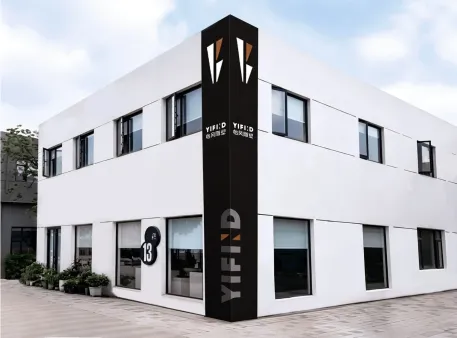
We Have The Best Solutions for Your Business
Yifeng Sculpture is a public art studio based in Ningbo, China, producing large-scale sculpture since 2003. We are one accountable team from first sketch to final bolt — creative planning, detailed design, engineering, fabrication and installation all happen in-house, so the artwork you approve is the artwork you receive. Our studio pairs sculptors with structural and mechanical engineers who calculate load, wind resistance and anchoring before a single panel is cut, and our founder is a Member of the Royal Society of Sculptors (UK).
We fabricate in stainless steel, bronze, aluminium, forged and cast metal, delivering monumental, kinetic, memorial and custom commissions for urban parks, commercial districts, transit hubs and campuses — from a single plaza piece to landmark works tens of metres in scale. For overseas clients we manage fully insured door-to-door logistics, send our own installation crew to site, and back every work with material certificates, a care guide and after-sales conservation.
What a Sculpture Company Should Own In House
The outsourcing line is the single most useful thing to establish during due diligence. Almost every fabrication house can cut steel and weld it together; far fewer can take an artist's sketch, verify that the form survives its local wind load, produce shop drawings that a site engineer accepts, and then deliver the same object to another continent without the finish arriving scratched.
When we assess a project, we look at where the interfaces sit. If the studio designs the artwork, engineers the frame, builds the armature, controls the finishing system and plans the installation, the client has one accountable party. If any of those steps is handed off, that is where defects appear, because nobody owns the seam between two suppliers' scope.
Capabilities to Verify Before You Appoint a Sculpture Company
Portfolios are curated to look good; capability questions are harder to stage. We encourage buyers to ask for specifics rather than references to awards, because the answers reveal how a studio actually operates on the difficult days.
- Engineering depth: who signs off wind load, connection design and foundation reactions, and whether calculations are issued as part of the deliverable.
- Material competence: comfort with 304 and 316 stainless, hot-dip galvanising, aluminium, bronze casting and coating systems, plus the isolation details between them.
- Scale of what it has actually shipped: how large the biggest crated sections have been, and how they were split for transport.
- Finishing control: whether polishing, blasting, patination and coating happen in house or are subcontracted to shops the client never meets.
- Installation capability: trial assembly in the yard, lifting point design, method statements and the crew that travels with the shipment.
- Documentation culture: record drawings, material certificates, finish schedules and a maintenance guide at handover rather than on request.
A studio that can answer all six without hesitation has probably delivered into jurisdictions with strict handover requirements, which is a useful proxy for reliability. A studio that answers three and redirects the rest is telling you where your project's risk will live.
Design-and-Build Versus Brokerage: A Practical Comparison
Commissioning models differ in ways that only become visible during delivery. The table below reflects what we see when clients bring us projects that started under a different arrangement.
| Factor | Design-and-build studio | Broker or trading intermediary |
|---|---|---|
| Where design decisions are made | In the studio, with the engineers in the same room | Relayed between separate parties and translated twice |
| Change requests | Answered with shop drawings and a clear impact statement | Answered with delay while the workshop is consulted |
| Finish consistency | Samples produced on the same line as the final work | Samples approved at one shop, production done at another |
| Accountability at installation | Same team that built the piece supervises the site | A local contractor meets the artwork for the first time on site |
| Records at handover | As-built drawings and material records from the maker | Assembled retrospectively, often incomplete |
Neither column is about honesty — both models can be run well. The point is that every extra party in the chain is another place where a detail can be lost between conversations, and the losses usually surface as finish defects or bracket conflicts rather than anything dramatic.
What Working With a Sculpture Company Actually Looks Like
The first exchange is usually less about art than about constraints. Send a site plan or sketch, photographs from the main approach, an indication of scale and the date by which the piece must be standing, and a sculpture company can respond usefully within days. Enquiries that stall almost always stall on the same missing item: nobody has said what the surrounding ground, power or access actually is. A rough photograph taken on a phone is more valuable to us than a polished mood board.
Once a commission begins, the quality of communication becomes the visible part of the service. We assign a single project lead who owns the schedule and answers the client directly, then report at each milestone with photographs of the actual work rather than a status sentence. Clients who cannot visit the workshop tell us repeatedly that this is what gives them confidence: seeing the armature, the first formed section and the finished surface as they happen, not in a package at the end.
Things still go wrong on site, and how a studio handles that moment says more than any portfolio. Our position is that the maker should diagnose first: inspect the condition, identify whether the cause is fabrication, transport or site handling, and propose a fix with a realistic sequence. Where a local contractor can perform the remedy, we provide the procedure, the materials and the drawings; where the issue needs our people, we send them. What no client should receive is a debate about responsibility while an unfinished artwork stands in public view.
Support should not end at handover either. We keep records of what was built, so a spare part, a replacement lighting component or a match for a discontinued finish can be produced later without reverse-engineering the original. Commissioning a sculpture company is a long relationship even when it lasts only one project, because the object it delivered will be asking questions of its owners long after the last invoice has been settled.
Cost is worth naming honestly without quoting figures. Fabrication scope, material grade, surface finish, structural complexity and site access all move the number, and a studio that gives a firm figure before it has seen the site is either guessing or planning to renegotiate. The useful conversation is about which of your goals you are buying: a larger form in a simpler finish, or a smaller form with mirror work and concealed lighting. A sculpture company that can compare those options in plain language is easier to work with than one that only quotes a total.
The Studio Behind the Work
Design and fabrication under one roof since 2003
More than 3000 completed works delivered
Projects installed in 23 countries
Academic links to leading art academies and the Royal Society of Sculptors
The Four-Step Process a Sculpture Company Should Follow
A commission that travels well is usually the one with the fewest surprises, and surprises are removed by sequence. Ours has four steps, and each one exists to close a risk that we have seen damage a project elsewhere.
- Consultation: site data, brief, budget shape and the client's own definition of success, captured before anyone draws.
- Concept development: drawings and physical models tested against the survey, with structural review running in parallel.
- Fabrication: armature, forming, welding, finishing and a trial assembly in our own yard before anything is crated.
- Installation: lifting plan, documented finishing procedure and commissioning checks, with the option of our supervisors on site.
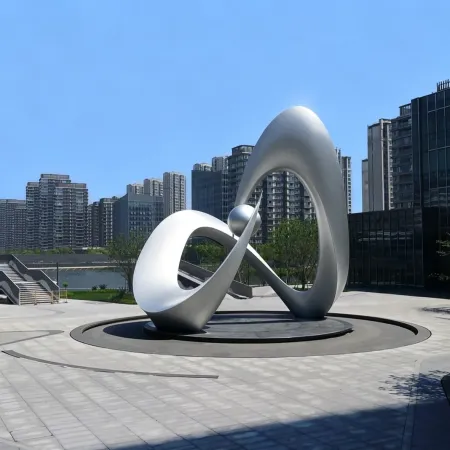
The same structure carried a large reflective gateway work documented as Eye of the Phoenix, where the form, the structural core and the transport split were resolved as one problem rather than three separate negotiations.
Working With an Overseas Partner: Communication That Holds
Time zones and distance remove the casual site visit, so good studios replace it with rhythm. For us that means a named project lead, progress photographs at agreed milestones, dimensional check reports before crating, and a single consolidated comment round at each design gate. Clients who receive a steady stream of small updates rarely feel the need for a crisis call at the end.
Shipping is planned with the artwork, not after it. Where geometry allows, sections are sized for standard containers; oversized elements are engineered to be split at natural joints that do not disturb the composition. Crated components carry edge protection and moisture control, and every pallet is listed against the assembly drawings so the receiving crew can match parts to positions without guesswork. Local contractors receive the method statement in advance, and our supervisors attend the first critical lifts whenever the client wants that support.
Red Flags We See in Commissioning Processes
Late-stage price revisions, a refusal to name who engineers the structure, and portfolios that show renders rather than installed photographs are the three signals that most often precede a difficult project. Ask for photographs of finished work in place, with the installation context visible; that single request filters a surprising number of enquiries.
Then look at how the studio talks about maintenance. A sculpture company that expects its work to be looked after will volunteer cleaning intervals, coating checks and fastener inspections, and will hand over the records needed to perform them. You can see how that four-step process works end to end on our services page, and completed commissions of every scale sit in the project gallery.
Send us your site plan, the brief and the drawing set you have so far. We will tell you plainly what a sculpture company can commit to at that site, where the engineering risk sits, and what the work will need from its owners in the years afterwards.
Featured Products
Collection about Us
User Reviews
What users say about Us
Frequently Asked Question
Do you have any question?
Our team's artistic and academic roots include the Academy of Arts & Design at Tsinghua University, the China Academy of Art and the Royal Society of Sculptors in the UK. That foundation shapes how we design — and how seriously we take the craft.
Entirely remotely until installation when needed: drawings, 3D models, renderings, finish samples and progress photographs carry the decisions, and shipping is arranged to the site's port. Buyers in the US and Europe work with us the way they work with any professional design partner.
Built projects at similar scale, in-house fabrication versus outsourced, engineering capability, and how the company communicates during concept development. Two companies can show similar renderings; their workshops and references will tell them apart.
Through the contact page on our website, with a few site photos and a short description of the project. A consultation from there usually clarifies the whole path — scope, process and a realistic schedule.