
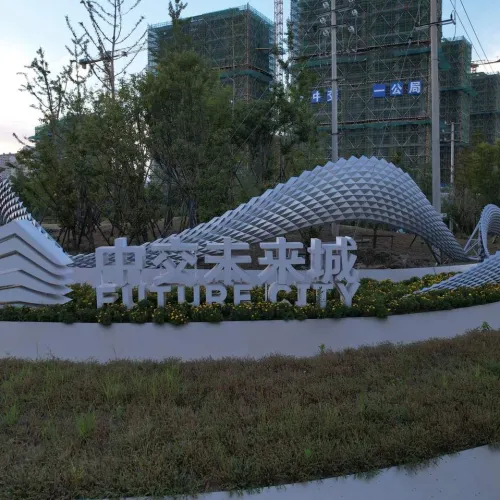
Features
Why Choose Us?
Full In-House Control
Design, engineering, fabrication and installation under one roof — one team, one contact, no outsourcing gaps.
Verifiable Engineering
Engineers calculate load, wind and anchoring; every steel and alloy batch ships with mill certificates.
Any Scale, Any Material
Stainless steel, bronze, aluminium, forged and cast metal — from a single plaza piece to landmark scale.
Worldwide Installation
Fully insured door-to-door logistics, our own crew on site, and material certificates with a maintenance guide.
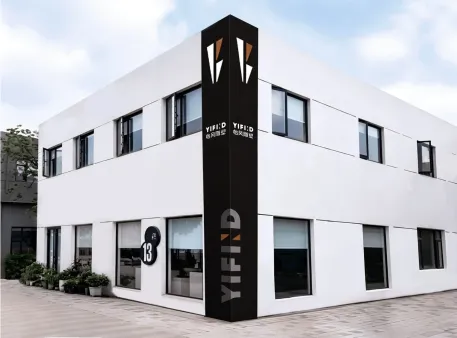
We Have The Best Solutions for Your Business
Yifeng Sculpture is a public art studio based in Ningbo, China, producing large-scale sculpture since 2003. We are one accountable team from first sketch to final bolt — creative planning, detailed design, engineering, fabrication and installation all happen in-house, so the artwork you approve is the artwork you receive. Our studio pairs sculptors with structural and mechanical engineers who calculate load, wind resistance and anchoring before a single panel is cut, and our founder is a Member of the Royal Society of Sculptors (UK).
We fabricate in stainless steel, bronze, aluminium, forged and cast metal, delivering monumental, kinetic, memorial and custom commissions for urban parks, commercial districts, transit hubs and campuses — from a single plaza piece to landmark works tens of metres in scale. For overseas clients we manage fully insured door-to-door logistics, send our own installation crew to site, and back every work with material certificates, a care guide and after-sales conservation.
What a Large Sculpture Changes About the Whole Project
Size rewrites every assumption. A form that is charming on a desk becomes a wind catch at eight metres; a joint that was a simple weld becomes a bolted splice designed to be tightened at height; a truck load becomes a route survey with escort permits. The budget structure changes too, because engineering, transport and installation grow from rounding errors into line items that deserve their own planning. Clients who understand this early budget realistically and get the piece they approved; clients who discover it late pay for it twice, once in redesign and once in delay.
Approval is another quiet consequence. Pieces above a certain height sit inside planning and airspace rules that vary by country and by city, and neighbours who will live with the silhouette deserve to be shown it honestly. We provide elevation studies from the real approach routes and the real distances, so the committee approves what will actually be built. In our experience a large sculpture that is presented truthfully at this stage sails through, while a flattering rendering almost always returns as an objection.
Engineering a Large Sculpture for Wind, Load and Access
Structural design is where scale is won or lost. Wind pressure rises with exposed area, slender forms invite vortex shedding, and cantilevers that feel stable in a model demand real depth in steel. Our engineers model the actual site exposure, check the load path from the highest point down to the holding-down bolts, and issue calculations that a local engineer can review against local code. The goal is not merely that the piece stands, but that it stands with the visual lightness the concept promised.
- Wind and dynamic response: forms are shaped and stiffened so the structure stays calm in gusts instead of humming or swaying visibly.
- Load path: every force is traceable from the surface through ribs and spine to a foundation the ground can carry.
- Splices and fixings: bolted connections are positioned where they can be reached, tightened and inspected for the life of the piece.
- Lifting design: lifting points, spreader beams and rigging are engineered with the piece, never improvised on the day.
- Maintenance access: the structure carries a safe way for a technician to reach every element that will ever need attention.
A twelve-metre interactive landmark we built, documented as Hello Conch, had to read as a smooth shell while hiding structure, drainage and lighting inside a double skin — the kind of problem that is solved in the engineering model, not on the scaffold. Pieces of that generation, along with their structural logic, sit in our project gallery.
Fabrication in Sections: Tolerances, Trial Assembly and Finishing
Few large works leave the workshop in one piece. Fabrication is therefore a problem of sections: how each is formed, how the joints will meet on site, and how the assembled silhouette stays true to the model. We build against a three-dimensional survey of the actual site, assemble the complete work once in our yard, and correct every misfit there, where a fitter with a crane is a normal event rather than a site emergency. The finished surface work — grinding, polishing, coating — is scheduled so that site work is limited to final touch-ups with a written procedure.
Tolerances deserve respect at scale. A gap that disappears at bench size reads as a flaw at six metres, and an accumulated error across ten sections can shift a head or a wing by a visible margin. We set tolerance budgets per section, check each against the master model, and record the measurements so the site assembly is a repeat of a proven performance rather than a first attempt.
Quality control in the shop follows the same logic of records. Weld procedures are agreed before the first pass, critical joints are inspected and logged, and every section carries its measurement sheet until trial assembly closes it out. Where a surface will be polished to a show finish, protection goes on before handling starts, not after the first dent teaches everyone why. None of this is complicated; it is simply the difference between a workshop that builds art and a workshop that hopes, and at the scale we work at, hope is not a method.
Transport, Lifting and Installation Logistics
Moving a large sculpture is a project inside the project. Sections are sized to the legal transport envelope of the destination country, crated for sea freight, and protected against the specific indignities of handling. On site, the install is planned backwards from the crane: ground bearing, access route, exclusion zones, weather windows and the sequence that returns the plaza to service fastest. Because we install in 23 countries, we arrive with a method statement the local team can actually execute, and with supervisors who have done this specific piece before.
- Route survey: every bridge, tunnel and bend between workshop and plaza is checked before section sizes are frozen.
- Permits and escorts: oversized loads are booked with the authorities of each region they cross, not hoped past them.
- Packaging: crating is engineered for freight, with finished surfaces protected against abrasion and vibration rather than padded as an afterthought.
- Crane planning: capacity, reach and ground bearing are confirmed against the actual machine scheduled for the day.
- Weather windows: lifting days carry stand-down criteria, because wind does not negotiate with a programme.
| Stage | Risk if left unplanned | How the studio controls it |
|---|---|---|
| Engineering | Redesign after review, steel added late | Wind and load modelling issued with the concept |
| Fabrication | Sections that do not meet on site | Full trial assembly against the site survey |
| Transport | Permits, route limits and damaged surfaces | Sections sized to the legal envelope, crated for freight |
| Installation | Crane time overrun, site conflict | Method statement and engineered lifting points |
| Aftercare | Unmaintained fixings and finishes | Record drawings and a written maintenance note |
Materials and Finishes That Survive at Scale
Material behaviour is amplified by size. Grade 316 stainless steel is our baseline within reach of salt water, with 304 stainless or properly specified coated steel inland; hot-dip galvanizing protects hidden steel where coatings cannot be reached again; aluminium earns its place on large light forms but demands isolation from steel. At large scale the finish must also stay consistent across many sections, which is why samples are approved in the full system — substrate, primer, topcoat — and viewed on site before a single panel is finished.
Every environmental question is harsher when the object is big: more surface to clean, more fixings to check, more runoff to direct. We detail for the person who will maintain the piece with ordinary equipment on an ordinary budget, because a giant that needs specialist attention every season will simply stop receiving it.
Scale also exaggerates what metals do to each other and to themselves. Thermal movement across a ten-metre span is measured in centimetres, so connections are slotted or articulated where the structure breathes; aluminium is isolated from steel at every junction, not only the obvious ones; and coatings are chosen for the site's UV and salt record rather than for the rendering. We keep a library of how our finishes have behaved in the climates we have shipped to, and we share that record with clients during concept development, because honest material advice at the start is cheaper than a resurfacing contract later.
The Studio Behind the Scale
Fabricating monumental public artwork since 2003
More than 3000 completed works delivered
Projects installed in 23 countries
Design, engineering and fabrication under one roof
What to Agree Before Fabrication Begins
Most trouble on large commissions traces back to things nobody wrote down. Before steel is cut we make sure the design freeze, the site survey, the responsibility split for foundations, the transport scope, the installation sequence and the aftercare package are each agreed in writing. The four-step process — consultation, concept development, fabrication, installation — gives those agreements natural checkpoints, and you can see how it runs on our services page. It is a short conversation that prevents long arguments.
Send us the site, the drawings and the dimensions you are dreaming about, and we will tell you honestly how a large sculpture should be engineered, sectioned, shipped and set — and what it will need from you in year ten. Handled this way, a large sculpture stops being a gamble at scale and becomes the most predictable part of the project.
Featured Products
Collection about Us
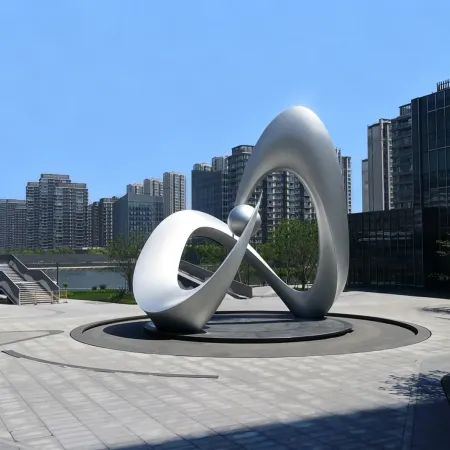
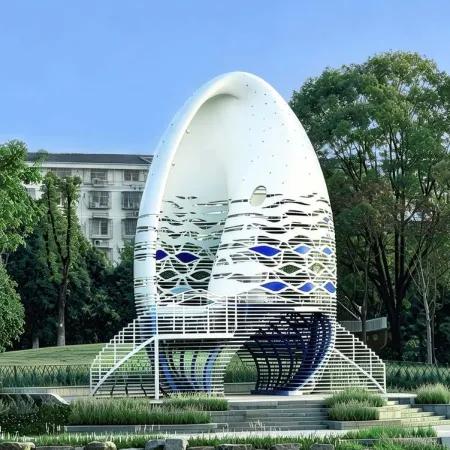
User Reviews
What users say about Us
Frequently Asked Question
Do you have any question?
With the projected area, the shape's drag characteristics and the site's design wind speed, reviewed by structural engineers. Open lattice and perforated forms reduce wind load significantly, which is one reason they appear so often in large public work.
One designed from the geotechnical report for the site: spread footings, piles or anchor systems depending on the ground. The sculpture's connection plates are set out with the foundation so the two are cast as one system.
Through shop fit-up of every section before shipping, weld inspection on structural joints, and dimensional surveys against the 3D model. Because sections must mate on site after a long journey, the workshop fit-up is the single most valuable control point.
It scales with surface area and structural complexity rather than with height alone. A perforated open form fabricates faster than a sealed monolith of the same height, and the engineering reviews that precede cutting steel are part of the real schedule.