
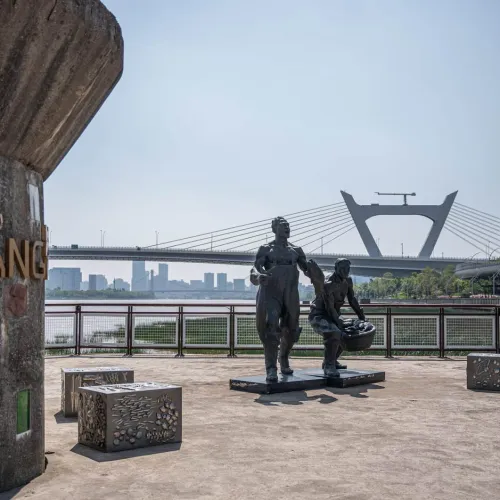
Features
Why Choose Us?
Full In-House Control
Design, engineering, fabrication and installation under one roof — one team, one contact, no outsourcing gaps.
Verifiable Engineering
Engineers calculate load, wind and anchoring; every steel and alloy batch ships with mill certificates.
Any Scale, Any Material
Stainless steel, bronze, aluminium, forged and cast metal — from a single plaza piece to landmark scale.
Worldwide Installation
Fully insured door-to-door logistics, our own crew on site, and material certificates with a maintenance guide.
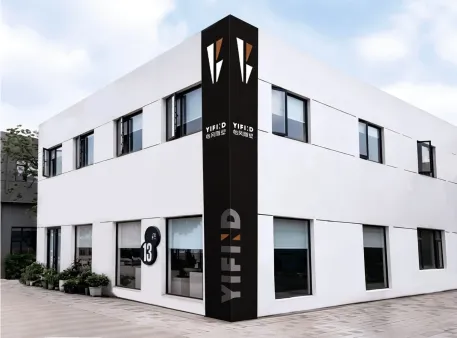
We Have The Best Solutions for Your Business
Yifeng Sculpture is a public art studio based in Ningbo, China, producing large-scale sculpture since 2003. We are one accountable team from first sketch to final bolt — creative planning, detailed design, engineering, fabrication and installation all happen in-house, so the artwork you approve is the artwork you receive. Our studio pairs sculptors with structural and mechanical engineers who calculate load, wind resistance and anchoring before a single panel is cut, and our founder is a Member of the Royal Society of Sculptors (UK).
We fabricate in stainless steel, bronze, aluminium, forged and cast metal, delivering monumental, kinetic, memorial and custom commissions for urban parks, commercial districts, transit hubs and campuses — from a single plaza piece to landmark works tens of metres in scale. For overseas clients we manage fully insured door-to-door logistics, send our own installation crew to site, and back every work with material certificates, a care guide and after-sales conservation.
Why Bronze Sculpture Still Holds Its Place in Public Art
Bronze has carried the weight of commemorative and figurative work for so long that the word itself now signals significance. The technical reason is plainer: the alloy is tough, it does not rust through the way ferrous metal does, and it ages by building a stable surface layer rather than by breaking down. In a public setting those three habits cut down the number of things that can go wrong, which is why clients come back to cast metal for anything a community will treat as a landmark.
There is a design reason too. Bronze accepts undercuts, hollows and sharp edges within a single piece, so a sculptor can model a hand, a hem or a branch and have it cast rather than assembled from panels that must then be blended. For a portrait that is decisive. For a large abstract form it matters far less, and there we usually steer a client towards stainless steel, aluminium or a fabricated skin, where weight, span and site handling are kinder to the programme.
| Consideration | Bronze | Stainless steel | Moulded composite |
|---|---|---|---|
| Surface detail | Finest, including tool marks | Good on flat and folded forms | Dependent on the mould quality |
| Ageing behaviour | Develops a stable patina | Stays bright or dulls evenly | Coating wear decides appearance |
| Weight and handling | Heavy, base must be designed for it | Moderate, allows large spans | Light, easiest to lift |
| Service routine | Waxing and touch-up of the patina | Washing and finish checks | Inspection and recoating |
| Strongest fit | Portraits, figures, plaques | Landmarks and kinetic work | Repetition and temporary shows |
Bronze Sculpture Explained Through the Casting Process
Every finished bronze you have ever admired started as something that no longer exists. Understanding that sequence explains most of the schedule and most of the risk. The wax pattern is destroyed when the metal is poured, so the original model, the mould and the wax are all consumed on the way to a single casting. If a piece is needed twice, the mould has to be made twice, and any client planning a paired figure or a series should settle that question at the start rather than after the foundry has closed the shell.
- Consultation and modelling: we agree scale, posture, base and setting before clay is worked, using the actual viewing distances on site.
- Mould and wax: a flexible mould is taken from the model and a hollow wax replica is built up, section by section, for each cast part.
- Casting: the ceramic shell is fired out and molten alloy is poured in, filling the void the wax has left behind.
- Chasing and assembly: gates and seams are cut back and worked by hand until the joins disappear into the modelled surface.
- Patina and installation: colour is applied with heat and chemicals, sealed, then the piece is fixed to its prepared base and documented.
Where schedules slip, it is almost never the pouring. It is the chasing, because chasing is done by eye and by hand and cannot be accelerated by adding machines. A studio that tells you the casting week but cannot tell you how many chasing hours the maquette will need has not costed the job properly, and the client is the one who discovers the difference when the installation date is already fixed by an opening ceremony.
Patina and Finish Choices on a Bronze Sculpture
Colour on cast metal is chemistry, not paint. Hot patina is applied by heating the bronze and brushing or spraying solutions onto it, so the tone sits in the surface rather than on top of it, and it will keep moving for years in an outdoor setting. That movement is the whole point for some clients and a problem for others, and the conversation has to happen before the last coat rather than after the piece is on its base.
- Waxed living finish: the patina is left to darken and lighten with weather and touch, read as character rather than damage.
- Sealed patina: a clear coating slows the change and holds the colour you approved, at the price of periodic recoating.
- Rubbed highlights: raised passages are taken back to bright metal so form reads from a distance and the piece gains depth.
- Gilded accents: selective gold or leaf detail for inscriptions and emblems, kept deliberate and small.
- Physical sample panels: we cast and patinate test plates and view them on site in real light before the piece is treated.
Approving a colour from a screen is the most common mistake in this category. Bronze reads differently against wet paving, against grass, under a warm evening lamp and under grey northern daylight, and a tone that looks noble in an office can look almost black in the plaza. Samples viewed in place cost very little and settle arguments that would otherwise be settled by grinding the surface back on site, which nobody wants to do to a hand-finished cast.
Structural Questions That Only Cast Metal Raises
Because bronze is dense, the forces it passes into its base are far larger than the visual size of the piece suggests. A life-size figure can be moved by a small forklift but cannot be supported by a decorative footing chosen from a catalogue; the load path has to be designed with the same care as a stainless landmark. We calculate the wind area, the eccentricity of the figure and the pull-out forces on the anchors, and we detail an internal armature so the cast shell is never asked to carry a load in bending.
Two smaller issues also decide how the work survives. Contact between the bronze and any steel base plate needs isolation to stop the two metals reacting through a film of water, and any cavity has to drain and breathe so that condensation cannot sit inside the shell. Both are cheap details at the drawing stage and stubborn problems afterwards, and both are invisible to the client until staining appears on the plinth.
The Studio Behind the Work
Casting, chasing, patina and installation handled by one team since 2003
More than 3000 completed works delivered
Projects installed in 23 countries
A four-step process from consultation to installation
Keeping a Bronze Sculpture Looking Right Outdoors
A bronze in a park or a square is not maintenance free, and anyone who promises otherwise has not visited a coastal city. Bird lime, salt spray, tree sap and irrigation overspray all attack the surface, and the surfaces most likely to be touched by the public are exactly the ones that wear first. A workable routine is deliberately modest: rinse and brush with clean water and a soft bristle on a seasonal cycle, remove droppings quickly because they are acidic, and reapply the correct wax to the high-contact zones when water stops beading.
Where the setting is an entrance hall, a memorial garden or a museum forecourt, the risks change and so does the plan. Indoor bronze mostly needs dust control and protection from careless cleaning contractors, who are far more dangerous to a patina than weather is; a laminated instruction sheet kept with the building's maintenance file prevents the classic accident of a well-meaning janitor scouring a hand-finished surface. Every cast piece we deliver leaves with that sheet, the surface schedule and the touch-up materials.
What to Ask a Bronze Sculpture Studio Before You Commission
Ask who does the chasing, and ask to see it. Anyone can arrange a pour; the difference between a fine cast and an ordinary one is in the hours spent working the surface, and a studio that cannot explain its chasing standard is not controlling the thing that matters most. Ask too how the wax will be built, how many parts will be cast and how those parts will be joined and patinated as one surface rather than several.
Then ask about the base and the paperwork. A credible studio will discuss anchor loads, isolation between dissimilar metals and drainage without prompting, and will hand over as-built drawings and a materials schedule at the end. Our own team works with the training traditions of Tsinghua Academy of Fine Arts, China Academy of Art and the Royal Society of Sculptors, and the useful part of that background is a habit of testing a finish and a joint before committing a client to it.
You can see how the four-step process from consultation to installation runs on our services page, and a ten-metre openwork metal artwork with integrated lighting is documented as Butterfly Dance. Cast and fabricated metal works sit together in the project gallery.
Send us the subject, the site and the light it will be seen in, and we will tell you honestly whether the piece should be cast, where the mould should be taken and what the surface will need over the next decade. Chosen for the right reasons, a bronze sculpture is not simply a durable object in a public place; it is the one material that lets a community read the hand of the maker twenty years after the maker has gone.
Featured Products
Collection about Us
User Reviews
What users say about Us
Frequently Asked Question
Do you have any question?
The casting sequence alone — molding, wax, shell, pour, chase and patina — takes weeks, and the full commission runs longer once modeling, engineering and mounting are included. Foundry schedules also queue, so the earlier the design is approved, the better the timing works.
The alloy specification, the wall thickness of the cast sections, the quality of welds and seams, and how the piece is anchored. Asking for photographs of the foundry process and the unfinished casting before patina tells you more than any finished rendering.
It develops a patina that shifts from warm brown toward green in humid or coastal air, and that surface layer actually protects the metal beneath. Buyers who want a stable color can specify a patina and protective coating, then maintain it with periodic waxing.
Washing with water, inspection of the wax or coating layer, and reapplication on a schedule set by the site's exposure. Indoor or sheltered pieces need far less attention than pieces placed beside the sea, so the maintenance plan should follow the site, not a generic calendar.