
Features
Why Choose Us?
Full In-House Control
Design, engineering, fabrication and installation under one roof — one team, one contact, no outsourcing gaps.
Verifiable Engineering
Engineers calculate load, wind and anchoring; every steel and alloy batch ships with mill certificates.
Any Scale, Any Material
Stainless steel, bronze, aluminium, forged and cast metal — from a single plaza piece to landmark scale.
Worldwide Installation
Fully insured door-to-door logistics, our own crew on site, and material certificates with a maintenance guide.
We Have The Best Solutions for Your Business
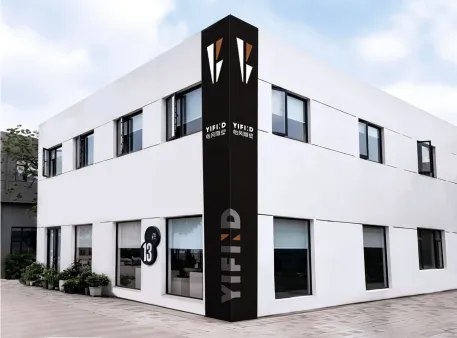
Yifeng Sculpture is a public art studio based in Ningbo, China, producing large-scale sculpture since 2003. We are one accountable team from first sketch to final bolt — creative planning, detailed design, engineering, fabrication and installation all happen in-house, so the artwork you approve is the artwork you receive. Our studio pairs sculptors with structural and mechanical engineers who calculate load, wind resistance and anchoring before a single panel is cut, and our founder is a Member of the Royal Society of Sculptors (UK).
We fabricate in stainless steel, bronze, aluminium, forged and cast metal, delivering monumental, kinetic, memorial and custom commissions for urban parks, commercial districts, transit hubs and campuses — from a single plaza piece to landmark works tens of metres in scale. For overseas clients we manage fully insured door-to-door logistics, send our own installation crew to site, and back every work with material certificates, a care guide and after-sales conservation.
What Separates a Public Monument From a Decorative Sculpture
Decoration is allowed to be pleasant; a monument is asked to be meaningful. That difference changes almost every practical decision downstream. A decorative piece can be moved when a road is widened or a plaza is redeveloped. A monument is usually fixed in place by public expectation, funding agreements and, quite often, a formal resolution that named the site. Designing for permanence at a location you cannot change is a stricter brief than designing for an object you can relocate.
The second difference is the number of voices. A single developer can approve a sculpture in one meeting; a monument may involve a civic authority, a heritage body, a funding committee and the families or communities the work represents. We plan for that by front-loading the review rhythm: fewer, better-prepared presentations, physical models people can stand next to, and a fixed point after which the form is locked so fabrication can actually proceed.
The Symbols a Public Monument Has to Carry
Once a brief arrives, the artistic work begins with translation — converting a narrative into form that reads without a caption. In our experience most successful memorial concepts rest on a small number of readable devices rather than a crowded composition.
- Scale as emotion: height and mass are read before detail, so a monument's first sentence is its silhouette.
- Repetition as memory: repeated elements — ribs, petals, figures, plaques — suggest continuity and collective loss.
- Absence as subject: negative space and voids let visitors read their own story into the work, which ages better than a literal tableau.
- Material as tone: weathered bronze signals endurance, brushed stainless signals the contemporary, stone signals institutional permanence.
- Interaction as ritual: a bench, a path, a threshold or a place to lay flowers turns viewing into a habit people repeat.
We test each device for legibility from the distance people actually arrive from, then again at touching distance. A monument has to work in a photograph taken from a moving car and in a quiet moment from two feet away; if it only works at one of those ranges, the composition still needs work.
How a Public Monument Is Engineered to Last Generations
Permanence is an engineering claim, not a stylistic one. The technical package behind a commemorative commission is what allows a community to stop worrying about the object for the next half century.
- Structural verification: the core frame is sized against wind load and, where required, seismic criteria by our engineers, with calculations issued as part of the documentation.
- Foundation interface: anchor geometry and cast-in plates are coordinated with the site's civil works so nothing is drilled ad hoc after the plinth is poured.
- Material grade: 316 stainless for coastal and high-exposure sites, 304 inland, hot-dip galvanising for structural steel hidden inside the form.
- Joint detailing: slotted connections and isolating washers absorb movement and prevent galvanic corrosion between dissimilar metals.
- Inscription and lighting: lettering is cut or cast for legibility, and lighting is specified with a serviceable, replaceable driver strategy rather than sealed into the artwork.
We also design the maintenance story. Every fixing that will need re-tensioning is reachable, every finish has a documented touch-up procedure, and the handover set includes the drawings and material records a facilities team needs years later when the original contractor has gone. That is what keeps a monument looking cared for rather than merely old.
Materials and Finishes Compared
Commemorative clients usually arrive with a strong instinct about material, and it is worth testing that instinct against exposure and long-term appearance. The comparison we walk through most often looks like this.
| Option | Tone it sets | Long-term behaviour |
|---|---|---|
| Cast bronze | Traditional, warm, institutional | Develops a patina that many communities read as dignity; periodic waxing keeps it even |
| Brushed stainless | Contemporary, precise, neutral | Hides handling and repair marks well; needs cleaning in polluted or coastal air |
| Mirror-polished stainless | Reflective, striking, event-like | Shows every fingerprint and joint; best where a maintenance regime is funded |
| Painted or coated steel | Graphic, colourful, flexible in colour | Appearance depends on the coating system and on scheduled re-coating |
| Natural stone | Gravitas, weight, civic permanence | Ages gracefully but demands careful lifting, bedding and joint sealing |
We produce physical samples in the specified finish and review them in the client's own climate and light where the project allows. For a memorial, one more step is worth taking: view the sample at the hour of day the community will use the place most, because a monument is visited at dawn on anniversaries as often as at noon.
Reading the Site and the Approach to a Public Monument
Before we propose any form, we read the setting the way a first-time visitor will encounter it. Most people will see the work from a road, a bus stop or a path junction, arriving with no explanation of what it commemorates. That first frame is the monument's real cover, and it decides how tall the main mass should be, which side should carry the readable silhouette and whether the piece needs a low base wall to slow the glance down. We record those views with photographs taken at standing eye level, because a drone image flatters a design that nobody will ever see from that height.
Accessibility is the second reading. A memorial that only works for people who can stand upright at a plinth has excluded part of the community it was built for. We plan level approaches for wheelchair users, seating for visitors who cannot remain standing through a ceremony, and text set at a height and size that reads comfortably without bending. Where tactile engagement is wanted, raised lettering or a three-dimensional element at hand height allows the work to be understood by touch without compromising the composition for everyone else.
Heritage settings add a third layer of constraint: mature trees with protected root zones, masonry that must not be drilled, sightlines that a conservation officer will defend. Our usual response is an independent, self-supporting frame founded within a compact footprint and anchored reversibly, so the monument can in principle be removed without leaving damage behind. That approach keeps the commemorative intent intact while remaining defensible at a later planning review, which is exactly what a long-lived civic work requires.
Ground conditions decide more of the design than most committees realise. A monument carries a concentrated load at its base, and the plinth that looks generous in a render may need a footing far wider than the visible stone. We resolve that with the site's civil engineers early, because discovering it after the paving is laid means either cutting into finished work or shrinking a form that has already been approved. On soft ground and made-up sites, an independent raft or a deeper mass concrete base is often the quieter answer, and it is invisible to the public once the surrounding levels are restored.
Maintenance planning is the last part of the reading we complete before design begins. Who will clean the work, with what equipment, and how will they reach the top of it? A community monument that requires a specialised lift for routine cleaning will be cleaned less often than one whose surfaces can be reached by a maintenance crew with ordinary equipment. That single question often reshapes a composition more than any aesthetic preference, and it is far cheaper to answer on paper than after handover.
The Studio Behind the Work
Commemorative commissions handled in house since 2003
More than 3000 completed works delivered
Projects realised in 23 countries
Design, engineering and fabrication under one roof
Working With a Committee Across Borders
Delivering a memorial to another country means the client cannot walk into the workshop. We compensate with transparency: dated progress photographs at each fabrication milestone, dimensional check reports before crating, and a fixed review gate where comments can still change the work without scrapping metal. When we delivered a quiet, layered commemorative piece documented as Vanishing Memories, the committee's feedback arrived as annotated drawings rather than site visits, and the sequence worked because the approval points were scheduled before fabrication started, not after.
Shipping, customs and installation are part of the plan rather than a separate worry. Sections are sized for standard containers where possible, crated with edge protection and moisture control, and accompanied by packing lists that match the assembly drawings so the receiving crew knows what each pallet contains. Our installation leads either travel with the shipment or brief the local contractor through a documented method statement and lifting plan.
From Consultation to Installation in Four Steps
Our process is the same for a memorial as for any other commission, but the weighting changes. Consultation takes longer because it gathers the story, the stakeholders and the site constraints. Concept development turns that into drawings, models and a materials direction tested against the survey. Fabrication happens entirely in our own workshop, including a trial assembly. Installation closes the loop with lifting points, rigging and a written finishing procedure agreed in advance.
You can see how this four-step process works on our services page, and commemorative and landmark commissions are collected in the project gallery.
Send us the story the community wants to hold, the site photographs and any heritage constraints you already know about. We will tell you which forms can carry that meaning, how the structure should be founded, and what the finished public monument will ask of the people who maintain it — because a memorial is judged not on the day it is unveiled, but on the anniversaries that follow.
Featured Products
Collection about Us
User Reviews
What users say about Us
Frequently Asked Question
Do you have any question?
Bronze for figures and inscriptions, granite and stone for plinths, and stainless steel for contemporary expressions. All three are chosen for permanence; a monument's materials are expected to hold their dignity with minimal intervention for generations.
Through alloy selection for the climate, connections designed for the site's wind loads, foundations based on the actual ground conditions, and details that drain water and allow inspection. Longevity is designed joint by joint, not promised in a brochure.
Typically site or planning approval, sometimes heritage or civic review, and often committee consensus on the design. The studio supports this by providing the drawings, renderings and engineering documentation reviewers need.
A clear statement of who or what is being commemorated, the preferred site, the approved scope of the commission, and the decision-making path. Bodies that settle those four questions early move through design without the stalls that exhaust most monument committees.