
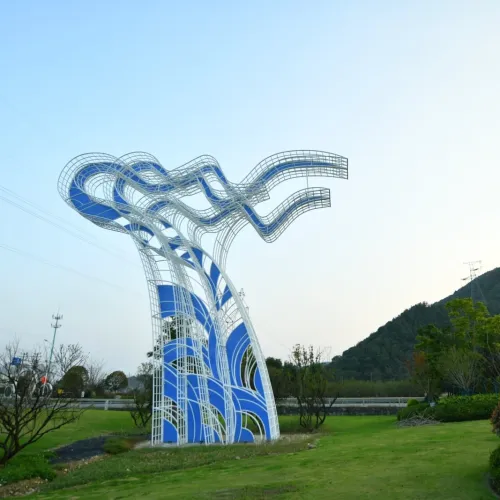
Features
Why Choose Us?
Full In-House Control
Design, engineering, fabrication and installation under one roof — one team, one contact, no outsourcing gaps.
Verifiable Engineering
Engineers calculate load, wind and anchoring; every steel and alloy batch ships with mill certificates.
Any Scale, Any Material
Stainless steel, bronze, aluminium, forged and cast metal — from a single plaza piece to landmark scale.
Worldwide Installation
Fully insured door-to-door logistics, our own crew on site, and material certificates with a maintenance guide.
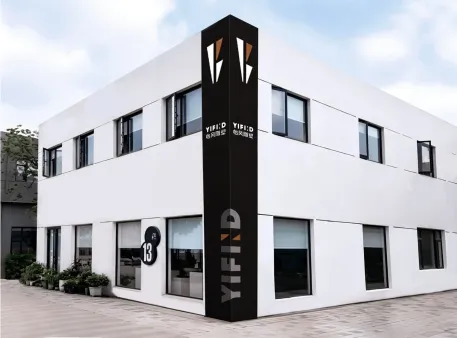
We Have The Best Solutions for Your Business
Yifeng Sculpture is a public art studio based in Ningbo, China, producing large-scale sculpture since 2003. We are one accountable team from first sketch to final bolt — creative planning, detailed design, engineering, fabrication and installation all happen in-house, so the artwork you approve is the artwork you receive. Our studio pairs sculptors with structural and mechanical engineers who calculate load, wind resistance and anchoring before a single panel is cut, and our founder is a Member of the Royal Society of Sculptors (UK).
We fabricate in stainless steel, bronze, aluminium, forged and cast metal, delivering monumental, kinetic, memorial and custom commissions for urban parks, commercial districts, transit hubs and campuses — from a single plaza piece to landmark works tens of metres in scale. For overseas clients we manage fully insured door-to-door logistics, send our own installation crew to site, and back every work with material certificates, a care guide and after-sales conservation.
How Open-Air Conditions Rewrite the Brief
An outdoor site is not a neutral backdrop; it is an active agent with a chemical and mechanical opinion about your artwork. Ultraviolet light chalks coatings and fades colour. Daily thermal cycling works every joint loose a fraction at a time. Salt spray attacks fasteners and weld zones within a kilometre of the coast. Wind turns cantilevered forms into structural questions. And the public does the rest: hands touch, feet climb, skateboards grind, and maintenance crews arrive with pressure washers and access equipment that were never in the drawings. A brief that ignores any of these forces will come back later as a variation order.
We treat these conditions as design inputs rather than as problems to solve after the fact. The concept stage for any open-air commission includes an exposure assessment — distance to salt water, prevailing wind direction, sun path, drainage fall, public circulation — and the materials and fixing strategy are chosen against that assessment. This is why two pieces that look similar in a portfolio can carry very different bills of materials: a plaza piece inland and a waterfront piece of the same size are simply not the same engineering problem, and pricing them as if they were is how projects get surprised.
| Material | Performs best at | Watch-outs |
|---|---|---|
| 316 stainless steel | Coastal promenades, waterfronts and any site with marine air nearby | Higher material cost; weld zones must be properly cleaned and passivated |
| 304 stainless steel | Inland plazas, campuses and corporate landscapes | Not the default near salt water; grade substitution is a common false economy |
| Painted or powder-coated steel | Large coloured forms where the palette carries the concept | Service life depends on pretreatment, the coating system and a written touch-up regime |
| Aluminium | Big, light or kinetic forms where mass matters | Must be isolated from steel contacts to stop galvanic corrosion at every joint |
| Weathering steel or bronze | Sites where a developing patina is part of the concept | Runoff can stain adjacent paving, so drainage has to be detailed from the start |
Materials That Keep an Outdoor Sculpture Looking Intended
Grade selection is only the first decision. Grade 316 stainless steel is the sensible baseline near salt water, with 304 stainless or a properly specified coated steel serving well inland. What most often separates a piece that ages gracefully from one that stains within two seasons is workmanship at the welds: weld zones that are ground, cleaned and passivated keep their corrosion resistance, while heat-tinted welds on even the best grade will tea-stain in a coastal environment. We passivate weld zones as standard on open-air work and isolate every dissimilar-metal connection with washers or sleeves.
Finish choice decides how the piece reads in ten years. A mirror polish shows every fingerprint, weld line and repair; a fine brushed grain hides handling and blends future maintenance; a bead-blasted surface reads evenly in strong sun but holds airborne dirt. For aluminium, anodising or a marine-grade coating protects the surface and keeps colour stable. Whatever the system, we produce physical samples and view them on site in real light, because a colour approved on a screen has been approved by nobody, and repainting a large outdoor piece is never the cheap option.
- Drainage and runoff: water must leave the piece, not pool in hidden pockets or weep onto the paving below.
- Dissimilar metals: isolation at every mixed connection stops galvanic corrosion before it starts.
- Fixings: stainless fasteners, a specified torque and reachable inspection points, not whatever the workshop had on the shelf.
- Finish sampling: physical samples judged in daylight at the site, then locked into the written specification.
- Public contact: surfaces people will touch are chosen and finished for hands, not only for photographs.
Structure: What the Wind and the Ground Carry
Wind is the load most buyers underestimate. A slender vertical form that reads elegantly can oscillate in gusts; a cantilever multiplies load at its root; perforated skins behave differently from solid surfaces in the same storm. Every open-air structure we engineer starts with the site's wind environment and the form's actual geometry, and the structure is sized so the piece is comfortable rather than marginal. Comfortable means no visible movement, no fatigue cracking at the welds over the years, and a foundation designed with the artwork rather than assumed to be a generic plinth.
- Survey the real site: levels, underground services, access routes and ground conditions measured, not assumed.
- Engineer the wind case: loads calculated for the actual exposure and geometry, not copied from a similar piece elsewhere.
- Design the foundation with the artwork: anchor positions, bolts and reinforcement issued together as one package.
- Trial assembly: the work is built and aligned once in the workshop so the site sees a repeat performance.
- Commission openly: lighting, movement and fixings are checked through full cycles before handover.
Lighting and Night Presence
A piece that only works at noon works half the time. Night presence is designed with the form, not bolted on afterwards: uplighting angles are tested against the surface finish, glare to adjacent residences is checked, cabling routes and drivers are concealed inside the structure, and ingress protection for every exterior fitting is specified for the exposure. Integrated lighting has become one of the most requested features in open-air commissions, and it is also one of the easiest things to get wrong when it is added late by a separate contractor.
Designing light into the piece also protects the surface. Fixtures mounted too close cook coatings and leave scorch rings on polished metal; fixtures mounted too far wash the form flat and lose the modelling. We build mock-ups of the lighting condition during concept development and adjust before fabrication, because correcting an angle in a drawing costs nothing and correcting it on a twelve-metre structure costs a cherry picker and an apology.
The Process That Protects the Investment
We run a four-step process — Consultation, Concept Development, Fabrication, Installation — and for open-air work each step carries specific duties. Consultation fixes the site realities and the client's ambitions in writing. Concept Development pairs the design with the exposure assessment and the structural approach, so the aesthetic and the engineering mature together instead of colliding at tender. Fabrication happens in the workshop under our own quality control, and Installation arrives with a written sequence a contractor can plan around rather than a surprise to be absorbed.
This ordering is also where money is saved without a single compromise. Fixing points agreed during concept cost nothing extra; the same points discovered on site mean secondary steel, visible bases or redesign. Clients who involve the studio while the landscape or the building is still being documented consistently get cleaner results than those who tender a finished design to whoever quotes lowest, because the knowledge that shapes the detail only exists inside the studio that will build the piece.
The Studio Behind the Work
Designing and fabricating open-air artwork since 2003
More than 3000 completed works delivered
Pieces installed in 23 countries
Design, engineering and fabrication under one roof
Siting, Scale and the Way People Arrive
Scale is judged against approach, not against a floor plan. We test proportion in measured drawings at eye level, from the main approach road and from the windows of nearby buildings, because a form that feels generous in a model can crowd a doorway or vanish against a glazed facade once it is built. Sightlines matter just as much: a piece that photographs well from three directions will do more work for a city's image than a technically superior piece that only reads head-on, and the camera angle people actually use is the one worth engineering for.
What to Ask Before You Commission an Outdoor Sculpture
Ask who carries structural responsibility, and ask for calculations rather than assurances. Ask for the material grade in writing, the coating system by name and the weld finishing method. Ask how fixings will be inspected and whether the studio hands over record drawings and touch-up materials, because the team that owns the plaza in ten years will inherit whatever documentation exists today. A studio that answers these without hesitation has built this kind of work before; one that deflects the questions onto the main contractor is telling you exactly where the risk will land.
Finally, ask to see work that has been outdoors for a while. We point clients toward documented built projects rather than renders, because weathering, joint lines and the way a piece sits in its landscape are only visible in finished work. Our record — thousands of open-air pieces across 23 countries since 2003 — exists precisely so that buyers can judge how our decisions age before they commit their own site.
The four-step process from consultation to installation is described on our services page, and a nine-metre wind-driven kinetic piece built for an exposed waterfront site is documented as Sailing Competition. Works of every scale and material sit alongside it in the project gallery.
Commissioned well, an outdoor sculpture becomes the image a city keeps — recognised from the approach road, photographed from every angle, and still holding its line decades later. Give us your site, your exposure and your ambition, and we will tell you honestly what the piece should be made of, how it should stand, and what outdoor sculpture will ask of you in service.
Featured Products
Collection about Us
User Reviews
What users say about Us
Frequently Asked Question
Do you have any question?
Sun and wind exposure, whether de-icing salt or coastal air is present, the foundation conditions, and how maintenance crews will reach the piece. Buyers should also see the anchoring detail before approving the design, because that is where outdoor failures start.
Freeze-thaw attacks any cavity that holds water, so we design continuous drainage and ventilation paths and avoid upward-facing recesses in cold climates. Coatings and alloys are specified for the lowest temperature the site sees, not its average.
Washing, inspection of coatings and fixings, drainage checks and periodic renewal of protective wax or clear coats on bronze. A simple maintenance schedule set at delivery keeps a piece presentable; neglect, not weather, is what ages most outdoor sculptures prematurely.
To a foundation sized for overturning and uplift from wind: anchor bolts set into concrete, embed plates for larger works, and connection details that allow the sculpture to be leveled and, when needed, removed without damage.