
Features
Why Choose Us?
Full In-House Control
Design, engineering, fabrication and installation under one roof — one team, one contact, no outsourcing gaps.
Verifiable Engineering
Engineers calculate load, wind and anchoring; every steel and alloy batch ships with mill certificates.
Any Scale, Any Material
Stainless steel, bronze, aluminium, forged and cast metal — from a single plaza piece to landmark scale.
Worldwide Installation
Fully insured door-to-door logistics, our own crew on site, and material certificates with a maintenance guide.
We Have The Best Solutions for Your Business
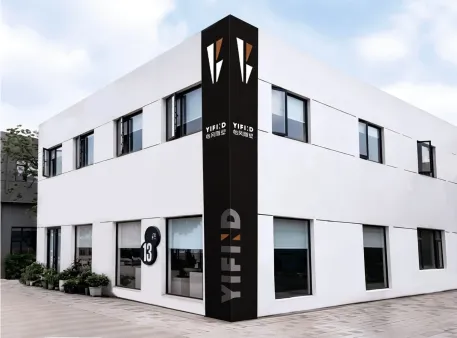
Yifeng Sculpture is a public art studio based in Ningbo, China, producing large-scale sculpture since 2003. We are one accountable team from first sketch to final bolt — creative planning, detailed design, engineering, fabrication and installation all happen in-house, so the artwork you approve is the artwork you receive. Our studio pairs sculptors with structural and mechanical engineers who calculate load, wind resistance and anchoring before a single panel is cut, and our founder is a Member of the Royal Society of Sculptors (UK).
We fabricate in stainless steel, bronze, aluminium, forged and cast metal, delivering monumental, kinetic, memorial and custom commissions for urban parks, commercial districts, transit hubs and campuses — from a single plaza piece to landmark works tens of metres in scale. For overseas clients we manage fully insured door-to-door logistics, send our own installation crew to site, and back every work with material certificates, a care guide and after-sales conservation.
Why a Commercial Sculpture Is a Business Decision First
The first question on a commercial job is not what the piece should look like. It is what the site needs the piece to do. A retail entrance needs recognition from a moving car; a hotel forecourt needs arrival, a moment of ceremony before the door; a workplace lobby needs something that photographs well and does not read as a corporate logo in three dimensions. Settle that sentence first and the form, the material palette and the lighting brief follow quickly and cheaply.
This framing also protects the client from the most expensive mistake in the category, which is buying a sculpture as furniture. A piece selected from a showroom because it suits a colour scheme is usually the piece nobody remembers, and it tends to be replaced early. A piece designed around the way visitors arrive, park and queue becomes part of the building's identity, which is the only reason a commercial artwork is worth commissioning rather than decorating with a planter.
| Site type | Job the piece has to do | Material direction | Service implication |
|---|---|---|---|
| Retail entrance | Recognition from the approach road | Polished stainless or bright painted steel | Frequent cleaning, high-contact zones |
| Hotel forecourt | Arrival and ceremony under vehicle headlights | Bronze, patinated steel or stone base | Seasonal cleaning, patina care |
| Workplace lobby | Backdrop, seating edge, photography point | Brushed metal, timber, integrated light | Dust control, lighting checks |
| Mixed-use plaza | Meeting point and place marker | Kinetic stainless or light installation | Mechanical and control checks |
| Transit or car park edge | Wayfinding and screening of hard edges | Painted steel, perforated screens, lighting | Graffiti removal, recoating cycles |
Commercial Sculpture on Retail, Hospitality and Workplace Sites
Different client types put pressure on different parts of the work, and knowing which pressure you are under saves a great deal of argument later. A developer selling or leasing space needs images and a story before completion. An operator who will run the building for fifteen years needs something that survives cleaning contractors, delivery vans and late-night crowds. Both are legitimate, but they lead to different specifications, and a brief that does not name which one you are is a brief that will be reinterpreted by whoever shouts loudest.
- Brand and recognition: the silhouette should be describable in one sentence, because that is how visitors, drivers and photographers will use it.
- Lines of sight: we model the piece against the approach speed, whether that is a pedestrian turning a corner or a car at forty kilometres an hour.
- Integrating with the base build: fixings, power and drainage are reserved in the structure rather than patched in after the paving is laid.
- Lighting as part of the sale: a large share of commercial value is realised after dark, so the night appearance is designed, not added.
- Commercial documentation: certificates, drawings and a service schedule that the facilities or leasing team can actually file and use.
The practical benefit of planning around these five points is that the artwork stops competing with the building. When a piece is chosen to fill a corner, it usually fights the architecture it sits against; when it is designed for a specific sightline under a specific light, it tends to make the surrounding materials look more considered than they are. Clients notice this effect in leasing photography long before they can explain it.
Durability Where the Public Is Hard on Everything
A commercial site is a harsher environment than a sculpture park. Deliveries reverse into things, trolleys scrape, crowds lean, and cleaning teams work to a schedule rather than to a care plan. Grade 316 stainless steel is the sensible baseline near salt water or heavy de-icing salt, with 304 or a properly prepared painted steel acceptable inland. Finishes that hide handling, such as a fine brushed grain or a textured coating, hold up far better than a mirror polish that shows every contact mark.
Design details decide the rest. A base that can be bumped without showing paint loss, a plinth edge that discourages skateboarding without looking hostile, a drainage path that stops water pooling around the fixing, and an anti-graffiti system agreed with the cleaning contractor before handover: these are small decisions that separate a piece which still looks new after a decade from one that is quietly removed. We also specify sacrificial and easily replaceable elements wherever the public will touch the work.
Running a Commercial Sculpture Commission Under a Construction Programme
- Brief and scope: we agree what the piece must do, who signs off and which programme dates are immovable before design starts.
- Concept and site survey: the proposal is drawn against measured site conditions, sightlines and the position of reserved services.
- Sample and approval: finish samples and a structural outline are approved in writing so the fabrication team is working to a fixed reference.
- Fabrication and delivery: the work is trial assembled in the workshop, packed for its route and delivered into a booked installation window.
- Handover and service: the site team receives as-built drawings, materials records and a written routine covering cleaning, inspection and touch-up.
Most commercial schedule damage happens when artwork is treated as the last item on the list and the paving or the shopfront is already finished. Brought in at enabling stage, the piece can share the crane, the scaffolding and the power supply that are already on site, and the installation becomes an afternoon rather than a small project of its own. That is a coordination argument, not an artistic one, but it is the argument that convinces programme managers.
The Studio Behind the Work
Serving developers, hotel groups and public realm teams since 2003
More than 3000 completed works delivered
Projects installed in 23 countries
Design, engineering and installation handled under one roof
What Buyers Most Often Get Wrong
The most common error is briefing by mood board. A folder of images tells a studio what a client likes but not what the site requires, and if the studio is honest it will say so; if it is not, it will simply copy the nearest reference and the result will look borrowed. A better brief describes the visitor, the season, the light, the camera angle that matters and the moment the piece is meant to mark.
The second error is leaving the maintenance conversation until the end. Commercial assets are judged by how they age, and a piece with no named owner and no written routine will drift within two seasons. We ask who will clean it, with what, how often, and who holds the spare parts, because a client who can answer those questions has effectively specified the durability of their own artwork without paying anything extra for it.
A third mistake is designing only for the opening photograph. Commercial sites are judged on ordinary weekdays, in rain, under street lighting, with a delivery van parked exactly where the rendering showed open paving. We build a small model and test it against those conditions instead: the silhouette at dusk, the surface after a wet week, the piece seen at an angle by somebody looking for a parking space. Whatever still works under that scrutiny is the version worth building, and it usually costs less than the version that only works in a brochure.
How to Brief and Evaluate a Commercial Sculpture Studio
Ask three questions and listen for specifics rather than adjectives. Who carries the structural responsibility, and can they show a load path for the base? How will the finish be approved, and what happens if the approved sample cannot be achieved at full scale? Who will be on site for commissioning, and what does the studio leave behind when it drives away? Studios that answer these easily usually turn out to have answered them many times before.
Experience in this category is a matter of volume and repetition rather than certificates. Our designers and engineers work with the academic traditions of Tsinghua Academy of Fine Arts, China Academy of Art and the Royal Society of Sculptors, which is useful mainly because it makes a team rigorous about material behaviour and about testing before delivering. More than a decade of overseas installation has taught the same lesson from the other end.
You can see how the four-step process from consultation to installation runs on our services page, and a 12.8-metre interactive landmark built for a commercial plaza is documented as Hello Conch. Commercial and public commissions sit together in the project gallery.
Send us the site plan, the arrival sequence and the dates you cannot move, and we will tell you plainly what a commercial sculpture can do for that location, what the base has to carry and how it should be looked after once your team takes over. Commissioned as part of the build instead of after it, a commercial sculpture stops being a decorative line in the budget and becomes an asset the site is known by.
Featured Products
Collection about Us
User Reviews
What users say about Us
Frequently Asked Question
Do you have any question?
Commercial projects usually move faster and involve brand and marketing stakeholders alongside designers, while civic projects add committees and public review. The artwork brief is similar in both; the approval path is not, and the schedule should be built around it.
That the concept fits the brand and the site, that the structure and foundation are engineered for the location, and that fabrication can be sequenced with the opening date. Developers should also confirm who owns the design rights and how the piece will be maintained.
We follow four steps: Consultation to understand the brand and site, Concept Development with drawings and models, Fabrication in our workshop, and Installation coordinated with the project's opening. Each step ends with the client's approval before we move forward.
Large pieces are fabricated in sections, protected and packed for container shipping, then assembled on site with engineered connections. We plan the lift, the anchor points and the site access in advance so installation fits into a tight commercial handover schedule.