
Features
Why Choose Us?
Full In-House Control
Design, engineering, fabrication and installation under one roof — one team, one contact, no outsourcing gaps.
Verifiable Engineering
Engineers calculate load, wind and anchoring; every steel and alloy batch ships with mill certificates.
Any Scale, Any Material
Stainless steel, bronze, aluminium, forged and cast metal — from a single plaza piece to landmark scale.
Worldwide Installation
Fully insured door-to-door logistics, our own crew on site, and material certificates with a maintenance guide.
We Have The Best Solutions for Your Business
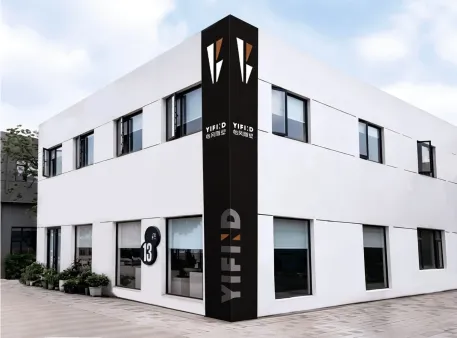
Yifeng Sculpture is a public art studio based in Ningbo, China, producing large-scale sculpture since 2003. We are one accountable team from first sketch to final bolt — creative planning, detailed design, engineering, fabrication and installation all happen in-house, so the artwork you approve is the artwork you receive. Our studio pairs sculptors with structural and mechanical engineers who calculate load, wind resistance and anchoring before a single panel is cut, and our founder is a Member of the Royal Society of Sculptors (UK).
We fabricate in stainless steel, bronze, aluminium, forged and cast metal, delivering monumental, kinetic, memorial and custom commissions for urban parks, commercial districts, transit hubs and campuses — from a single plaza piece to landmark works tens of metres in scale. For overseas clients we manage fully insured door-to-door logistics, send our own installation crew to site, and back every work with material certificates, a care guide and after-sales conservation.
Why Commissions Stall Without It
Most stalled art commissions we are called into fail for ordinary reasons, not artistic ones. The brief said something different to every stakeholder, so each review reopened the concept. The artist was selected late, after the structural grid and the landscape levels were frozen, so every fixing point became a negotiation. Nobody owned the interface between the artwork and the civil works, so the foundation arrived without anchors. The approvals path was assumed rather than mapped, and a single objector reopened a permit everyone thought was settled. None of these is a design failure; all of them are process failures.
Consulting exists to remove exactly these failures before they cost anything. A consultant's job is to write down what success means, test it against the site, identify who must approve what and when, and select a maker whose capabilities match the technical ambition. Done early, this work is a fraction of the cost of the artwork itself; done late, the same questions arrive as variation orders, redesigns and programme risk charged at construction rates.
| Stage | What consulting settles | What goes wrong without it |
|---|---|---|
| Brief definition | Purpose, audience, themes and success criteria written once and signed | Every review reopens the concept and the design never stabilises |
| Site study | Sightlines, approaches, wind, services and fixing zones documented | The piece lands where the structure allows, not where it reads best |
| Maker selection | Shortlist judged on built work, engineering depth and delivery record | A beautiful concept arrives with no studio able to build it safely |
| Approvals mapping | Stakeholders, permit steps and review gates sequenced before design starts | A late objection reopens work everyone believed was finished |
| Delivery interfaces | Foundations, power, lighting and installation access assigned to owners | Gaps surface on site and are closed at emergency rates |
What Public Art Consulting Actually Covers
The scope is broader than most clients expect, because a commission touches more disciplines than the artwork itself. Our advisory work on a typical engagement runs across the full front end of the project and hands a clean package to the delivery phase. The components below are the ones that consistently change outcomes, in roughly the order they need to be settled.
- Brief translation: converting boardroom language into a written commission document that artists and engineers can both price against.
- Site and sightline studies: testing candidate locations at eye level, from approach roads and from surrounding buildings.
- Maker and method selection: matching the concept's technical demands to studios with proven fabrication depth.
- Stakeholder alignment: mapping who reviews, who approves and who maintains, so no gate is discovered late.
- Procurement readiness: documentation shaped so the tender or direct award proceeds without rework.
Choosing the Right Studio or Artist — and Knowing the Difference
A recurring mistake in commissioning is treating every maker as interchangeable. A gallery artist produces concepts that may never have met a wind load; a fabricator without design depth executes faithfully and questions nothing; a full studio does both. For work that stands in the public realm, carries structural loads or integrates lighting and movement, the fabrication capability is not a detail — it is the difference between a concept that gets built and a concept that gets value-engineered into something else entirely.
We are candid with clients about where our own model fits. Yifeng Sculpture Studio designs, engineers and fabricates under one roof, and our collaborations with academics and internationally exhibiting artists connected to the Tsinghua Academy of Fine Arts, the China Academy of Art and the Royal Society of Sculptors keep the conceptual side as strong as the technical side. When a client needs an independent artist's voice, consulting is where that decision gets made deliberately instead of by default.
From Recommendation to a Real Built Landmark
The clearest way to describe the value is through outcomes we have watched develop from the first meeting. A waterfront client came to us with a wish for an interactive landmark and a shortlist of three ideas that all exceeded what the site's structure could carry. The consulting phase — a site study, a fixing strategy agreed with the civil engineer and a concept direction sized to reality — produced a twelve-point-eight-metre interactive landmark, delivered as Hello Conch, that became the district's recognisable image without a single late redesign.
That pattern repeats. When the thinking happens before the contract is signed, the fabrication phase is calm and the installation phase is boring, which is precisely what a client should want. Every dramatic story we have heard from clients about previous projects — crane surprises, welding on site in the rain, a concept value-engineered beyond recognition — traces back to a decision that consulting would have made months earlier.
How Consulting Fits the Four-Step Delivery Process
Our standard delivery sequence runs Consultation, Concept Development, Fabrication, Installation, and advisory work concentrates in the first two steps while de-risking the last two. The list below shows where the consulting mindset reaches into each step and what it hands forward to the next one.
- Consultation: the brief, the site realities and the stakeholder map are fixed in writing before anyone draws.
- Concept Development: the design direction is tested against structure, materials and approvals as it evolves.
- Fabrication: the specification written during consulting becomes the benchmark the workshop works to.
- Installation: access, lifting and interfaces agreed early arrive as a sequence, not as discoveries.
- Handover: record drawings and maintenance notes close the loop the brief opened.
The Studio Behind the Advice
Advising and building for public settings since 2003
More than 3000 completed works delivered
Projects across 23 countries
Consulting grounded in our own fabrication floor, not in theory
Advisory or Full Delivery: Choosing the Engagement Shape
Clients usually arrive believing they must choose between hiring an independent advisor and going straight to a studio. In practice the engagement has three useful shapes. Advisory-only suits public bodies that must run their own tender: the consultant writes the brief, the site study and the selection criteria, then steps back. Advisory-then-build suits private developers who want the same team that shaped the strategy to carry it through fabrication and installation. And rescue engagements suit projects already in trouble, where the first task is an honest audit of what has actually been agreed so far — because in our experience the paperwork rarely says what the meetings assumed it said.
The choice matters less than the timing. Public art consulting engaged before the site design freezes can move a fixing zone, reserve a power supply or relocate a plinth at the cost of a line on a drawing. Engaged after, the same advice becomes a negotiation with concrete that has already been poured. We tell every prospective client the same thing: the advisory phase is cheapest twice — at the very beginning of the project, and as a rescue after things have gone wrong. Only one of those two moments leaves the landmark intact.
What the first weeks of an engagement look like is worth knowing as well. We walk the site with the client and the landscape or structural engineer, photograph the approaches at the hours the space is used, read the approvals history, and come back with a written reading of the place and a short set of directions the commission could take. No artwork yet — just a shared, documented understanding of what the site allows and what the client needs. That single document is what every later decision refers back to, and it is why well-consulted projects almost never argue about taste in their final month.
What a Client Should Walk Away With
A consulting engagement is only worth its fee if it ends in documents, not opinions. At the end of our advisory work a client holds a written brief with success criteria, a site study with a recommended location and its fixing logic, a materials and structural strategy outline, a mapped approvals path, and a delivery sequence with interfaces assigned by name. Those five items are what allow the artwork phase to proceed at full speed, and they are what protect the client if any team member changes mid-project.
Just as important is what the client stops carrying: the ambiguity that made every meeting reopen old ground, and the unowned risks that would otherwise surface during installation. The services behind this process, from advisory through build, are set out on our services page, and completed commissions of every type sit in the project gallery.
If you are holding an ambition that has not yet become a commission, bring it to us while the site is still a drawing. Early public art consulting is the least expensive decision on the whole project, and the quality of every later decision — structural, artistic and procedural — compounds from it, which is why experienced clients start with public art consulting before they start with sketches.
Featured Products
Collection about Us
User Reviews
What users say about Us
Frequently Asked Question
Do you have any question?
Early — ideally when the master plan is still flexible. Locations, sight lines and even building geometry can be reserved for art at that stage, while engaging after the design is fixed usually means the artwork has to fit around decisions it should have shaped.
The consulting phase ends with a brief and a shortlist; the design and fabrication phase turns that into a built work. Because we also design and fabricate, the transition is seamless — recommendations are made by people who know what they require to build and how they stand up.
A public art strategy, site opportunities with sight-line studies, a design brief, selection criteria and a phased program. Those documents give the owner a defensible, consistent basis for decisions instead of opinions.
By preparing clear presentation materials — plans, renderings, models and explanations of intent — and by framing the artwork's public benefits in terms reviewers can evaluate. We cannot decide for a committee, but a well-prepared case shortens the path considerably.