

Features
Why Choose Us?
Full In-House Control
Design, engineering, fabrication and installation under one roof — one team, one contact, no outsourcing gaps.
Verifiable Engineering
Engineers calculate load, wind and anchoring; every steel and alloy batch ships with mill certificates.
Any Scale, Any Material
Stainless steel, bronze, aluminium, forged and cast metal — from a single plaza piece to landmark scale.
Worldwide Installation
Fully insured door-to-door logistics, our own crew on site, and material certificates with a maintenance guide.
We Have The Best Solutions for Your Business
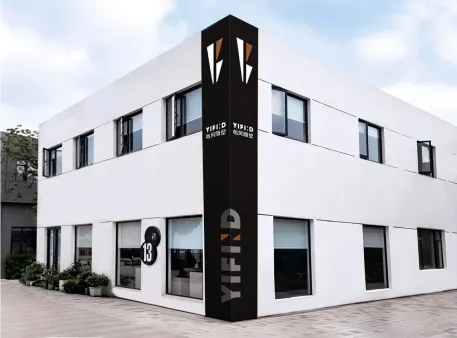
Yifeng Sculpture is a public art studio based in Ningbo, China, producing large-scale sculpture since 2003. We are one accountable team from first sketch to final bolt — creative planning, detailed design, engineering, fabrication and installation all happen in-house, so the artwork you approve is the artwork you receive. Our studio pairs sculptors with structural and mechanical engineers who calculate load, wind resistance and anchoring before a single panel is cut, and our founder is a Member of the Royal Society of Sculptors (UK).
We fabricate in stainless steel, bronze, aluminium, forged and cast metal, delivering monumental, kinetic, memorial and custom commissions for urban parks, commercial districts, transit hubs and campuses — from a single plaza piece to landmark works tens of metres in scale. For overseas clients we manage fully insured door-to-door logistics, send our own installation crew to site, and back every work with material certificates, a care guide and after-sales conservation.
Why a Memorial Sculpture Is Different from Every Other Commission
Most public art is judged by how it animates a space; a memorial sculpture is judged by how it holds a feeling. The audience is not the casual passer-by alone but the family who returns each year, the veteran who stands in silence, the school group who arrives knowing nothing and leaves knowing something. That changes the designer's task: the piece must not compete with grief but frame it, must not dictate one interpretation but allow many, and must age into gravity rather than out of relevance. A flashy form can win a rendering review and still fail the people it was built for.
This is why we begin remembrance commissions with listening rather than drawing. The stories we are told — by committees, families, veterans' groups or city historians — usually contain the form. A memorial about departure might live in a gesture of leaving; one about loss might live in an absence rather than a figure. We have found that the honest detail, drawn from a real account, moves people in a way that heroic abstraction never does, and it also protects the design from the generalities that make so many memorials feel interchangeable.
| Dimension | Decorative public art | Memorial sculpture | Why it matters |
|---|---|---|---|
| Primary audience | General public, casual encounters | Families, survivors, returning visitors | Design must reward repeated, personal visits |
| Brief | Site identity, visual interest | Remembrance, dignity, shared meaning | The story drives the form, not the reverse |
| Tone | Bold, playful or striking | Restrained, layered, enduring | Loud forms rarely carry grief well |
| Decision makers | Developer or city, one review | Committees, families, agencies over time | Process and consensus management matter |
| Lifetime duty | Look good for its first decade | Stay legible and cared-for indefinitely | Materials and access are ethical choices |
Designing for Emotion, Ceremony and Everyday Use
A memorial lives two lives at once: the ceremonial one on anniversaries, and the quiet one on ordinary Tuesdays. The site plan has to serve both. There must be a place to stand with a wreath, a path that allows approach without forcing it, seating that invites lingering, and a threshold that tells the visitor the ground has changed. We design these movements as carefully as the form, because a memorial that cannot host a small ceremony, or that frightens a passer-by into crossing the street, has missed its purpose.
- The approach: a gradual transition from street to site, so arrival feels deliberate rather than accidental.
- The gathering space: hardscape sized for a ceremony of dozens and comfortable for a visitor of one.
- The focal moment: one clear act the visitor performs — pausing, touching a name, looking through a form — that makes the memory physical.
- The inscription: typography chosen and sized for real reading, placed where light and angle actually allow it.
- The long years: materials, drainage and access designed so the site can be maintained with dignity by ordinary crews.
One remembrance commission we built, documented as Vanishing Memories, carried its subject through dissolving forms rather than through any literal figure — visitors bring their own faces to it, which is precisely why it still works. Other remembrance and heritage pieces sit in the project gallery.
The hardest discipline in remembrance work is knowing when to stop. Every additional gesture dilutes the one that matters, so we edit relentlessly: one central act, one inscription, one material voice. Contrast is handled the same way — a polished surface beside a rough one says more than five surfaces competing — and silence in the composition, the empty ground around the form, does work that ornament cannot. Visitors rarely name these decisions, but they feel them, and committees see it in how people behave on the site within its first month.
Materials, Patina and the Ethics of Permanence
Material choice in remembrance work is an ethical decision, not just a technical one. Bronze is chosen when a slowly deepening patina belongs to the story; stainless steel when the piece must stay bright and legible with minimal intervention, using grade 316 near salt water and 304 inland; stone when mass and permanence are the message. Every material is specified for the site's real exposure, every dissimilar-metal joint is isolated, and drainage is detailed so water never leaves stains where the public stands closest.
We also plan for the hands. Memorials are touched — names are traced, surfaces worn smooth — and that contact is a feature to be designed for, not prevented. Where touching will happen we select and finish surfaces that improve with contact; elsewhere we protect what needs protecting. Maintenance notes, record drawings and touch-up materials are handed over so the caretakers never have to guess, because a memorial that falls into neglect tells exactly the wrong story about how much the place cared.
Security and stability are part of the same ethic. Anchors are specified against the real soil and the real wind, not against optimism; fixings in public reach are tamper-resistant; and the piece is detailed so that nothing loose, sharp or climbable is offered to the small percentage of visitors who will test it. These are unromantic sentences in a romantic brief, but they are what allow the romantic parts to survive, and every caretaker who inherits one of our memorials inherits them as drawings rather than as folklore.
Working with Committees, Families and Public Agencies
Remembrance projects rarely have a single client. A committee may answer to families, a city department, donors and veterans' organisations, each with a veto and each with a different definition of success. We have learned to treat consensus as a design material: concepts are presented in plain language, options are framed around the same core story rather than around taste, and every stakeholder sees the same material at the same time. Years of committee work have taught us that the brief is rarely wrong, but it is often unwritten — part of our job is writing it down before drawing begins.
The four-step process — consultation, concept development, fabrication, installation — gives this consensus a rhythm, with a reviewable deliverable at each stage. You can see how it is structured on our services page. For committees working to an anniversary date, the sequence also protects the calendar, because the installation and commissioning steps are planned backwards from the ceremony rather than squeezed into whatever time remains.
- Consultation: the stories are gathered and the brief is written down with every stakeholder in the room, so nothing decisive lives only in someone's memory.
- Concept development: the core account is translated into form, site movement and inscription, and issued for committee review as one package.
- Fabrication: the work is built with the material dignity the story requires, with finishes approved on site in real light.
- Installation: setting, commissioning and site reinstatement are planned backwards from the anniversary date, not forwards from hope.
The Studio Behind the Remembrance
Building public remembrance work since 2003
More than 3000 completed works delivered
Projects installed in 23 countries
Design, engineering and fabrication under one roof
What a Memorial Sculpture Should Do in Year Twenty
The truest test of remembrance work comes when the generation that commissioned it is no longer the audience. A memorial sculpture has to keep speaking to visitors who arrive without personal memory, which means the story must be carried in the form and inscription, not only in the ceremony. We design legibility for that future visitor, and we choose materials whose ageing adds weight rather than decay — patina, not decay. When a piece still draws school groups and quiet visitors decades on, the committee's patience through consensus has been repaid with interest.
If your community, agency or family is considering a memorial sculpture, send us the story, the site photographs and the date you are working toward. We will tell you honestly what the site can carry, which materials will age with dignity, and how the process will keep every stakeholder on board — because a memorial sculpture deserves the same rigour in its making that it asks of us in remembrance.
Featured Products
Collection about Us
User Reviews
What users say about Us
Frequently Asked Question
Do you have any question?
Bronze for figures and inscribed elements, granite and stone for bases, and stainless steel for contemporary forms are the standard palette. All three age gracefully outdoors, which matters because a memorial is expected to outlast everyone who commissioned it.
Inscription layout is treated as part of the design: letterforms, spacing and placement are drawn into the concept and approved as artwork, not added as an afterthought. Casting and engraving methods are matched to the material so the lettering stays legible for decades.
That the concept honors the brief, that the site and approvals are secured, that the materials and structure are specified for long-term outdoor exposure, and that a maintenance arrangement exists. Committees should also agree the approval path early so design decisions do not stall.
Design refinement with a committee usually takes the longest, because consensus deserves time. Casting and fabrication follow the approved design, and installation is scheduled around dedication dates, which the committee normally sets well in advance.