
Features
Why Choose Us?
Full In-House Control
Design, engineering, fabrication and installation under one roof — one team, one contact, no outsourcing gaps.
Verifiable Engineering
Engineers calculate load, wind and anchoring; every steel and alloy batch ships with mill certificates.
Any Scale, Any Material
Stainless steel, bronze, aluminium, forged and cast metal — from a single plaza piece to landmark scale.
Worldwide Installation
Fully insured door-to-door logistics, our own crew on site, and material certificates with a maintenance guide.
We Have The Best Solutions for Your Business
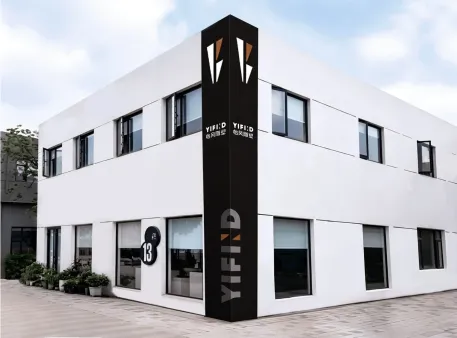
Yifeng Sculpture is a public art studio based in Ningbo, China, producing large-scale sculpture since 2003. We are one accountable team from first sketch to final bolt — creative planning, detailed design, engineering, fabrication and installation all happen in-house, so the artwork you approve is the artwork you receive. Our studio pairs sculptors with structural and mechanical engineers who calculate load, wind resistance and anchoring before a single panel is cut, and our founder is a Member of the Royal Society of Sculptors (UK).
We fabricate in stainless steel, bronze, aluminium, forged and cast metal, delivering monumental, kinetic, memorial and custom commissions for urban parks, commercial districts, transit hubs and campuses — from a single plaza piece to landmark works tens of metres in scale. For overseas clients we manage fully insured door-to-door logistics, send our own installation crew to site, and back every work with material certificates, a care guide and after-sales conservation.
How Environmental Art Is Planned Around a Site
Every environmental art commission we accept begins with the site, not the object. We walk the route at different hours, watch where people actually gather, note where wind funnels between buildings, where water pools after rain and where the evening sun lands. Only after that survey do we start drawing, because a form that ignores the way a place is already used will be walked past, photographed once and forgotten. The strongest concepts usually come from a detail the client assumed was a problem: a flood line, an awkward slope, a service corridor nobody wanted to see.
Working site-first also protects budget and programme. When a concept is fixed before the ground is understood, the project later pays for footing clashes, root protection measures, drainage rework and crane access nobody reserved. When the survey comes first, those constraints become the design brief itself, and the piece arrives with its foundations, its drainage and its maintenance strategy already agreed instead of discovered.
| Aspect | Artwork placed in a landscape | Environmental art grown from the site | What the client gains |
|---|---|---|---|
| Starting point | A catalogue form looking for a location | A site study that produces the form | A piece that fits the first time |
| Paths and views | Sited wherever space is left over | Placed on desire lines and framed views | The work is actually encountered daily |
| Ground works | Foundations designed after approval | Footings, drainage and services drawn in early | Fewer surprises during construction |
| Seasonal change | Ignored or fought against | Built into the concept as an asset | A piece that keeps offering new images |
| Local meaning | Generic and portable | Anchored in local history and use | A community that adopts the work |
The Elements a Site Study Has to Settle
A landscape is never a neutral plinth. Before we commit a form to paper we resolve the physical questions that will otherwise surface as change orders, and we put the answers in writing so the design team, the contractor and the client are all working from the same assumptions.
- Water and drainage: the piece is detailed so water leaves it and the planting around it, rather than ponding at the base or staining the plaza.
- Root zones and soil: footing positions respect tree protection areas, and foundations are sized for the soil the survey actually found.
- Wind and sun: orientation is tested against glare, prevailing wind and shadow, so the work reads well at midday and in the evening.
- Movement: the work sits on the lines people already walk, and never blocks a cycling route, an emergency access path or a ramp.
- Night use: lighting, or the deliberate absence of it, is coordinated with the landscape lighting design from the start.
None of these questions is glamorous, and all of them are cheap to answer early. The expensive versions of the same questions arrive after the concrete is poured, and they arrive wearing a variation order. We have inherited enough remedial jobs to know the pattern, which is why our site study document is issued before any concept rendering, not after the client has already fallen in love with an image that the ground cannot support.
From Consultation to Installation: The Four-Step Process
Landscape work rewards a disciplined sequence, because every stage depends on the one before it and the site will not wait. We run every environmental art commission through the same four steps, scaled to the size of the project, and we show the client exactly what each step produces before the next one begins.
- Consultation: we visit the site, listen to the brief and the community, and agree what the work must do before anyone discusses what it should look like.
- Concept development: the form is drawn from the site study, tested against views and movement, and issued with dimensions, materials and fixing strategy.
- Fabrication: the work is built in our own workshop, with finish samples approved in real light and assembly rehearsed in the yard.
- Installation: lifting, setting and commissioning follow a written sequence the site manager can plan around, with the landscape reinstated behind us.
The Studio Behind the Work
Designing and fabricating public artwork since 2003
More than 3000 completed works delivered
Projects installed in 23 countries
Design, engineering and fabrication under one roof
Materials That Age Well in a Living Landscape
Material choice in a landscape is driven by exposure and by neighbours. Grade 316 stainless steel is the sensible baseline within reach of salt water or winter de-icing salt, with 304 stainless or a correctly specified coated steel serving well inland. Weathering steel gives a rich, self-protecting surface but needs detailing that keeps its runoff away from pale paving, and bronze earns its cost where a deepening patina is part of the concept. Every connection between dissimilar metals is isolated, because a landscape keeps its joints wet for longer than a facade ever will.
Finish decides how the piece will be read for the next two decades, so we never approve one from a screen. We produce physical samples in the specified system and view them on site, at the angle and in the light the public will actually see. A fine brushed grain hides handling and rain spots far better than a mirror polish; a bead-blasted surface reads evenly in strong sun but holds pollution in traffic-heavy air. Those differences sound small until they are ten metres tall.
Longevity is also a civic question. A landscape piece is usually maintained by whoever owns the ground, often without a dedicated art budget line, so we specify systems that tolerate irregular care: finishes that survive a missed washing season, fixings that hold their torque, and geometries a grounds crew can work around without scaffolding. Clients sometimes ask why we resist a showier surface. The answer is simple: the most beautiful finish is the one that still looks intentional after fifteen summers of weather nobody planned for, and in a landscape, seasons are the harshest reviewer the work will ever face.
How Environmental Art Changes the Way a Place Is Used
A park without a distinguishing element is described by its gate number. A park with strong environmental art is described by the work: directions shorten, meeting points form, and the photograph people post does the marketing that no signage budget could buy. We have watched a riverside piece turn an under-used embankment into the town's evening walking route, and that shift happened within weeks of installation, long before any press coverage appeared. The effect compounds over years, because each season gives the work a new image and the place a new reason to be visited.
Restraint matters as much as ambition. The pieces that endure are usually the quiet ones at the scale of the whole landscape, carrying one clear idea rather than several competing gestures, with proportion tested in measured drawings at eye level and from the approach road. A work that overwhelms its setting stops being environmental art and becomes an obstacle, so we would rather remove a flourish than add a base, a step or a barrier that the site never needed.
Working With Landscape Architects, Contractors and Communities
Most of our landscape commissions arrive through design teams who already carry the site's complexity, so our job is to fit into their documentation, not to add a parallel process. We issue drawings at the stages the team needs, answer technical submittals in days rather than weeks, and coordinate footing positions with the drainage and lighting packages so no trade discovers another's work in the ground. Where a community consultation is part of the programme, we present the concept in plain language and show what it will look like from the paths people already use.
The same discipline continues after handover. We hand over record drawings, material schedules and a plain maintenance note covering cleaning intervals and fastener checks, so the facilities team inherits a plan instead of a mystery. Clients come back to us for their second and third landscapes because the first one still looks the way it did on opening day, and because nothing about owning it has turned out to be difficult.
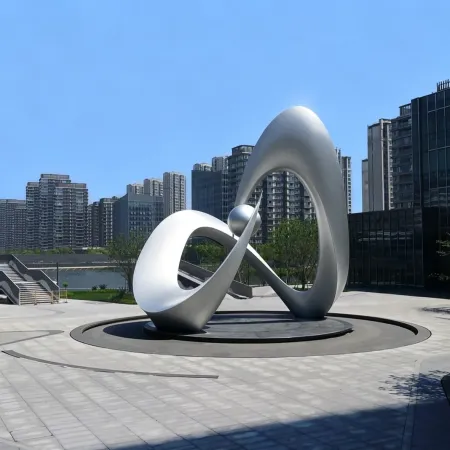
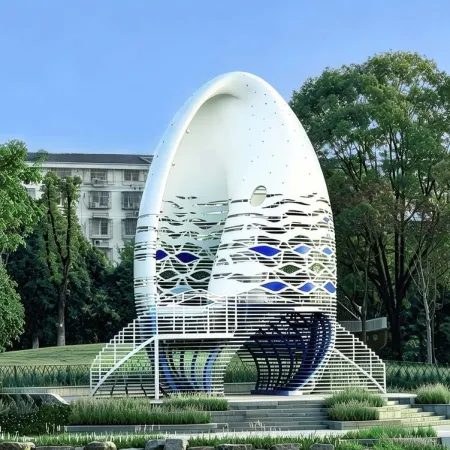
You can see how the four-step process from consultation to installation works on our services page. A riverside commission built directly out of its site study is documented as The Flow of Fenghua River, and site-led pieces of every scale sit alongside each other in the project gallery.
Send us the site plan, the photographs and the story the place wants to tell, and we will tell you honestly what environmental art can do there, what it should be made of and how it should be maintained. Handled that way, environmental art stops being decoration on a lawn and becomes the reason the landscape is remembered.
Featured Products
Collection about Us
User Reviews
What users say about Us
Frequently Asked Question
Do you have any question?
Site analysis, collaboration with landscape architects and engineers, and material choices that suit the local climate. The design has to work at two scales: the composition seen from a distance and the detail a visitor touches up close.
Weathering steel, stainless steel in 304 or 316, bronze, stone and coated aluminum are proven choices, each selected for its specific exposure. Coastal sites push the specification toward 316 stainless and hot-dip galvanized structures; shaded, damp sites need drainage designed into every joint.
Lighting is designed as part of the artwork, not added afterward, so night scenes and day scenes both work. Planting, pathways and seating are coordinated with the landscape team so the piece directs movement instead of blocking it.
Through structural checks for wind load, corrosion planning for the climate zone, and drainage and access details reviewed with the maintenance team. A piece that cannot be reached for cleaning will not stay presentable, so maintainability is part of the design, not an afterthought.