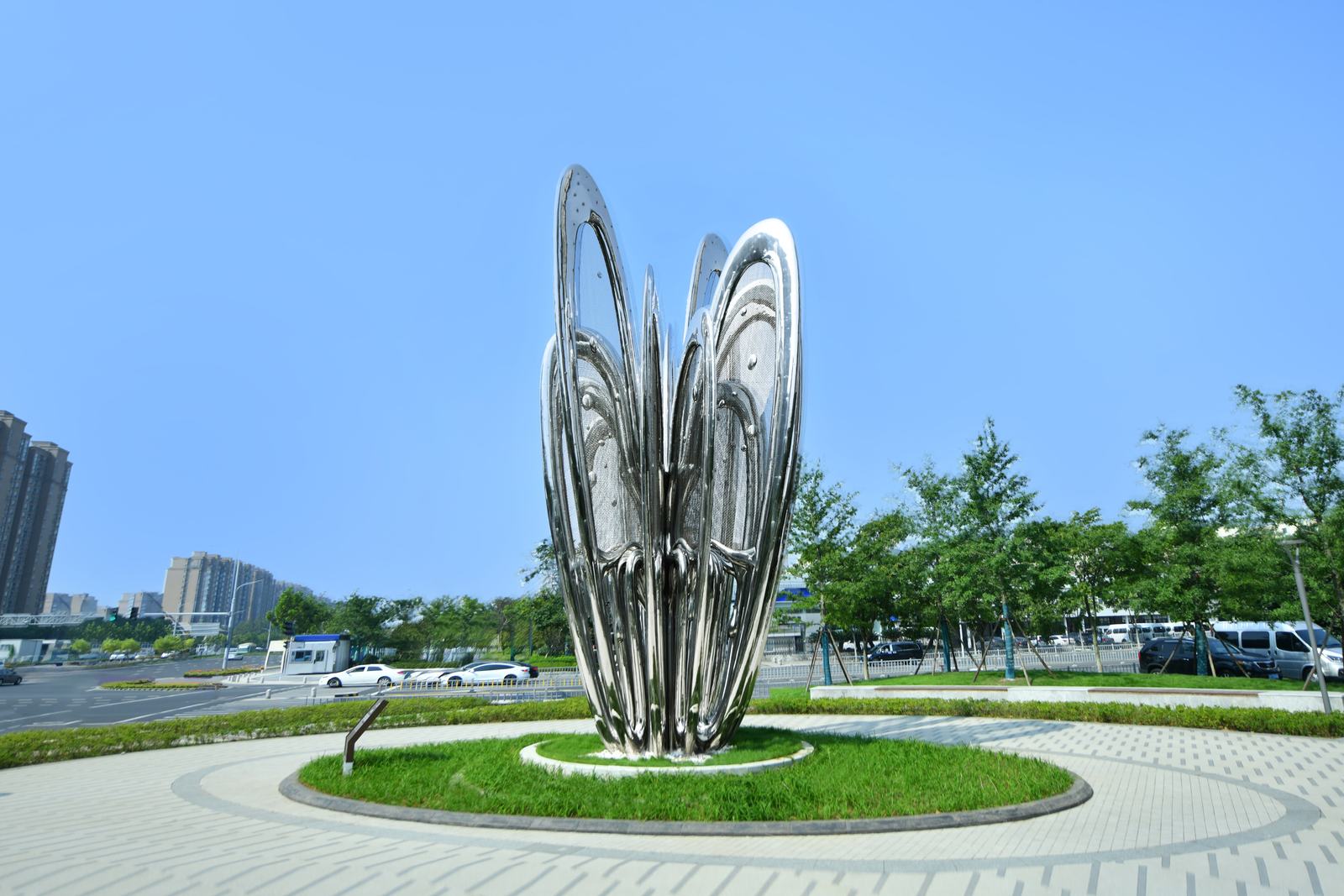
Metal Sculpture: A Complete Guide to Types, Materials, Design, Fabrication, and Applications
Metal sculpture is widely used in public spaces, commercial developments, architectural environments, gardens, cultural projects, and private landscapes. Its versatility allows artists and designers to create everything from small decorative objects to monumental outdoor installations. Through cutting, welding, casting, bending, forging, and surface finishing, metal can be transformed into complex forms that combine artistic expression with structural function.
For architects, landscape designers, property developers, public art consultants, and procurement teams, selecting a metal sculpture involves more than evaluating its appearance. Material grade, structural stability, fabrication methods, surface treatment, transportation, installation, and long-term maintenance all influence the project's success. This guide explains the main types of metal sculpture, compares commonly used materials, and outlines the key considerations for developing and manufacturing a custom metal artwork.
1. What Is a Metal Sculpture?
A metal sculpture is a three-dimensional artwork made primarily from metal materials. It can be produced as a solid object, a hollow shell, an assembled structure, or a combination of metal components and other materials. Depending on the design, the sculpture may be realistic, abstract, geometric, figurative, or architectural.
Metal sculpture is suitable for both indoor and outdoor environments. Stainless steel installations are often used in contemporary plazas and commercial spaces, bronze sculptures are common in memorial and figurative projects, and weathering steel is frequently selected for landscape environments that benefit from a natural industrial appearance. The choice of material and manufacturing process should reflect the intended use and environmental conditions.
1.1 The Main Characteristics of Metal Sculpture
Metal offers a broad range of physical and visual properties. It can be formed into thin curved panels, rigid geometric structures, detailed castings, or large assembled frameworks. Its surface can be polished, brushed, textured, painted, oxidized, or treated with specialized coatings.
Metal also provides opportunities for combining structural performance with artistic design. Hollow construction can reduce weight in large sculptures, while internal frames and reinforced connections can provide support. These characteristics make metal suitable for projects where the artwork needs to achieve a distinctive appearance without relying on a single solid mass.
1.2 Metal Sculpture for Indoor and Outdoor Applications
Indoor metal sculptures are generally installed in controlled environments such as hotel lobbies, shopping centers, museums, offices, and exhibition spaces. Their design may focus on fine surface details, reflective finishes, visual impact, and compatibility with interior materials and lighting.
Outdoor metal sculptures face more demanding environmental conditions. Rain, humidity, sunlight, temperature changes, wind, and airborne contaminants can affect material performance and surface appearance. Outdoor projects therefore require careful material selection, drainage planning, corrosion protection, and an appropriate maintenance strategy.
2. Common Types of Metal Sculpture
Metal sculptures can be classified by artistic style, construction method, function, or installation environment. Understanding these categories helps project owners communicate their design objectives and identify suitable manufacturing processes.
In many commissioned projects, the categories overlap. For example, a large abstract stainless steel sculpture may also be a site-specific public artwork, while a figurative bronze sculpture may serve as a memorial installation.
2.1 Abstract Metal Sculpture
Abstract metal sculpture uses shapes, lines, volumes, and spatial relationships rather than directly reproducing recognizable subjects. Its design may be inspired by movement, natural forms, architecture, mathematics, or conceptual ideas.
Abstract works are often selected for corporate plazas, hotel entrances, commercial landscapes, cultural venues, and modern architectural projects. Their visual impact depends on proportion, balance, negative space, surface treatment, and how the sculpture changes when viewed from different directions.
2.2 Figurative Metal Sculpture
Figurative metal sculpture represents recognizable subjects such as people, animals, plants, or historical scenes. It may be realistic or stylized, depending on the project's artistic direction.
Bronze casting is commonly used for detailed figurative works, while stainless steel and other metals can be fabricated into simplified or contemporary interpretations. The manufacturing process should preserve the intended proportions, facial details, surface textures, and overall character of the approved design.
2.3 Geometric Metal Sculpture
Geometric metal sculpture is based on structured forms such as spheres, cubes, polygons, intersecting planes, and repeated patterns. It is frequently used in contemporary architecture and landscape design because its clear geometry can complement modern buildings and organized public spaces.
Manufacturing accuracy is important for geometric works. Panel dimensions, cutting angles, bending radii, connection positions, and alignment should be controlled to maintain the intended shape. Complex geometric sculptures may require 3D modeling and detailed fabrication drawings before production.
2.4 Large-Scale Metal Sculpture
Large-scale metal sculpture is designed to create a strong visual presence in open spaces, urban developments, parks, waterfronts, and institutional campuses. These works may reach several meters in height or width and often become recognizable landmarks within their surroundings.
Large sculptures usually require structural calculations, internal support systems, modular fabrication, transportation planning, and specialized lifting equipment. The design should consider wind exposure, foundation conditions, component weight, and the route from the workshop to the installation site.
2.5 Interactive Metal Sculpture
Interactive metal sculpture is designed to encourage visitors to engage with the artwork. People may walk through it, touch selected surfaces, sit nearby, or interact with integrated mechanical or electronic features.
Because visitors may come into direct contact with the sculpture, designers should pay attention to surface temperature, edges, gaps, moving parts, stability, and accessibility. If the installation includes lighting or electronic components, the design should also account for weather protection and maintenance access.
2.6 Architectural Metal Sculpture
Architectural metal sculpture combines sculptural expression with the visual language of buildings and constructed environments. It may be installed on building entrances, facades, terraces, courtyards, or landscaped areas surrounding commercial and institutional properties.
These projects require coordination with architectural drawings and building systems. Attachment methods, structural loads, material compatibility, drainage, and access for future maintenance should be reviewed before fabrication begins.
3. Common Metals Used for Sculpture
Material selection affects the sculpture's appearance, weight, strength, corrosion resistance, fabrication complexity, cost, and maintenance requirements. No single metal is ideal for every project. The right option depends on the artistic concept, dimensions, site environment, and expected service life.
Before selecting a material, project owners should consider whether the sculpture will be installed indoors or outdoors, whether it will be exposed to coastal or industrial conditions, and how much surface maintenance is acceptable.
3.1 Stainless Steel Sculpture
Stainless steel is widely used in contemporary metal sculpture because it offers a combination of strength, formability, and corrosion resistance. It can be fabricated into curved panels, geometric structures, hollow forms, and complex assembled installations.
Different finishes create different visual effects. Mirror-polished stainless steel reflects the surrounding environment, brushed stainless steel provides a more restrained appearance, and matte finishes reduce strong reflections. The appropriate stainless steel grade should be selected according to the installation environment. Coastal and industrial locations may require more careful consideration of corrosion resistance and cleaning requirements.
Stainless steel is commonly used for public art, commercial entrances, landscape installations, architectural features, and large abstract sculptures. For related project examples, buyers can review our completed sculpture projects.
3.2 Bronze Sculpture
Bronze is a traditional sculpture material valued for its casting characteristics and ability to reproduce detailed forms. It is commonly used for human figures, animals, memorials, historical statues, and decorative artworks.
Bronze surfaces can be finished with different patinas, including brown, dark, green, and customized tones. The final appearance depends on the alloy, casting process, surface preparation, and patination technique. Outdoor bronze sculptures may develop changes in appearance over time, so the project owner should understand the expected surface behavior and maintenance requirements.
3.3 Corten Steel Sculpture
Corten steel, also known as weathering steel, is selected for its distinctive weathered appearance. Under suitable exposure conditions, the surface develops a protective oxide layer that creates a reddish-brown finish.
This material is often used in landscape sculpture, public art, architectural installations, and industrial-style outdoor environments. However, weathering steel requires appropriate site conditions and detailing. Runoff may stain nearby paving or concrete, and areas that remain continuously wet may not develop the expected protective surface. Drainage and surrounding material selection should therefore be considered during design.
3.4 Aluminum Sculpture
Aluminum is lighter than many other commonly used structural metals, making it useful for sculptures where weight reduction is important. It can be cut, bent, machined, welded, and finished in different ways.
Aluminum is used in indoor installations, outdoor artworks, suspended sculptures, and large forms that would be difficult to manufacture from heavier materials. Its surface may be anodized, painted, polished, or treated with other finishes. The design should account for its mechanical properties and the connection details required for the intended structure.
3.5 Copper Sculpture
Copper has a distinctive warm color that changes as the surface reacts with its environment. Over time, untreated copper may develop darker tones or a green patina, depending on exposure conditions.
It is used for decorative sculptures, architectural details, landscape artworks, and custom artistic installations. Copper can be shaped through sheet-metal forming, hammering, welding, and other fabrication methods. Its natural color changes may be part of the artistic concept, but the expected surface development should be discussed before production.
3.6 Mild Steel and Carbon Steel Sculpture
Mild steel and carbon steel are often used for structural frameworks, fabricated sculptures, and projects requiring customized shapes at a controlled material cost. They can be cut, welded, bent, rolled, and machined into many forms.
Unlike stainless steel, ordinary carbon steel generally requires suitable protective treatment for outdoor use. Depending on the design, protection may include primer, paint, powder coating, or another specified coating system. The project team should consider coating thickness, surface preparation, drainage, and inspection requirements.
4. How to Choose the Right Metal for a Sculpture Project
The material decision should be based on the complete project rather than appearance alone. A metal that performs well in a dry indoor environment may require additional protection in a coastal location. Similarly, a material that is suitable for a small decorative object may not be the most practical choice for a monumental outdoor structure.
Comparing material properties against the project's requirements helps avoid unnecessary cost and maintenance issues later.
4.1 Consider the Installation Environment
Start by identifying the environmental conditions at the installation site. Relevant factors include humidity, rainfall, temperature variation, sunlight, pollution, salt exposure, and the possibility of standing water.
For example, stainless steel may be suitable for many outdoor installations, but the required grade and maintenance plan depend on the exposure conditions. Corten steel may be appropriate for a landscape project where weathering is part of the intended appearance, while painted carbon steel may be suitable when a specific color is required and a maintenance plan is available.
4.2 Compare Weight and Structural Requirements
Material weight influences transportation, lifting, foundation design, and installation costs. A lightweight aluminum structure may reduce handling demands, while a heavy bronze or steel sculpture may require more substantial support and lifting arrangements.
Weight should not be considered separately from strength and stiffness. The sculpture's geometry, support system, component thickness, and environmental loads all affect structural performance. For large or publicly accessible works, qualified engineering review should be included in the project scope.
4.3 Evaluate Surface Appearance and Finish
Metal materials offer different visual characteristics. Stainless steel can create reflective or understated surfaces, bronze provides a traditional sculptural appearance, and weathering steel offers a natural oxidized finish. Aluminum can be treated to achieve a range of colors and surface effects.
When appearance is important, request physical finish samples or approved reference panels. Digital renderings are useful for concept development, but they may not accurately represent reflections, texture, color variation, or the way a finish changes under outdoor lighting.
4.4 Review Maintenance and Lifecycle Costs
The initial material price is only one part of the total cost. Cleaning, coating renewal, corrosion inspection, surface repairs, and access equipment may add to long-term expenses.
A material with a higher initial cost may be appropriate when it reduces maintenance demands or better matches the environmental conditions. Buyers should compare expected maintenance requirements over the sculpture's intended service life rather than focusing exclusively on the purchase price.
5. Metal Sculpture Design and Concept Development
Metal sculpture design transforms an artistic idea into a form that can be manufactured, transported, and installed. The process should consider visual composition and technical feasibility together, particularly when the sculpture has complex geometry or large dimensions.
Early communication between the artist, design team, manufacturer, and engineering professionals can help identify potential fabrication challenges before they affect the production schedule.
5.1 Define the Artistic Concept and Purpose
Begin by identifying the message, theme, or experience that the sculpture should communicate. The concept may be inspired by nature, movement, local culture, architecture, technology, or an abstract idea.
The intended audience and location should influence the design direction. A sculpture for a corporate entrance may need a different visual language from an artwork in a public park or cultural district. A clear project brief should describe the concept, approximate dimensions, preferred materials, and intended installation environment.
5.2 Develop the Form, Proportion, and Composition
Form and proportion determine how the sculpture is perceived. Designers should consider its overall height, width, depth, visual balance, negative spaces, and relationship with nearby buildings or landscape elements.
For sculptures intended to be viewed from multiple directions, the design should be evaluated from different angles. A form that looks balanced in a front elevation may appear too heavy or visually disconnected from the side. Three-dimensional models and site renderings help identify these issues before fabrication.
5.3 Consider Material Thickness and Construction
The material thickness and internal construction method influence the sculpture's weight, stiffness, appearance, and fabrication cost. Thin metal panels can create lightweight visual forms, but they may require internal reinforcement or carefully designed supports to maintain their shape.
For large hollow sculptures, the manufacturer may use an internal frame, ribs, brackets, or a modular structure. The construction should support the intended form without introducing visible elements that compromise the artistic design.
5.4 Use 3D Modeling for Complex Forms
3D modeling helps translate complex geometry into measurable components. It allows the design team to review dimensions, curves, intersections, assembly relationships, and potential production issues before material is cut or formed.
For customized metal sculpture projects, digital models can also support the preparation of cutting files, fabrication drawings, templates, and assembly references. However, the model should be checked against real manufacturing capabilities and installation conditions rather than treated as a complete substitute for technical review.
6. Metal Sculpture Fabrication Processes
Metal sculpture fabrication involves several manufacturing processes, and the appropriate combination depends on the material and design. A simple geometric sculpture may require sheet cutting, bending, and welding, while a detailed bronze figure may require modeling, mold making, casting, and finishing.
Understanding the main processes helps buyers evaluate production proposals and discuss quality requirements with a sculpture manufacturer.
6.1 Metal Cutting
Cutting separates metal sheets, plates, bars, or profiles into the required shapes. Depending on material thickness, geometry, and tolerance requirements, manufacturers may use laser cutting, plasma cutting, waterjet cutting, sawing, or other methods.
Accurate cutting is important for sculptures with repeated components, intersecting panels, or tightly controlled joints. The cutting process should be selected according to the material and required edge quality. Additional grinding or edge preparation may be necessary before assembly.
6.2 Bending and Forming
Bending and forming transform flat metal into curved or angled components. These processes are commonly used for abstract sculptures, flowing forms, cylindrical structures, and geometric artworks.
The achievable shape depends on material properties, thickness, bending radius, tooling, and machine capacity. Complex curved surfaces may require several forming operations or custom templates. Prototype components can help verify the intended shape before full production.
6.3 Welding and Assembly
Welding joins metal components into a larger structure. It is widely used in fabricated sculptures made from stainless steel, carbon steel, aluminum, and other weldable metals.
Weld positioning and finishing are important because joints may remain visible on the final artwork. For polished or exposed surfaces, grinding and polishing should be coordinated with the welding sequence to maintain a consistent appearance. Large structures may require temporary fixtures to control alignment during assembly.
6.4 Metal Casting
Casting is used to produce solid or hollow metal forms, especially when the design includes detailed organic shapes or complex three-dimensional surfaces. Bronze sculpture commonly uses casting processes to reproduce modeled forms.
The casting process generally involves creating a model, preparing a mold, pouring molten metal, removing the casting, and completing surface finishing. Large cast sculptures may be divided into sections that are joined after casting. Inspection should cover surface details, casting defects, joints, and overall dimensions.
6.5 Forging and Hand Forming
Forging and hand-forming methods are used when the sculpture requires shaped metal components with a crafted appearance. These techniques can produce textured surfaces, organic forms, and distinctive details that may not be achieved through standard sheet fabrication alone.
The choice depends on the artwork's design, material, production quantity, and required finish. Some projects combine hand-forming with modern cutting, machining, and welding to achieve the intended result.
6.6 Surface Treatment and Finishing
Surface treatment determines the final appearance and can also contribute to environmental protection. Common options include mirror polishing, brushing, sanding, patination, painting, powder coating, and protective clear coatings.
The finish should be specified clearly before production. Buyers should identify the expected color, gloss level, texture, and acceptable variation. For large sculptures, the manufacturer should also establish how the finish will remain consistent across separate components and welded areas.
7. Quality Control for Metal Sculpture Manufacturing
Quality control should take place throughout manufacturing rather than only after the sculpture is complete. Early checks can identify dimensional errors, material issues, or assembly problems before they become expensive to correct.
Inspection requirements should reflect the sculpture's complexity and intended application. A small decorative piece may need fewer technical checks than a large outdoor installation with structural and public-access requirements.
7.1 Material Verification
Material verification confirms that the metal used in production matches the approved specification. Relevant information may include material grade, thickness, dimensions, and supplier documentation.
This is especially important when the sculpture will be installed outdoors or when different metals are used in the same structure. Substituting materials without approval may affect corrosion resistance, appearance, structural behavior, and long-term maintenance.
7.2 Dimensional and Assembly Inspection
Dimensional inspection checks whether the finished components match the approved drawings and tolerances. For modular sculptures, the manufacturer should verify that individual sections fit together correctly and that connection positions align.
Trial assembly may be useful for large or complex works. It allows the production team to check the overall geometry, component alignment, joint positions, and assembly sequence before the sculpture is packed for transportation.
7.3 Welding and Surface Quality Inspection
Welds should be inspected according to the project's technical requirements. The review may consider weld continuity, visible defects, joint alignment, and whether the finished connection is suitable for the intended structural and visual function.
Surface inspection should check for scratches, dents, uneven polishing, coating defects, color variation, and visible finishing inconsistencies. Approved samples and drawings provide a reference for evaluating the completed work.
8. Applications of Metal Sculpture
Metal sculpture is used in many environments because it can be adapted to different scales, styles, and functions. Its application may be primarily artistic, architectural, commemorative, or decorative, and some projects combine several purposes.
The installation environment should guide the selection of material, dimensions, finish, and construction method. The following applications illustrate how metal sculpture can contribute to different types of projects.
8.1 Public Parks and Urban Plazas
Metal sculpture can create focal points in parks, plazas, pedestrian areas, and civic spaces. Large abstract forms may help define gathering areas, while figurative or symbolic sculptures can communicate local history and cultural identity.
Outdoor projects should account for weather exposure, pedestrian movement, public interaction, foundation design, and maintenance access. The artwork should complement the surrounding landscape without obstructing circulation or essential site functions.
8.2 Commercial Developments and Shopping Centers
Commercial developments use sculpture to create recognizable entrances, enhance public areas, and strengthen the visual identity of a property. Sculptures may be installed in outdoor plazas, landscaped courtyards, building entrances, or indoor atriums.
Material and finish selection should reflect the architectural style and expected visitor experience. Reflective stainless steel may complement a contemporary development, while a more textured or colored finish may support a distinctive design concept.
8.3 Hotels and Hospitality Environments
Hotels, resorts, and hospitality developments often use sculpture to create memorable spaces for guests. Metal artworks may be placed in reception areas, gardens, courtyards, poolside environments, and entrance landscapes.
Indoor installations may emphasize refined surface quality and compatibility with interior finishes. Outdoor works need to withstand environmental exposure and regular cleaning. The design should also consider guest circulation, visibility, and the relationship between the sculpture and nearby amenities.
8.4 Corporate Campuses and Office Buildings
Corporate campuses may use metal sculpture to communicate organizational identity, innovation, or a particular design philosophy. Installations can be placed at building entrances, courtyards, landscaped walkways, and shared outdoor spaces.
These projects often require coordination with architecture, landscape design, lighting, and site infrastructure. The sculpture's dimensions and foundation details should be confirmed before surrounding paving and landscape construction are completed.
8.5 Museums, Cultural Venues, and Memorial Sites
Museums and cultural institutions may commission metal sculpture for exhibitions, outdoor grounds, public programs, or permanent installations. Memorial projects may use bronze, stainless steel, or other metals to create lasting commemorative works.
For these applications, the artistic concept and contextual meaning are especially important. The project team may also need to coordinate with historians, curators, community representatives, or conservation specialists, depending on the subject and location.
9. Outdoor Metal Sculpture: Durability and Maintenance
Outdoor metal sculpture must be designed to withstand environmental conditions throughout its intended service life. Material selection is important, but durability also depends on detailing, fabrication quality, drainage, protective finishes, and maintenance.
There is no universal maintenance schedule for every metal sculpture. The project owner should follow material-specific recommendations and adjust inspection frequency according to the location and exposure conditions.
9.1 Prevent Corrosion and Surface Deterioration
Corrosion protection depends on the selected metal and the surrounding environment. Stainless steel relies on its corrosion-resistant properties, but surface contamination and unsuitable exposure can still create maintenance concerns. Carbon steel generally needs a suitable coating system for outdoor applications.
For painted or coated sculptures, surface preparation and coating quality are important. Damaged areas should be inspected and repaired according to the coating manufacturer's recommendations. For mixed-metal structures, connection details should also consider the risk of galvanic corrosion where dissimilar metals are in contact.
9.2 Design for Drainage and Moisture Management
Water trapped inside hollow sections or around connections can contribute to corrosion and deterioration. The sculpture should be designed with suitable drainage, sealed joints, or ventilation details where appropriate.
Designers should also consider how rainwater moves across the surface. On weathering steel, runoff may leave stains on adjacent materials. On polished metal, water deposits may affect appearance and require regular cleaning.
9.3 Establish Regular Inspection and Cleaning
Routine inspection can identify scratches, coating damage, loose fasteners, corrosion, surface deposits, and changes in structural connections. Cleaning methods should be compatible with the material and finish.
Owners should avoid using aggressive chemicals or abrasive tools unless they are approved for the specific surface. For large installations, maintenance planning should include safe access for inspection and cleaning equipment.
10. Transportation and Installation of Metal Sculpture
Transportation and installation should be considered during the design and manufacturing stages. Metal sculptures may be heavy, oversized, or sensitive to surface damage, and these characteristics influence packaging, delivery routes, lifting equipment, and on-site assembly.
For large custom projects, the manufacturer and installation contractor should coordinate component dimensions, lifting points, connection systems, and assembly instructions before production is completed.
10.1 Plan Component Sizes and Shipping Requirements
Large sculptures may need to be divided into sections to meet transportation limits or site access conditions. The division should be coordinated with the design so that joints are placed in suitable locations and do not unnecessarily interrupt the visual form.
Packaging should protect polished, painted, patinated, or otherwise sensitive surfaces. Each component should be labeled clearly, and the shipment should include a packing list, handling instructions, and relevant assembly drawings.
10.2 Prepare the Installation Site
Before delivery, the installation area should be checked against the approved drawings. Foundation dimensions, anchor bolt positions, embedded plates, access routes, and lifting positions should be confirmed.
Depending on the project, the site may also require pavement protection, temporary barriers, crane access, traffic management, and coordination with other contractors. Completing these preparations before delivery can reduce installation delays.
10.3 Complete Assembly and Final Inspection
Installation may involve lifting, positioning, anchoring, bolting, welding, or connecting separate sculpture sections. The work should follow the approved assembly sequence and be carried out with suitable equipment and qualified personnel.
After installation, the team should check alignment, connections, surface condition, and stability. Any damage caused during handling should be recorded and repaired using an appropriate method before final handover.
11. How to Choose a Custom Metal Sculpture Manufacturer
Choosing a manufacturer is a major part of a custom sculpture project. The supplier must understand the relationship between artistic requirements and manufacturing limitations, especially when the design includes large dimensions, complex curves, detailed surfaces, or outdoor structural requirements.
Buyers should evaluate more than the quoted price. Relevant factors include material knowledge, fabrication equipment, craftsmanship, project management, quality inspection, packaging, and installation coordination.
11.1 Review Previous Metal Sculpture Projects
Ask the manufacturer to provide examples of completed work involving similar materials, sizes, and construction methods. Review the overall proportions, surface quality, joint details, and consistency between the approved design and finished product.
For outdoor projects, it is useful to examine installations that have been exposed to real environmental conditions. This can provide insight into the manufacturer's approach to material selection, finishing, drainage, and long-term performance.
11.2 Confirm Design and Fabrication Capabilities
Determine whether the manufacturer can support 3D modeling, technical drawings, cutting, bending, welding, casting, polishing, coating, and assembly. Not every supplier provides all these processes, so the scope should be clarified before the project begins.
Ask how the manufacturer handles complex geometry, large components, custom finishes, and production changes. A clear technical review process can help identify potential problems before they affect the final artwork.
11.3 Check Quality Control and Project Coordination
A reliable supplier should be able to explain how materials are verified, dimensions are inspected, welds are checked, and surface finishes are approved. For complex projects, buyers may also request progress photographs, sample approvals, and trial assembly records.
Communication is equally important. The manufacturer should be able to coordinate with the client, designer, architect, and installation contractor regarding drawings, revisions, production milestones, and delivery requirements.
11.4 Compare Quotations Based on the Complete Scope
When comparing quotations, check whether each supplier has included the same material grade, thickness, finish, dimensions, internal structure, packaging, transportation, and installation responsibilities. A lower quotation may reflect a narrower scope or different technical assumptions.
For customized metal sculpture projects, explore our sculpture design and fabrication services to learn more about the project support available. You can also review our sculpture project portfolio for examples of different forms and applications. If you have a concept drawing, reference images, or a project brief, contact us through our contact page to discuss material options, manufacturing requirements, and the next steps.
12. How Much Does a Metal Sculpture Cost?
The cost of a metal sculpture varies according to material, dimensions, design complexity, fabrication method, surface treatment, structural requirements, and installation conditions. A small decorative sculpture may involve relatively straightforward manufacturing, while a large custom installation may require engineering review, internal reinforcement, modular production, specialized transportation, and on-site assembly.
Material prices are only one part of the total cost. Labor, equipment, tooling, finishing, packaging, and project coordination can also influence the quotation. Buyers should therefore evaluate the complete project scope before comparing suppliers.
12.1 Main Cost Factors
Material selection affects both raw material costs and manufacturing requirements. Stainless steel, bronze, aluminum, copper, and carbon steel have different material prices and processing characteristics. The required grade, thickness, and quantity also influence the final cost.
Design complexity can increase modeling, cutting, forming, welding, casting, and finishing time. Large sculptures may require internal structures, lifting points, modular connections, and foundation coordination. Special surface finishes and customized colors may also add production steps.
12.2 What to Include in a Quotation Request
To receive a more accurate quotation, provide the manufacturer with the sculpture's approximate dimensions, design references, preferred material, finish requirements, installation location, and expected delivery schedule. Drawings or 3D models are helpful when available, but reference images and a clear project brief can also support an initial assessment.
Ask suppliers to identify what is included in the price, such as design development, engineering coordination, fabrication, surface treatment, packaging, shipping, and installation. Clear scope definitions make proposals easier to compare and reduce the risk of unexpected expenses.
13. Conclusion: Planning a Successful Metal Sculpture Project
A successful metal sculpture project requires a balance between artistic concept, material performance, fabrication quality, structural requirements, and installation planning. Stainless steel, bronze, Corten steel, aluminum, copper, and carbon steel each offer different advantages, and the appropriate choice depends on the artwork's design and intended environment.
For project owners, the most effective approach is to define the purpose and site conditions early, confirm the material and finish specifications, review the manufacturing strategy, and coordinate transportation and installation before production begins. Careful planning helps preserve the artistic intent while ensuring that the finished sculpture meets practical project requirements.
At Yifeng Sculpture, we work with custom sculpture concepts and manufacturing requirements for different project environments. Whether you are planning an abstract metal artwork, a large outdoor installation, an architectural sculpture, or a custom decorative piece, sharing your design references, dimensions, material preferences, and project location is a useful starting point for discussing a suitable production approach.
Frequently Asked Questions About Metal Sculpture
Q1. What metals are commonly used for metal sculpture?
Common materials include stainless steel, bronze, Corten steel, aluminum, copper, and mild steel. Each material offers different properties in terms of appearance, weight, corrosion resistance, fabrication methods, and maintenance. The best option depends on the sculpture's design and installation environment.
Q2. Is metal sculpture suitable for outdoor use?
Yes. Many metal sculptures are designed for outdoor installation, including works made from stainless steel, bronze, weathering steel, aluminum, and coated carbon steel. However, material grade, surface treatment, drainage, structural support, and maintenance should be selected according to the actual environmental conditions.
Q3. How is a custom metal sculpture manufactured?
Manufacturing methods may include cutting, bending, rolling, welding, casting, forging, machining, polishing, and coating. The process depends on the material and design. Large or complex sculptures may be fabricated in sections and assembled at the installation site.
Q4. How do I maintain an outdoor metal sculpture?
Maintenance depends on the metal and surface finish. General practices include regular cleaning, checking for corrosion or coating damage, inspecting joints and fasteners, and repairing surface defects when necessary. Owners should follow material-specific maintenance instructions and arrange professional inspections when structural issues are suspected.
Q5. What information should I provide when ordering a custom metal sculpture?
Useful information includes design drawings or reference images, overall dimensions, preferred metal, surface finish, installation location, expected delivery date, and whether transportation and installation are required. For large projects, site plans and foundation information can also help the manufacturer evaluate the production and installation requirements.
.png?imageMogr2/format/webp)

