How Abstract Environmental Art Turns an Empty Landscape Into a Place People Remember
Abstract environmental art works when a form you cannot name still changes how the place feels, and that quiet emotional pull is exactly why developers, landscape architects and civic clients commission it for sites where paving, planting and signage alone fall flat. In more than a decade of delivering public sculpture, I have watched abstract works outperform literal ones again and again, not because they are trendier but because they give every visitor permission to read the piece in their own way. This guide explains what makes abstract environmental art succeed and how to commission a work that earns its place in your landscape for decades.
We will walk through the meaning of abstraction in environmental work, why it reads so strongly outdoors, and the practical steps that turn a sketch into an installed landmark.
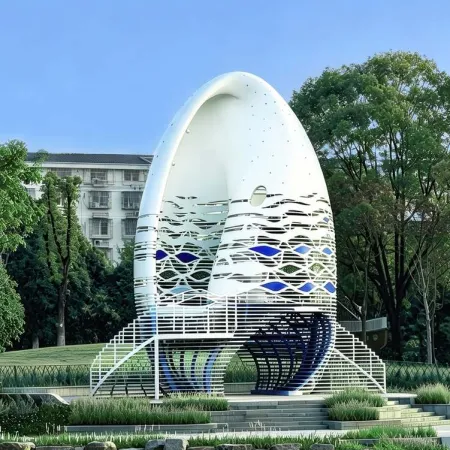
Our services overview shows the full design-to-installation model, the project archive documents completed commissions, and the Weaving Shadows of Fishing Waves piece demonstrates how an abstract language drawn from nature can anchor a public space.
What Abstract Environmental Art Really Means
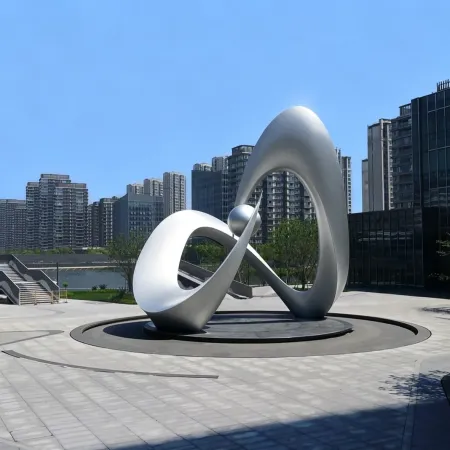
Abstract environmental art distils an idea, a natural rhythm or a cultural memory into shape, line, surface and material, leaving the storytelling to the viewer rather than dictating it. Unlike a figurative sculpture that says exactly what it is, an abstract piece offers a composition that echoes waves, wind, flight or growth without copying them literally. That openness is its strength in a public landscape, because a thousand visitors will each find a different echo of their own memory in the same form, and a work that means many things to many people becomes a place they defend and return to.
The environmental dimension matters as much as the abstraction. The work is not a gallery object imported into a park; it is conceived for a specific site, in dialogue with the horizon, the planting, the water and the light of that particular place. Material choices respond to weather and maintenance, scale responds to the distances from which people will see it, and the form responds to the land around it. When abstraction and environment are developed together from the first sketch, the result feels inevitable, as if the sculpture had grown out of the ground rather than being placed upon it.
Why Abstract Forms Read Stronger Outdoors
Outdoor space punishes detail and rewards silhouette. A figurative sculpture carries meaning in facial expression and small gestures that a visitor fifty metres away, or driving past at speed, can never read; an abstract composition carries meaning in its overall mass, its voids, its rhythm and its relationship to the sky. That is why abstraction dominates successful environmental commissions: it is legible at the scale of a landscape, not just at the scale of a person. A strong abstract silhouette also changes through the day as light moves across its surfaces, giving people who pass it daily a reason to keep looking.
There is a discipline beneath that apparent simplicity. Every curve must hold its line from every viewing angle, every proportion must survive the distortion of a low winter sun, and every material must keep its character for decades in weather that destroys weaker work. The best abstract environmental art looks effortless and is anything but. It is the product of serious three-dimensional thinking, tested in model, tested in full-scale study and engineered to stand against wind, frost and the wear of public life, so the elegance you see is really a system of decisions made invisible by good craft.
| Characteristic | Figurative Work | Abstract Environmental Art |
|---|---|---|
| Meaning | Fixed by the subject | Open to each viewer |
| Reading distance | Close range only | Works from metres to hundreds of metres |
| Site dialogue | Often portable, subject-led | Developed from the specific place |
| Longevity of interest | Fades once the story is told | Renews as light and seasons change |
How We Develop an Abstract Environmental Art Concept
A successful abstract environmental art commission never begins with a drawing; it begins with the site and the story the client wants the place to tell. We start by walking the site, mapping how people move through it, where they pause, what they see against the sky and what the local culture and natural history offer as raw material. From those observations we distil a concept, often a single gesture, a ribbon of movement, a rhythm of fins, a cluster of forms, that can carry the idea at full environmental scale without needing a caption.
The concept is then tested rigorously. We build physical and digital models, study the silhouette from every approach, and check the form against engineering realities such as wind load, structural connections and material behaviour. Only when the concept survives that testing do we present it, and we present it with honest drawings and samples rather than flattering renderings, because an abstract form that looks good in a picture but fails structurally or visually at full scale helps nobody. The approval gate protects you: you approve a developed design, not a hope.
- Site immersion: study movement, sightlines, light, climate and local story before any sketch is made
- Concept distillation: reduce the idea to one legible gesture that survives environmental scale
- Model testing: verify silhouette, proportion and structure before the design is frozen
- Material honesty: choose finishes that weather beautifully and maintain affordably
What a Strong Abstract Commission Gives You
A landmark that needs no explanation
Freshness for every visitor and every season
Design and engineering resolved together
A commission built to last decades outdoors
Reading Abstract Environmental Art Through Materials
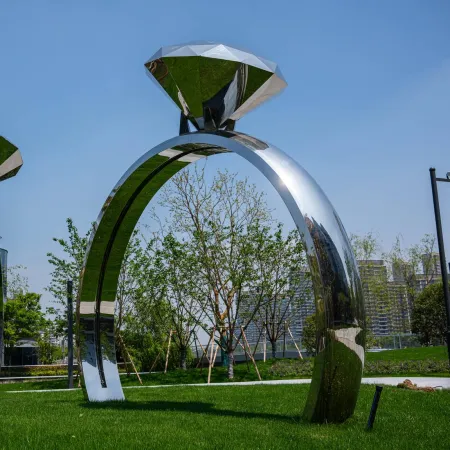
In abstract work the material is half the meaning. Stainless steel brings a mirror that reflects the landscape and changes with every cloud; weathering steel carries the warm patina of earth and time; painted steel allows bold colour that can echo a brand or a season; bronze warms with age and suits more intimate settings. The choice must suit both the concept and the environment, because coastal salt, urban pollution and freezing winters each demand different finishes. We specify materials by their behaviour on your site, not by fashion, and we show clients real samples aged to preview how the surface will evolve.
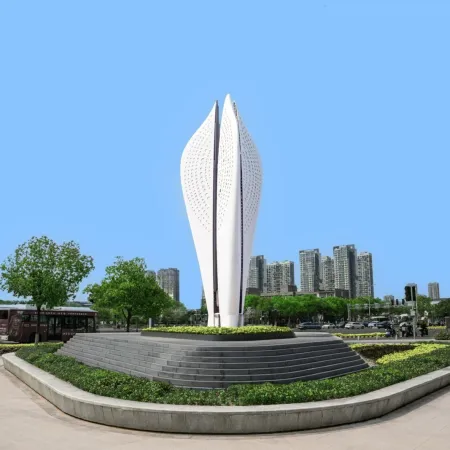
Surface finish is where abstraction lives or dies. A mirror-polished plane catches the sky and dissolves the boundary between object and environment; a satin texture softens glare in residential settings; a patterned or perforated skin casts moving shadows that animate the ground beneath. These are not decorative afterthoughts but primary design decisions made early, because they determine how the sculpture will look at noon and at dusk, in summer and in winter. Clients who understand this dimension make far better decisions when reviewing concepts, because they are judging the work they will actually live with.
Common Mistakes When Commissioning Abstract Work
The most common failure is choosing an abstract environmental art piece from a catalogue and forcing it into a site it was never designed for, which is why so many corporate plazas end up with sculptures that look borrowed rather than owned. The second failure is scale fear: clients approve a design and then shrink it to save money, and the result loses the very presence that made it work. The third is ignoring maintenance, selecting mirror-polish for a coastal site or delicate perforations where children climb. Every one of these mistakes is avoidable when the brief, the site survey and the maintenance reality are put on the table before the design begins.
Frequently Asked Questions About Abstract Environmental Art
Will the public understand an abstract sculpture?
Yes, when the concept is rooted in the site. Abstract works engage people because each viewer completes the meaning personally. Public response studies and our own installed projects consistently show abstract landmarks generating more conversation and photography than literal ones.
How large should an abstract environmental piece be?
Scale is dictated by viewing distance and surrounding context, not by preference. A piece seen from a road must be far larger than one seen from a bench. We calculate the minimum scale that holds the composition from every key viewing point before we confirm dimensions.
Which materials last longest in outdoor environments?
Stainless steel and weathering steel are the workhorses of large public sculpture, with bronze excellent for finer work. The real determinant is correct specification and finish for your specific climate, which is why we always assess the site before recommending a material.
Can abstract art carry a specific meaning or brand story?
Absolutely. Abstraction can encode a brand gesture, a natural history or a cultural memory through form and material. The difference is that the meaning is embedded rather than illustrated, which makes it more sophisticated and longer lasting.
How do we start an abstract environmental art project?
Begin with site photos, a plan and the story you want the place to tell. From those we prepare a concept study with models and honest material guidance, so you approve a developed design rather than a vague hope.
Abstract environmental art rewards clients who trust the process, because a form distilled from your site and your story becomes a landmark that strangers photograph and residents defend. Since 2003 our studio has designed, fabricated and installed public art across twenty-three countries, and the works that age best are almost always the ones where abstraction met environment with discipline. That is the standard we bring to every commission, from the first site walk to the final installation.
Send us your site and the feeling you want people to carry away, and we will show you what a well-developed abstract environmental art concept looks like on your ground.