How Contemporary Large Scale Sculpture Changes a Whole District
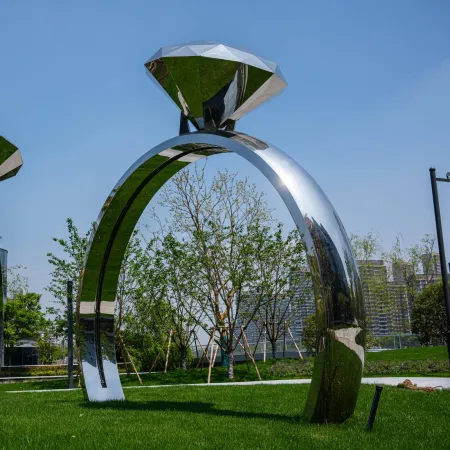
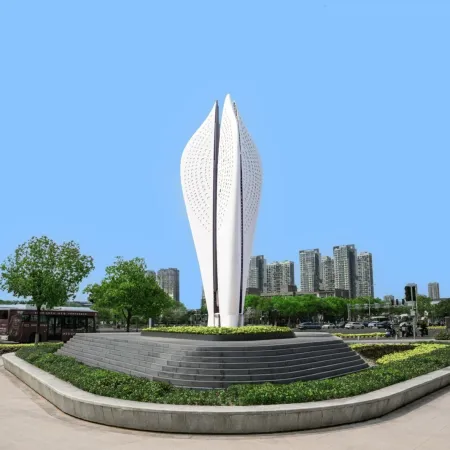
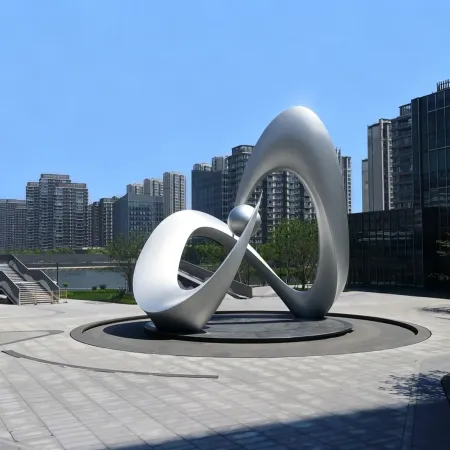
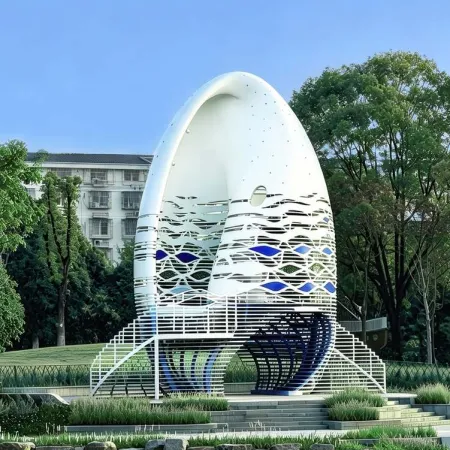
Contemporary large scale sculpture is the most powerful instrument available for changing how a place is seen, because it operates at the scale of the district itself. A work ten or twenty meters tall is not an artwork in a space; it is a landmark that redefines the space — visible from approaching roads, present in the skyline, nameable in directions and unforgettable in photographs. Cities and developers commission contemporary large scale sculpture to give new districts an identity from day one, to give mature districts a new chapter, and to give brand destinations an image no competitor can copy. The form demands engineering, logistics and courage in equal measure, which is why the studios that deliver it are few. Yifeng Sculpture Studio has designed, fabricated and installed contemporary large scale sculpture since 2003 across more than twenty countries, and this guide explains what the scale really involves.
We look at the civic and commercial power of the monumental, the engineering that makes it safe, and how a large commission is delivered from concept to unveiling.
Our project archive includes large-scale works in civic and commercial settings, the services overview explains our full capability, and the Wind Sail demonstrates a large kinetic work engineered for a demanding public site.
Why Scale Itself Is the Message
There is a reason civilizations have always built large: scale is a language that speaks before content does. A contemporary large scale sculpture tells every passerby that this place matters enough to build something ambitious for it. It gives a district a gravity that small works cannot create, gathering attention from the freeway, anchoring the aerial photograph and giving the evening news a backdrop. For new developments, the large work is often the first thing that exists at full identity — the landmark arrives before the buildings are finished and tells the market what the address will be. For cities, the monumental work is a declaration of confidence that pays in tourism, press and civic pride for decades. The content of the work matters, but the scale is the message that gets the content heard, which is why commissioning at true scale is a strategic decision rather than an aesthetic one.
The Engineering That Makes Monumental Safe
At large scale, sculpture becomes structural engineering with an artistic surface, and safety is non-negotiable. The work must be engineered for the site's real conditions: wind loads that grow with height and exposure, seismic demand where the region requires it, live loads where the public can climb or crowd, and fatigue where moving elements are involved. The engineering is not an afterthought applied to a finished design; it is woven into the design from the first sketch, because at this scale the structure shapes the form as much as the form shapes the structure. A tall slender work needs a spine and a foundation sized for overturning; a wide canopy needs primary structure that reads as part of the composition; a kinetic element needs bearings and drives engineered for years of motion. The studio carries this engineering through calculation, peer review and fabrication inspection, and the result is a landmark that is not merely beautiful but certified safe for the public that will live beneath it.
Engineering Disciplines at Monumental Scale
- Wind engineering: loads, vortex effects and dynamic response at height
- Foundation design: geotechnical investigation and overturning resistance
- Structural framing: the skeleton that carries loads invisibly
- Connection design: site joints that assemble and transfer load
- Fatigue and motion: bearings and drives for kinetic elements
From Concept to Landmark: How a Large Commission Flows
A large commission is a project of many months that succeeds through disciplined staging. It begins with the vision and the site — what the district needs, what the sightlines demand, what story the landmark should tell. Concept directions are developed and tested against the site, and the chosen direction is refined into a design that engineering can build. Scale models and, for critical elements, full-size mock-ups let every stakeholder judge proportion before commitment. The engineering is then completed and reviewed, the fabrication is planned in sections sized for transport, and the workshop build proceeds under documented quality control. Delivery and installation follow a written plan — transport routes surveyed, cranes matched to the heaviest section, site work sequenced — and the unveiling is the end of a process in which every risk was retired in advance. Clients receive a complete documentation file: engineering, materials, fabrication records, installation records and a care manual.
| Stage | Duration Signal | Client Approval Point |
|---|---|---|
| Vision and concepts | Weeks of dialogue and iteration | Direction chosen from the family |
| Design development | Models, mock-ups, engineering | Final design and engineering review |
| Fabrication | Months in the workshop | Progress reports and staged inspection |
| Installation | Days to weeks on site | Final alignment and handover |
Fabrication, Transport and the Art of the Section
The largest practical limit on a sculpture's size is not imagination but the road: a work too large to move cannot be built. Large commissions are therefore designed in sections from the beginning — modules sized for transport by truck, ship or rail, with the joints between them engineered to disappear in the final composition. This sectional logic is an art in itself: seams are placed where they can be made invisible, finishes are applied so that site joints blend perfectly, and the assembly sequence is planned so that each section can be lifted, aligned and secured without strain. The workshop build is a trial in miniature — critical sections are often dry-fitted before shipment to prove the joints — and the site installation follows the written plan that the sections were designed for. Clients watch their landmark arrive in pieces and rise in a matter of days, the seams vanishing as the work takes its final form.
The Commitment Behind a Landmark
Commissioning at monumental scale is a commitment that deserves honest framing. The timeline is measured in months, the budget reflects true engineering and logistics, and the maintenance story is part of the decision — a large work needs an inspection and care regime that the client can sustain. A responsible studio tells these truths early, and shapes the design so the commitment is sound: materials chosen for low-care longevity, finishes specified for the climate, access designed so that future inspection is practical rather than heroic. What the commitment buys is equally honest: a landmark that outlives the people who commissioned it, that gives the district an identity measured in decades, and that becomes part of how a place is known. For cities, developers and institutions ready to think at that scale, the return is among the most durable a public investment can make.
What Our Studio Delivers at Monumental Scale
Concepts engineered for true landmark scale and district impact
Full structural engineering, peer review and certification
Sectional fabrication, transport planning and site installation
Complete documentation and a sustainable care plan
Frequently Asked Questions About Contemporary Large Scale Sculpture
How large is "large scale" in practice?
In practice, works from roughly eight meters upward begin to operate as district landmarks, and our portfolio includes commissions well beyond that. The scale is set by the site, the sightlines and the ambition rather than by any fixed ceiling.
What is the typical timeline for a large commission?
Most large commissions run from roughly six to twelve months from concept approval to unveiling, depending on complexity, with the engineering and fabrication phases setting the pace. We build the schedule honestly at the first meeting.
How is a huge work transported and installed?
The work is designed in transportable sections, dry-fitted in the workshop, then shipped and erected on site with cranes matched to each section. The installation follows a written plan with surveyed routes and engineered lifting.
Can the public interact with or enter the work?
Many large works are designed to be walked through, under or around, and some support climbing at designed points. Any public access is engineered for the load and detailed for safety from the first sketch.
What maintenance does a landmark require?
A defined regime of inspection, washing and periodic refinishing, documented in the care manual we deliver. Materials and finishes are chosen at design stage for low-care longevity, and access for inspection is designed into the work.
Contemporary large scale sculpture is the boldest instrument a city or developer can commission — a work that changes how a whole district is seen, remembered and named. Our studio has delivered that ambition since 2003, with landmarks standing across more than twenty countries and engineered to be safe, durable and loved for decades. If your site is ready for a work that operates at the scale of the place itself, bring us the district and the dream — the contemporary large scale sculpture we engineer together will rise in sections, stand for generations and give your address a landmark it can keep.
Start the conversation with a site visit or a set of drawings, and we will show you what contemporary large scale sculpture could make of your place — in scale studies you can stand inside.