How Custom Outdoor Sculpture Fabrication Turns a Sketch Into a Durable Landmark
Custom outdoor sculpture fabrication is the bridge between an approved design and a physical work that must survive sun, rain, frost and public life for decades, and it is where good ideas live or die. A beautiful rendering tells nothing about whether the welds will hold, the finish will last or the form will arrive intact, and those answers are decided entirely in the workshop.
This guide explains how professional custom outdoor sculpture fabrication works, what separates a real workshop from a trader, and how to brief and inspect fabrication so that your commission is built to last.
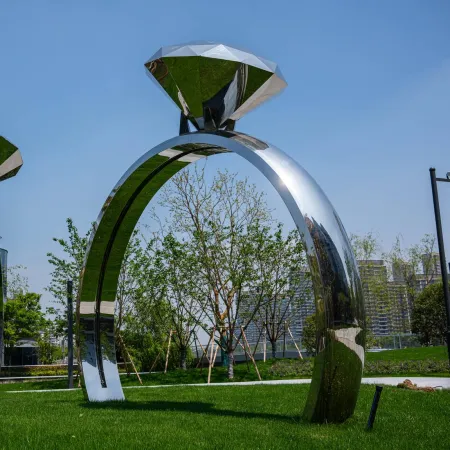
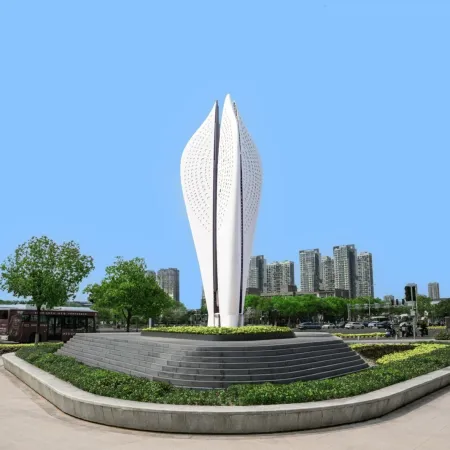
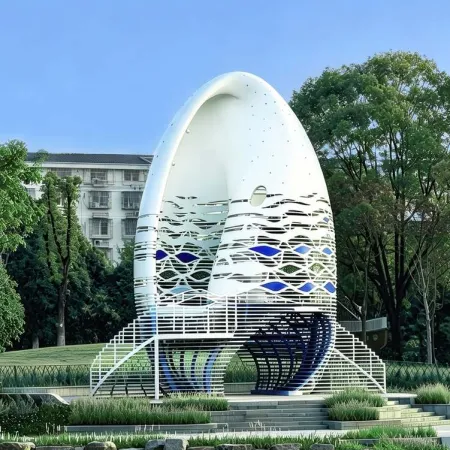
See fabrication excellence in the polished forms of The Diamond Rings, the structural ambition of Honeycomb Pavilion and the outdoor durability of Butterfly Dance.
Why Fabrication Decides the Work's Future
Every outdoor sculpture is only as good as its fabrication, because the forces of weather and time attack precisely the places that making can get wrong. A weld that is incompletely fused can crack after years of thermal movement; a joint that traps water can corrode from within; a surface finished carelessly can stain or fade; and a structure built lighter than designed can fail under wind load. Custom outdoor sculpture fabrication is therefore not a mechanical stage after the creative work but a creative discipline in its own right, where the maker decides how the art will be made true in material.
The distinction between fabrication and assembly matters. Assembly joins pre-made parts, while fabrication creates the parts themselves from raw material, interpreting the design through cutting, forming, welding, forging, casting and finishing. A fabricator who builds sculpture regularly understands how metal moves under heat, how forms should be sectioned for strength, how finishes are built up and how the work will behave on site; an assembler only follows drawings. When clients choose a partner for custom outdoor sculpture fabrication, they are choosing this depth of knowledge.
From Design Data to Fabrication Drawings
Professional fabrication begins with translation. The approved design, whether a physical maquette, a digital model or both, is developed into detailed fabrication drawings that define every dimension, every material thickness, every joint and every sequence, and these drawings are reviewed with the designer before any metal is cut. This stage catches the problems that would otherwise surface later: a curve that cannot be formed, a section that cannot be transported, an internal structure that collides with the surface, a weight that exceeds the foundation's capacity.
For large or complex works, digital modelling is invaluable, because it lets the team verify the structure, calculate weights, plan the sectioning and even rehearse the installation before fabrication begins. The same data can drive CNC cutting and forming machines for the parts that need machine precision, while skilled hands take over where the art demands judgement. The best custom outdoor sculpture fabrication blends digital accuracy with manual craft, using each where it serves the work best rather than fetishising either.
| Stage | Activity | Quality control |
|---|---|---|
| Drawing review | Design translated to shop drawings | Designer sign-off before cutting |
| Material control | Correct grade and thickness sourced | Mill certificates verified |
| Cutting and forming | Parts shaped by CNC and hand | Dimensions checked against data |
| Welding and assembly | Structure built and connected | Weld inspection and testing |
| Finishing | Surface prepared and finished | Finish stages checked visually |
| Packing and delivery | Protected for transport | Surface protection and cradles |
Materials and the Disciplines They Demand
Each material in custom outdoor sculpture fabrication brings its own disciplines. Stainless steel must be kept isolated from carbon steel tooling, because embedded particles rust and stain the surface for years, and its welds must be ground and polished to invisibility. Weathering steel must be detailed so its runoff does not stain paving, and its welds must use matching consumables so the patina develops evenly. Painted steel lives or dies by its surface preparation and coating system, while bronze demands careful casting, chasing and a patination that suits outdoor exposure.
The fabricator's choice of technique is equally a matter of honesty. Doubling wall thickness where the design demands strength, adding drainage where water would collect, avoiding sharp internal corners where stress concentrates, and sealing every hollow space against moisture are invisible decisions that determine whether a sculpture stands for decades or fails within years. A workshop that practises custom outdoor sculpture fabrication daily accumulates these decisions as craft knowledge, and clients should look for that depth rather than assuming any metal shop can build art.
- Isolate the stainless: carbon steel contamination causes rust spots
- Drain every void: trapped water is the enemy of outdoor metal
- Design welds for invisibility: placed where they can be finished
- Protect the surface: film and cradles from shop to site
Quality Control and Third-Party Inspection
Serious fabrication runs on documented quality control. Materials arrive with certificates that are checked against the specification; dimensions are verified at each stage against the fabrication drawings; welds are inspected, with non-destructive testing where the structure demands it; and the finish is checked under proper light before the work is accepted. For large or safety-critical commissions, independent third-party inspection at key milestones gives the client an extra layer of assurance and a record that protects both sides.
Clients should agree the inspection plan when the contract is signed, specifying what will be checked, when and by whom. Milestone photography and video are also invaluable, because they document the invisible work, the internal structure before it is closed up, the welds before they are ground, the finish before it is protected, that no final photograph can show. A fabricator who welcomes documentation is confident in the work; the one who resists it is asking you to accept quality on faith.
Choosing and Working With a Fabricator
Choosing a partner for custom outdoor sculpture fabrication begins with evidence. Ask to see work in your material and at your scale, visit the workshop or take a live video tour, talk to the people who would actually build your piece and ask about their experience with outdoor durability. Ask how they handle the specific challenges your design presents, whether that is a complex double-curved surface, a kinetic mechanism or a coastal environment, and ask for references you can genuinely contact. The answers reveal craft, and craft is the product.
Once chosen, work in a rhythm of approvals. Review the fabrication drawings, visit or video-call at key milestones, comment early rather than late, and keep a written record of decisions so that both sides share the same understanding. A good fabricator will challenge the design where physics demands it and find creative solutions where the art insists, and that partnership, designer and maker testing each other respectfully, is where the best public sculpture comes from. When fabrication is done with both skill and honesty, the finished work carries a quiet authority that no rendering can ever capture.
Fabrication That Endures
Drawings reviewed before metal is cut
Materials certified to the specification
Welds inspected and documented
Surfaces protected to the moment of install
Packing for the Long Journey
Custom outdoor sculpture fabrication does not end when the last weld is finished and the surface is approved, because the journey to the site is where many fine works are damaged, and professional packing is the final act of the workshop. The finished surfaces should be protected with peelable film, the vulnerable edges guarded and the sections secured in purpose-built cradles or frames that hold them immovably against the shocks of transport, and the packing should be designed for the specific route, the handling at ports and the weather the cargo will meet. A sculpture that arrives damaged has failed no matter how beautifully it was made, so the packing specification deserves a place in the contract.
The studio should also plan the journey itself, choosing shipping methods that suit the scale and fragility of the work, providing handling instructions that travel with the crate and arranging insurance that covers the full value from workshop to site. Clients should ask to see the packing plan before shipment and should have the right to inspect the work at the factory before it is closed into its crate, because once the container is sealed the evidence of the workshop disappears. When the fabrication, the finishing and the packing are all handled with the same discipline, the client receives not a gamble in a box but a work that arrives as it left, ready for installation.
Frequently Asked Questions About Custom Outdoor Sculpture Fabrication
How is fabrication different from assembly?
Fabrication creates the parts from raw material through cutting, forming, welding and finishing, interpreting the design. Assembly only joins pre-made parts. A real fabricator brings craft knowledge that an assembler lacks.
What should we check when visiting a workshop?
Look for stainless isolated from carbon steel, clean welding bays, finishing areas, lifting equipment and work in progress at your scale. Ask who would lead your project and question them directly on technique.
Is third-party inspection necessary?
For larger commissions it is strongly recommended. Independent inspectors verify materials, welds, dimensions and finish before shipment, and their reports protect you if problems emerge after delivery.
Why do some stainless sculptures show rust spots?
Surface staining usually comes from carbon steel contamination during fabrication or an alloy unsuited to the environment. Both are preventable through dedicated tooling, correct grade selection and disciplined finishing.
How do we protect the work during transport?
Finished surfaces are protected with peelable film, and sections travel in purpose-built cradles or frames that prevent movement and contact. Packing should be specified in the contract and checked before shipment.
Custom outdoor sculpture fabrication is where art becomes object and intention becomes endurance, and it rewards clients who choose their maker with the same care they give their design. When the workshop is skilled, the materials are certified and the process is documented, the sculpture that rises on site is the sculpture the artist imagined, built to carry its meaning for decades.
Visit our workshop to see custom outdoor sculpture fabrication in progress and judge the craft yourself.