How Stainless Steel Sculpture Design Works With Light and Reflection
Stainless steel sculpture design is a discipline of light, because the material's greatest gift is its surface, which can mirror the sky, gather the colours of the city and change with every cloud and passer-by. Yet that gift is also the material's greatest demand, because a mirror surface exposes every flaw in the form, the welding and the finish, and only disciplined design and making can keep the reflections true.
Yifeng Sculpture Studio has practised stainless steel sculpture design since 2003, delivering more than 3000 works across 23 countries. Works such as Peach Blossom, a 20.8-metre mirror stainless gateway, show how far the material can be pushed, and our workshop's polishing craft keeps the surfaces as true as the forms that carry them.
What Stainless Steel Offers the Sculptor
Stainless steel is the contemporary sculptor's material of choice for public work because it combines brilliance with endurance. It can be polished to a mirror that reflects the world, brushed to a quiet sheen, bead-blasted to a soft architectural grey or coloured through physical vapour deposition, and it resists corrosion with a strength that suits a fifty-year public life. That combination of beauty and durability is why so many modern landmarks are born in stainless steel sculpture design.
The material also carries a particular cultural meaning. Stainless steel speaks of the contemporary, the engineered and the optimistic, and it has become the language of the modern city's landmarks, from gateways and towers to abstract forms that catch the sun. A designer who works in stainless is designing in the material of its time, and the best works use that timeliness without being trapped by it.
The Surfaces and Their Behaviour
The table below compares the principal stainless steel finishes used in sculpture, showing how each surface changes the reading of the form and the maintenance it demands.
| Finish | Appearance | Design and care notes |
|---|---|---|
| Mirror | Reflects sky, city and viewers | Exposes flaws; needs cleaning rhythm |
| Satin and brushed | Soft sheen without hard reflections | Forgiving of touch; even grain required |
| Bead-blasted | Soft architectural grey, diffused light | Hides minor wear; even texture required |
| Coloured PVD | Gold, bronze and other tones | Durable colour; matching across sections |
Designing the Reflections
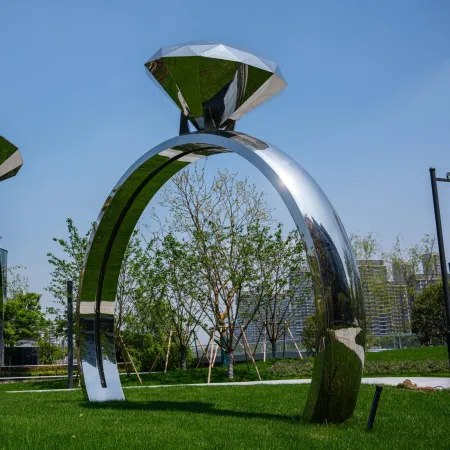
In stainless steel sculpture design, the reflections are part of the composition and must be designed as deliberately as the form. The designer considers what the surface will reflect from each viewpoint, the sky above, the architecture around, the planting beside and the people passing, and shapes the curves so those reflections compose into something richer than the form alone. A gently curved mirror surface can compress, stretch and multiply the world it reflects, turning the sculpture into a living camera of its place.
The orientation of the work against the sun is part of the design. A form that catches the low morning sun will glow differently from one that stands against the noon glare, and the designer should study how the light moves across the site through the day and the seasons. The finest stainless works change continuously, brilliant at one hour, quiet at another and alive with the city's colours at dusk, and that changing life is designed, not accidental.
The Craft That Keeps Reflections True
- Grade selection: the correct grade must be chosen for the site's environment, with marine and coastal sites demanding higher corrosion resistance.
- Weld discipline: welds on visible surfaces must be executed and finished so the mirror runs across them without a trace.
- Progressive polishing: mirror quality is built through graded polishing stages, each removing the scratches of the last.
- Distortion control: the substructure must hold the skin without rippling, because a mirror surface amplifies every sag.
- Protection in transit: mirror surfaces must be protected from scratch and contamination from the workshop to the site.
A stainless work is only as true as its craft chain, and clients should verify the workshop's polishing capability before commissioning mirror surfaces.
Why Stainless Succeeds Outdoors
Stainless steel sculpture design is a natural choice for outdoor public work because the material is built to endure. Its corrosion resistance, maintained by a protective oxide layer, lets it face rain, sun and urban pollution without painting or coating, and its strength allows slender forms that would be impractical in lesser metals. With sensible detailing and a modest cleaning rhythm, a stainless work keeps its brilliance for decades, which is why so many civic landmarks are specified in the material.
See how stainless surfaces have carried major public forms in our project gallery, review the services behind a stainless commission on the services overview, and study Peach Blossom, whose 20.8-metre mirror petals compose with light, sky and the reflecting pool beneath them.
What Stainless Steel Sculpture Design Offers
Surfaces that mirror the sky and the city
Strength for slender, daring public forms
Corrosion resistance for a fifty-year outdoor life
A contemporary voice for the modern landmark
Commissioning Stainless Steel Work
Clients commissioning stainless steel sculpture design should verify three things: the studio's polishing craft, its structural engineering and its honesty about maintenance. Ask to see delivered mirror works and examine them for weld lines and distortion; ask how the structure will support the skin without rippling the surface; and ask what cleaning rhythm the finish genuinely needs in the site's environment. The answers separate studios that master stainless from those that merely use it.
The design conversation should also settle the finish early, because mirror, satin, bead-blast and colour lead to different forms and different care. We advise clients honestly on the trade-offs, recommending mirror where the site rewards reflection, satin where the work will be touched and bead-blast where the architecture calls for calm, and we sample the chosen finish before full production so the client sees the truth before committing. That honesty, applied to every stainless commission, is why the works we deliver keep their promise in the light for decades.
The Environmental Story of Stainless Steel
Stainless steel sculpture design carries an environmental story that increasingly matters to clients and the communities they serve. Stainless steel is highly durable, so a well-designed work avoids the repeated replacement that lesser materials demand; it is largely recyclable at the end of its very long life; and its resistance to corrosion means it needs no painting or coating that would require renewal and disposal. For clients who must answer sustainability questions about their public art, stainless offers an honest and defensible answer.
The design can build on that story rather than merely claiming it. Choosing the appropriate grade for the site extends the life and reduces maintenance, detailing the work for simple cleaning reduces the water and chemicals the care requires and engineering the structure efficiently reduces the material footprint of the work. We discuss these choices with clients who care about the environmental record of their commissions, because a sculpture that stands for fifty years with modest care is a sculpture that has earned its place in a responsible public realm.
Stainless steel also rewards a disciplined approach to sampling, because the difference between finishes is easier to see than to describe. We produce sample panels in the proposed finish and, for major works, expose them at the real site so the client can judge the reflections, the colour and the weathering behaviour in the actual light before committing to full production. That sample is the client's last chance to steer the surface decision with evidence, and we treat it as an essential gate in every serious stainless commission.
A stainless work that is sampled, engineered and documented with that care becomes a lasting member of its place, gathering light and admiration for decades.
Frequently Asked Questions About Stainless Steel Sculpture Design
What is stainless steel sculpture design?
The discipline of designing sculpture in stainless steel, composing form and reflective surface together while engineering for outdoor endurance.
Why is stainless steel so popular for public sculpture?
It combines mirror brilliance with corrosion resistance and structural strength, suiting ambitious forms that must stay beautiful outdoors for decades.
How do mirror finishes stay flawless outdoors?
Through skilled progressive polishing, weld-free visible surfaces and a realistic cleaning rhythm matched to the site's environment.
Can stainless steel sculpture be coloured?
Yes, through physical vapour deposition and other treatments that add durable colour while keeping the metal's character and corrosion resistance.
Does stainless steel need maintenance?
A modest cleaning rhythm keeps mirror and satin surfaces at their best, and the studio should match the finish to the care the owner can provide.
Stainless steel sculpture design is the art of composing with light, reflection and the contemporary city, and it rewards studios with real polishing craft and honest engineering. Choose a team that can keep a mirror true and a structure sound, and your stainless work will gather the sky and the years with equal grace.
If you have a form that should shine and endure, tell us about the place and the light, and we will show you what stainless steel sculpture design can reflect there.