What a Large Metal Sculpture Requires in Engineering, Craft and Finish
A large metal sculpture is the purest expression of modern monumental art, because metal allows forms that stone cannot hold and bronze cannot afford, spans that seem to defy gravity and finishes that turn daylight into a material. But with that freedom comes a demanding discipline, because a monumental work in steel or stainless must be engineered like a structure, fabricated like a machine and finished like a jewel, and every one of those disciplines must be mastered by the studio that takes the commission. After more than a decade creating large metal sculpture across twenty-three countries, I have built works from a few metres to towering landmarks and learned exactly what separates lasting metal art from costly mistakes.
This guide explains the material choices, the engineering truths and the craftsmanship that a monumental metal commission demands.
Our metal sculpture services span design to installation, the works archive documents our steel and stainless landmarks, and the Wind Sail shows how a large metal form can hold its own against the sky.
The Material Families of Monumental Metalwork
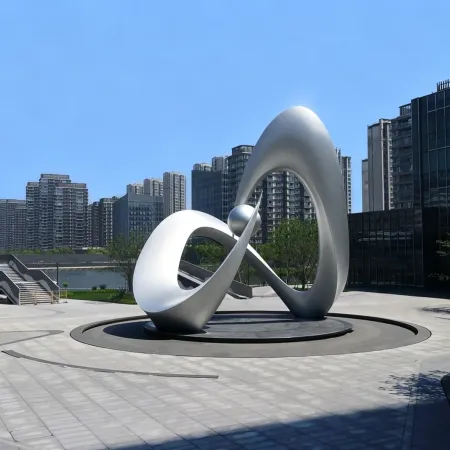
Every large metal sculpture begins with a material decision that shapes everything that follows. Stainless steel offers brilliance and permanence, taking mirror, satin or coloured finishes and resisting corrosion for decades; painted mild steel delivers saturated colour at the most accessible cost, with a coating system that must be maintained; weathering steel develops a stable rust-brown patina that belongs to landscape and industrial settings; and aluminium offers light weight for large spans that steel could not carry. Each family has its character, its cost and its maintenance truth, and the honest studio presents all of them before the design commits.
The choice must respect the site as much as the aesthetic. Coastal air attacks metal finishes aggressively, so marine environments demand higher alloy grades and tougher coating systems; industrial atmospheres carry pollutants that soil painted and mirror surfaces; and inland climates with hard winters test every detail through freeze and thaw. A sculpture designed for its real climate, rather than for a brochure photograph, will still look right when the seasons have done their worst.
Engineering the Form Against Wind and Time
A large metal sculpture is a structure before it is an artwork, and its engineering determines whether it stands for generations or fails within years. Every monumental metal work must be analysed for the wind loads of its specific site, with the internal frame, plate thicknesses, connections and foundation calculated to carry those forces with an appropriate margin of safety. The slenderness that makes a form elegant on paper is exactly what makes it vulnerable in reality, so the engineer and the sculptor must resolve the tension between visual lightness and structural truth together.
The details are where metal sculpture lives or dies. Water must drain from every cavity instead of collecting to corrode from within; dissimilar metals must be separated to prevent galvanic attack; joints must allow thermal movement without fatigue; and surfaces must shed dirt so the finish stays bright with reasonable care. These are not glamorous problems, but they are the difference between a landmark that is admired in fifty years and one that is repaired in five, and a studio that has installed monumental metal knows each one by heart.
| Metal | Signature Quality | Key Consideration |
|---|---|---|
| Stainless steel | Mirror brilliance and permanence | Grade choice for coastal air |
| Painted steel | Full colour at accessible cost | Coating system and maintenance |
| Weathering steel | Stable rust patina, warm tone | Runoff management on site |
| Aluminium | Light weight for long spans | Finish and joining discipline |
The Craft of Forming and Welding at Scale
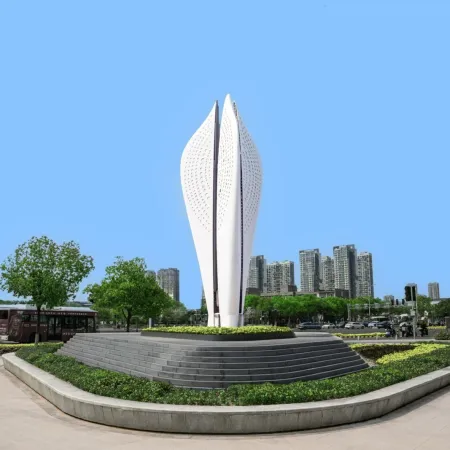
The beauty of a large metal sculpture is made in the workshop, where flat plate is rolled, pressed and formed into the curves of the design, and where sections are welded into a whole so seamless that the joints disappear. Monumental forming demands heavy equipment and deep skill, because a curve that is simple at a metre of plate becomes a serious operation at six metres, and the tolerances must be held across the entire form so that the assembled sculpture matches the approved model. Fabricators who have built large metal sculpture understand that the material has a memory and a will of its own, and they work with it rather than against it.
Welding quality is the hidden foundation of everything. Structural welds must carry the loads with certified integrity, while cosmetic welds must be ground and finished until they vanish into the surface, and both demands fall on the same welders. The best monumental workshops develop welders who think like sculptors, who understand that a seam on a public artwork will be examined by thousands of eyes, and who take pride in work that must be flawless at every distance from a metre to a kilometre.
Finishes That Make Metal Read as Art
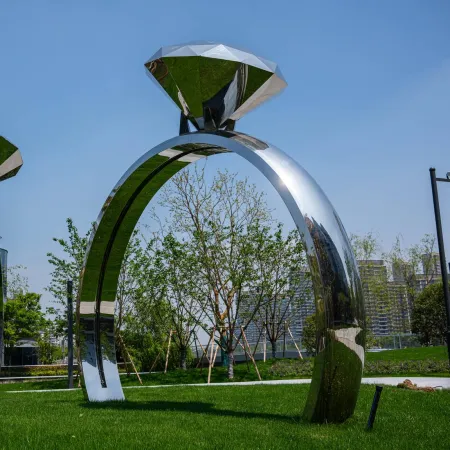
The finish of a large metal sculpture is half its artistic message, because the surface is what the public actually sees and remembers. A mirror polish turns the work into a lens for the sky and the city, a satin finish gives quiet sophistication, a painted surface carries colour and graphic identity, and a weathered patina speaks of time and landscape. Each finish demands its own craft and its own maintenance, and the studio should produce approved finish samples before fabrication so that the client and the workshop agree on exactly what the surface must be.
The finish must also be planned for its future. A mirror surface in an industrial city will need periodic cleaning; a painted work will need recoating on a realistic cycle; and even stainless can suffer tea-staining in aggressive coastal air if the wrong grade was chosen. An honest studio specifies the finish with its maintenance built in, advising the owner on what the surface will require over the decades, because a finish that fails silently destroys the very qualities that made the sculpture worth commissioning.
- Match material to climate: the site decides the metal and the finish
- Engineer before cutting: wind, load and foundation calculations first
- Audit the workshop: forming and welding quality is made on the floor
- Approve the finish sample: agree the surface before full fabrication
Serious Metal Sculpture Returns to Its Owner
Forms that no other material could achieve
A landmark presence that endures for decades
Surfaces that age with dignity and plan
Engineering honesty that protects the public
Commissioning a Large Metal Sculpture
The commissioning of a large metal sculpture should follow a route that matches its technical ambition. It begins with the site and the story, moves through concept and three-dimensional study, resolves the material and finish with approved samples, and passes through full structural engineering before fabrication begins. Each gate protects the client: the concept gate prevents wasted fabrication, the engineering gate prevents structural failure, and the finish approval prevents disappointment, so a disciplined process is not bureaucracy but the framework that lets ambition become reality safely.
The studio you choose must hold every skill the work demands. Look for a team with its own monumental workshop, its own engineers and its own installation crews, and with delivered large metal sculpture you can visit or verify in the field. Since 2003 our studio has designed, engineered, fabricated and installed monumental metal across twenty-three countries, and we would be glad to show you the workshops, the engineering and the finished works that stand behind our name.
Frequently Asked Questions About Large Metal Sculpture
Which metal is best for a monumental outdoor sculpture?
The answer depends on the site, the design and the budget. Stainless steel leads for brilliance and low maintenance, painted steel for colour and cost, weathering steel for landscape warmth, and aluminium for light weight.
How do I know the sculpture will stand safely for decades?
Demand full structural engineering: wind and load calculations, correct material specification, sound detailing and a proper foundation. A studio with in-house engineers will provide these naturally.
How is a huge metal form fabricated?
Steel plate is cut, rolled and formed with heavy equipment, welded into sections, and assembled and finished in the workshop before disassembly for shipping and re-erection on site.
What maintenance does a metal sculpture need?
It depends on the finish: mirror stainless needs periodic cleaning, painted steel needs recoating on a cycle, and all works benefit from annual inspection. The studio should specify a realistic care plan.
Can metal sculpture be combined with light or water?
Yes. Integrated lighting, water features and kinetic elements extend the presence of metal work, provided the interfaces are engineered for safety, drainage and long-term reliability.
A large metal sculpture is a statement of confidence, a belief that a form made of steel and light can hold its own against the sky for a generation or more. Built with engineering truth and finished with craft, it becomes a permanent landmark that rewards its city every day.
Let our studio help you create the large metal sculpture your site deserves, and see what monumental metal can become in expert hands.