What Environmental Art Sculpture Means and How to Commission One
Environmental art sculpture is work conceived for a specific landscape or public place rather than for a gallery wall, and the difference shapes every decision, from the concept to the materials to the foundation hidden beneath the ground. I have spent more than a decade creating sculpture for parks, plazas, waterfronts and campuses, and the term is often misunderstood by clients who imagine any outdoor statue qualifies. This guide explains what environmental art sculpture really is, how it differs from other outdoor art, and how to commission a piece that belongs to your place.
We will look at the defining qualities of the genre, the materials and forms that suit it, and the process that turns a site into a sculpture.
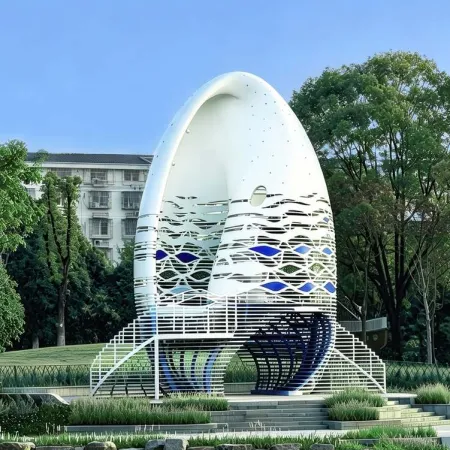
Our services overview explains the full commissioning journey, the project archive shows environmental works in their settings, and the Homing Nesting piece shows how a sculptural form can carry ecological meaning in a landscape.
What Makes a Sculpture Environmental
Environmental art sculpture is defined by its relationship to place. A sculpture is environmental when its form, material, scale and meaning grow out of the landscape it inhabits, echoing the horizon, the local story, the movement of light or the character of the ground, rather than when it is simply a sculpture placed outside. This distinction matters because it changes the design process entirely: the site is studied before the concept is drawn, the material is chosen for the climate and the context, and the work is conceived to be seen against trees, sky and weather rather than against a white wall. The result is sculpture that feels native to its place.
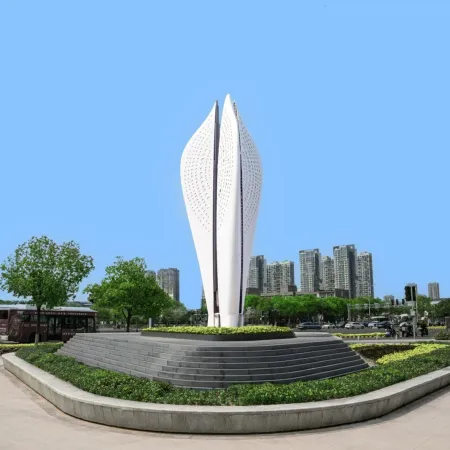
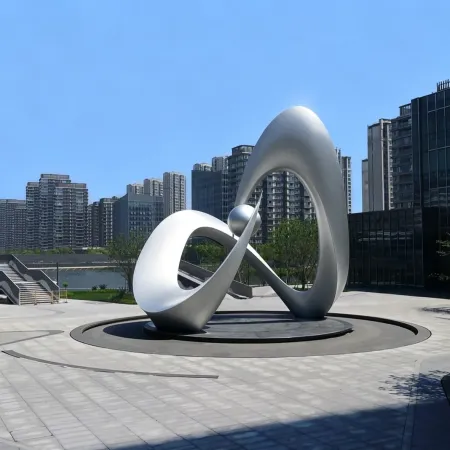
The genre is broader than many clients assume. It includes abstract landmarks, works that echo natural forms such as nests, leaves, waves and flight, pieces that respond to wind or water, and installations that frame a view or mark a path. What unites them is intention: every environmental art sculpture is designed in dialogue with its surroundings, so that removing it would leave the place somehow incomplete. That quality, the sense that the work and the site belong together, is the clearest sign that a commission has succeeded.
Materials That Carry Environmental Meaning
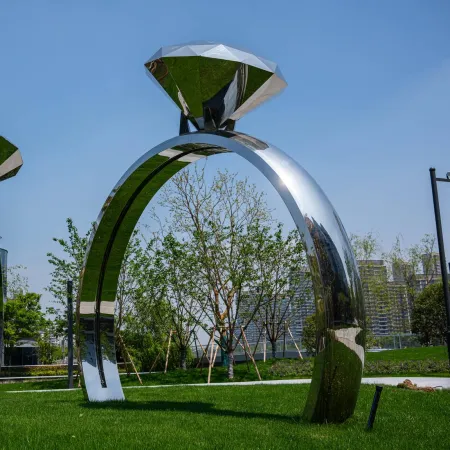
Material is the bridge between an environmental art sculpture and its environment. Stainless steel mirrors the sky and the changing light, letting the landscape paint the work; weathering steel carries the warm patina of earth and ages like the landscape itself; bronze warms with time and suits settings where history and craft matter; stone echoes the geology of the region. The choice must respect both the concept and the climate, because coastal salt, mountain frost and urban pollution each demand different specifications. The strongest environmental works use material as part of the meaning, not merely as a means of construction.
| Material | Environmental Character | Best Settings |
|---|---|---|
| Stainless steel | Mirrors sky, light and seasons | Modern and waterfront sites |
| Weathering steel | Earth-toned patina that ages | Landscape and heritage parks |
| Bronze | Warms and gains depth with age | Civic and garden settings |
| Stone | Echoes the geology of place | Monumental and natural sites |
Scale, Setting and the Human View
Environmental art sculpture is designed at the scale of the landscape, which means the human viewer is only one of its audiences. A work must read from the road, from the path, from the bench and from the upper windows that overlook the site, and it must hold its composition against trees that will grow, buildings that will be built and seasons that will transform the view. The design should be tested at the site, ideally with a full-scale mock-up or a lifted test piece, because scale is the quality that photographs most reliably betray. Clients who see their sculpture at true scale before approving it rarely regret the exercise.
Commissioning Environmental Art Sculpture
A successful commission follows a defined path: the site is studied, the concept is developed and approved, the design is engineered, the materials are sampled and approved, the work is fabricated with inspection milestones and finally installed and handed over with documentation. Each stage should end with the client's written approval, so the finished sculpture is the work you chose rather than a surprise. The studio you choose should demonstrate real site-specific thinking, genuine engineering capacity and an owned workshop, because those capabilities determine whether the sculpture you approve is the sculpture you receive.
- Site study first: the landscape and its story read before any concept is drawn
- Concept approval: the artistic direction agreed in writing before development
- Sample approval: real materials and finishes approved before production
- Inspection milestones: dated evidence of progress at every stage
Signs of a Truly Environmental Work
It echoes the local landscape or story
Material is chosen for the climate
Scale holds against the surroundings
Removing it would empty the place
Designing for the Life of the Landscape
Environmental sculpture lives inside a changing landscape, and the design must anticipate that change. Trees will grow and alter the sightlines, planting will mature around the work, and the piece must be positioned and scaled so the landscape frames it rather than swallows it. Maintenance is equally part of the design: drainage detailed so water never sits on surfaces, finishes chosen that the site team can clean, and access planned so the work can be cared for safely. The studios that think in decades, not seasons, are the ones whose environmental works still look right twenty years after installation.
The Artist Hand Behind the Site-Grown Form
Environmental art sculpture is often assumed to be the product of a committee, but the works that move people most are shaped by a confident artistic hand working within the site constraints. The best commissions balance the two: the site provides the raw material of meaning, scale and material, and the artist brings the formal intelligence, the instinct for proportion, rhythm and surface that turns analysis into art. When clients choose a studio, they are choosing that artistic voice as much as its engineering, so it is worth asking who will actually design the work and what their portfolio reveals about their sensitivity to place. A studio with artists who listen produces sculpture that belongs.
The artistic hand is also what prevents environmental sculpture from becoming generic. Two studios given the same brief and the same site will produce different works, and the difference is the voice, the way one sees a river as movement while another sees it as memory, the way one resolves a form in a single bold gesture while another builds it from repetition. We encourage clients to look for that voice in a studio older works and to trust it once found, because a work shaped by a confident artistic vision, disciplined by engineering and rooted in the site, will reward the client for decades. Technique can be verified; vision can only be recognised, and recognising it is the heart of commissioning.
The relationship between artist and client is itself part of the craft, because the strongest commissions are neither the artist vision imposed on a passive client nor the client wishes executed by a passive artist, but a genuine collaboration. The client brings knowledge of the place, the community and the story; the artist brings the formal language to carry that knowledge into form; and the studio process provides the structure for the conversation to happen productively, with concepts presented clearly, feedback documented and decisions made at the right moments. When that collaboration works, the client ends up with a work that feels both deeply personal and entirely of its place, and the artist ends up with a commission that stretched their practice in a meaningful direction.
Frequently Asked Questions About Environmental Art Sculpture
How is environmental sculpture different from ordinary outdoor sculpture?
Outdoor sculpture is placed outside; environmental sculpture is conceived for a specific place, with its form, material, scale and meaning growing from the site. The design process starts with the landscape rather than with a portable object.
Can environmental sculpture include natural or living elements?
Yes. Many works integrate water, planting or wind-responsive movement, and the design can frame living landscape as part of the composition. These elements demand extra engineering and maintenance planning.
What budget range should we plan for?
Budgets vary widely with scale, material and complexity, so the right first step is a realistic framework covering design, engineering, fabrication, foundations, installation and maintenance. A studio should help you scope before you commit.
How long does a commission take?
Most commissions take several months from concept to installed work, with larger or interactive pieces taking longer. Design, engineering, fabrication and site works each need realistic time, and approval rounds should be planned into the schedule.
Do we need planning permission for a sculpture?
Most public sculpture needs some form of approval, and the requirements vary by jurisdiction and site. A studio experienced in public commissions will flag the approval pathway early and help you prepare what the authorities need to see.
Environmental art sculpture is a conversation between a place and a form, and the finest works are the ones where that conversation never ends, because the landscape keeps changing and the sculpture keeps answering. Since 2003 our studio has designed and delivered environmental sculpture across twenty-three countries, and we bring the same respect for place to every commission, from a single garden piece to a city landmark.
Share your site with us, and we will show you what an environmental art sculpture conceived for your ground looks like.