How an Urban Public Art Design Manufacturer Scales Ideas Into City Landmarks
An urban public art design manufacturer is the maker of city landmarks, the organisation that turns an artist's vision into a structure of steel, bronze or stone that can stand in a public square for decades. Urban work is unforgiving, demanding scale, engineering and endurance that studio-scale making never tests, and the manufacturer that serves cities well is a specialist in the gap between a beautiful idea and a built reality.
This guide explains what an urban public art design manufacturer must master, how it collaborates with artists and clients and how to choose a maker whose works survive the city.
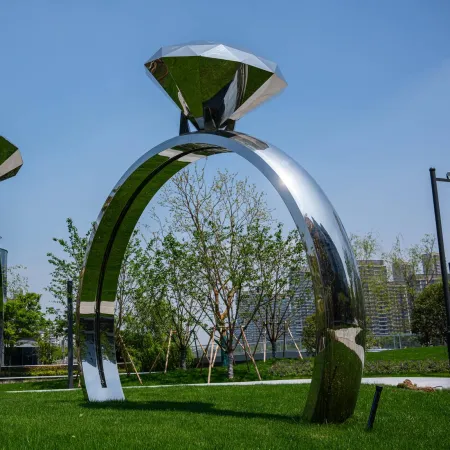
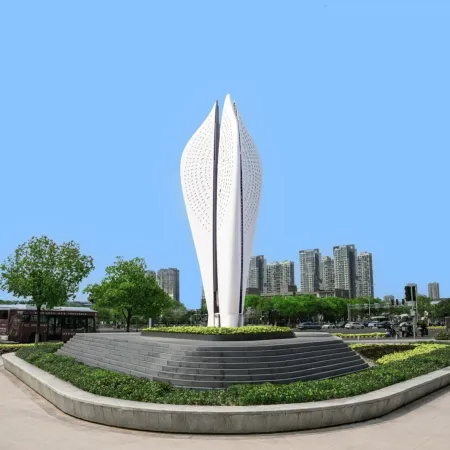
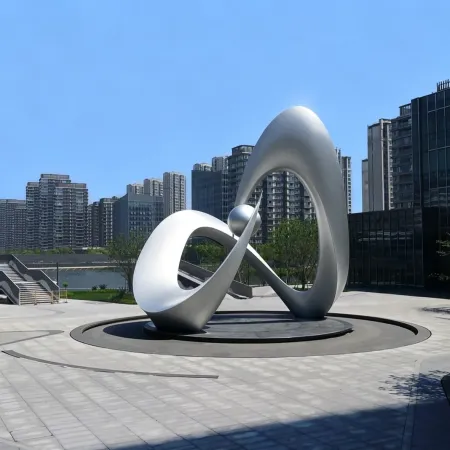
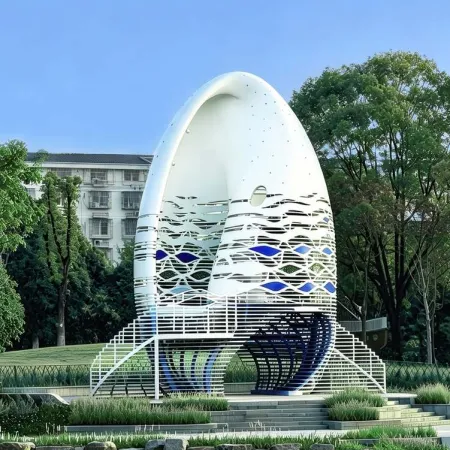
See large urban fabrication in Rainbow Windmills, Wind Sail and Fishing Net Canopy.
Making at the Scale of the City
Urban work is made at the scale of the city, and an urban public art design manufacturer is defined by its capacity to build at that scale. The workshop must handle modules that dwarf a truck, weld structures that will carry their own weight and the wind for decades, finish surfaces that will be judged from a hundred metres and a metre alike, and assemble works that arrive on site as tested wholes rather than hopes. This is not studio craft scaled up; it is a different discipline, closer to precision construction than to bench work, and the manufacturer that has built urban landmarks has learned its lessons in steel, at height and under the eyes of the city.
The scale of urban work also changes the relationship between design and making, because a sketch that looks magnificent on paper must survive the translation into tonnes of material. The manufacturer works with the artist and the client to resolve the design at full scale, testing proportions, detailing the junctions, choosing the structural system and specifying the finishes, so that the work that is built is the work that was dreamed, made honest by the discipline of material. The best urban manufacturers are not passive fabricators waiting for drawings; they are partners in the making, bringing to the design the knowledge of what steel can do, what wind will demand and what the city will throw at the finished work.
| Urban demand | Manufacturer response | Failure if unmet |
|---|---|---|
| Scale | Workshop and crane capacity for large modules | Works that cannot be built or moved |
| Wind and load | Full structural engineering with reports | Structures that move, fatigue or fail |
| Endurance | Materials and finishes for decades of city life | Works that decline within years |
| Public safety | Details and fixings engineered for public use | Edges, joints and parts that become hazards |
Engineering Urban Works for Decades of Public Life
The heart of an urban public art design manufacturer is its engineering, because an urban work that fails is not merely an aesthetic loss but a matter of public safety. The manufacturer engineers every landmark for the loads of its whole life, the dead weight of the material, the wind of the exact site with its funnels and its gusts, the thermal movement between summer and winter, the seismic forces where they apply and the loads of the public who will climb, lean and gather on and around the work; and it designs the foundations and the fixings to carry those loads with an honest margin. Every structure should come with its calculations, because the reports are the evidence that the risk has been managed and the work is safe to give to the city.
The engineering of urban work also extends to its endurance, because a city keeps its landmarks for generations and the maker must think in those generations. Materials must be specified for the urban environment, the pollution, the salt of winter streets and the touch of millions of hands; drainage and detailing must protect the work from the water that slowly destroys outdoor metal; finishes must be chosen for the maintenance the city can actually provide; and the fixing systems must allow inspection and repair without destroying the work. The manufacturer that thinks in decades is the manufacturer whose landmarks the city will still be maintaining when the original commissioners have retired.
Collaborating With Artists and Protecting Their Vision
An urban public art design manufacturer serves the artist's vision, and the craft of that service is knowing when to follow and when to advise. The manufacturer must read an artist's intent from drawings and models that were never meant to carry engineering information, resolve the ambiguities in the spirit of the work and translate the idea into buildable structure without flattening it; and it must advise honestly when the vision meets the limits of material, budget or physics, proposing alternatives that serve the intent rather than merely reporting the obstacle. The manufacturers that artists trust are those that protect the vision through the making, and the artists who return with their next commission are the manufacturer's best reference.
The collaboration should also be protected by clear agreements, because the making of urban art involves many hands and the ownership of the idea must be clear to all of them. The manufacturer should work under a contract that respects the artist's copyright, builds the client's approvals into the schedule and defines what happens when the design must change; it should document the fabrication so that every stage is traceable; and it should give the artist real access to the making, because an artist who can watch the work grow can correct the small deviations that would otherwise become permanent. When the roles are clear and the vision is shared, the making becomes a true collaboration rather than a handover.
Delivering and Installing in the Heart of the City
Urban installation is a public event in a working city, and an urban public art design manufacturer plans it with the care of an operation that cannot afford to fail. The delivery must navigate streets that were never designed for the modules, working around traffic, bridges, trees and overhead lines; the installation must be staged to minimise disruption, often overnight or at the quiet hours, with the safety of the public protected by barriers, signs and method; and the work must be assembled, aligned and finished on site to a standard indistinguishable from the workshop. The manufacturer that has installed in city centres has learned the dance of the crane and the crowd, and the client should listen for that fluency.
The handover after installation is the beginning of the work's civic life, and it should leave the city with everything it needs to care for the landmark. The owner should receive the as-installed records, the maintenance manual that names the finishes, the fixings and the cleaning regime, the structural reports for future engineers and the name of the manufacturer who will answer when the first issue appears. A city landmark is maintained by people who were not present at its making, and the documentation they inherit decides whether the work is cared for or neglected; the manufacturer that treats the handover as part of the art is the manufacturer whose landmarks age with dignity.
The Maker of Lasting Landmarks
Workshop capacity matched to city scale
Engineering shared as part of the making
The artist's vision protected to the last weld
Delivery planned for the working city
Choosing a Manufacturer for Your City Commission
Choosing an urban public art design manufacturer means verifying three things: the workshop, the engineering and the record. The workshop should be visited or independently inspected, with the equipment, the crane capacity and the quality systems your project demands; the engineering should be shown in the reports of past urban works, with the engineers named and still engaged; and the record should be tested through the owners of completed landmarks, who will confirm whether the maker delivered on schedule, stood behind its work and left documentation that proved its worth. A manufacturer that welcomes this scrutiny is a manufacturer confident in its making.
The choice should also fit the relationship, because urban commissions are long collaborations between the client, the artist and the maker, and the manufacturer must be able to work with all of them. Ask how the manufacturer has collaborated with artists on past projects and whether those artists would work with it again; ask how it handles the design changes that every urban project brings; and ask how it communicates through the long months of fabrication, because the maker that keeps the client informed is the maker that keeps the client confident. Our studio has designed and fabricated urban works across more than twenty countries since 2003, and the landmarks we are proudest of are the ones whose artists became our repeat clients and whose cities still call us when a decade of maintenance has passed.
Frequently Asked Questions About an Urban Public Art Design Manufacturer
What makes a manufacturer suitable for urban work?
Capacity for large modules, full structural engineering, materials specified for decades of city life and a record of installing in working streets. Urban work is precision construction with an artist at its centre.
Who engineers the structure of a large urban work?
The manufacturer should carry the responsibility, through its own engineers or named specialists, and share the reports with the client. Wind, weight, thermal movement and public loads all demand calculation.
How do we protect the artist's vision during fabrication?
Choose a manufacturer that collaborates with artists, protects their copyright in the contract and gives them real access to the making. The artists who return are the maker's best reference.
How is installation managed in a busy city?
With a written method statement, permits and traffic planning, often staging the work at quiet hours. The safety of the public and the protection of the surroundings are engineered into the plan.
What documentation should a city receive with a landmark?
As-installed records, structural reports, a maintenance manual and a named contact. The documentation decides whether the work is cared for or neglected in the decades after the making.
An urban public art design manufacturer is the bridge between a city's dreams and its skyline, the maker that turns the artist's vision into a structure of steel and stone that the public will live with for generations. Verify the workshop, read the engineering, test the record and confirm the collaboration, and the landmark you commission will be a landmark the city keeps. The works that define great cities are built once and maintained for decades, and the manufacturer that builds them with craft, engineering and respect for the artist is the manufacturer whose name is written, invisibly, into the identity of the city itself.
Commission an urban public art design manufacturer whose landmarks are still standing, and your city will gain a work built to last.