Why an Urban Public Art Sculpture Supplier Must Understand City Contexts
An urban public art sculpture supplier works in a denser, more regulated and more visible world than any other kind of maker, because a sculpture placed in a city must satisfy not only the client but also the planners, the safety authorities, the traffic engineers and the millions of people who will judge it daily. City contexts demand suppliers who can navigate that complexity without losing the art.
This guide explains what an urban public art sculpture supplier must master, from municipal approvals and public safety to the design conversation with streets, buildings and infrastructure, and how to choose one for a city project. Our studio has delivered more than 3,000 installed works across 23 countries since 2003, many of them in dense urban settings, and the lessons below come from work that has faced city life at its most demanding.
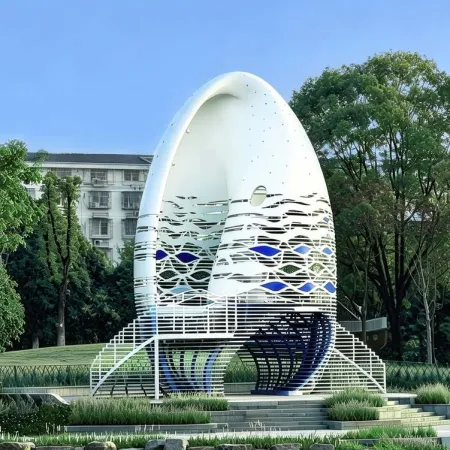
See how urban sculpture is delivered through our services, city works in the project gallery and an urban landmark like Hello Conch.
The City as a Client With Many Voices
In a city, the client is rarely one person, and an urban public art sculpture supplier must serve a chorus of voices with different concerns. The mayor wants a landmark that makes the city proud, the planner wants a work that fits the urban design framework, the safety officer wants a structure that cannot harm the public, the maintenance department wants surfaces that will not bankrupt them and the community wants something that belongs to them. The supplier who hears all of these and designs for the intersection delivers work that survives every review.
The urban context also disciplines the art. A sculpture in a city competes with architecture, signage, traffic, lighting and the constant motion of people, so its form must be bold enough to be seen and disciplined enough not to shout. It must relate to the street wall, respect the sight lines, survive the grit and grime of urban air and stand up to the enthusiasm of a dense public. Suppliers who have worked in cities know these pressures and design for them from the first sketch.
| Urban voice | Their concern | What the supplier must answer |
|---|---|---|
| Municipal leadership | A landmark for the city's pride | A work worthy of the city's stage |
| Planning authority | Fit with the urban framework | Documentation they can approve |
| Safety officers | No harm to the public | Engineering and risk analysis |
| Maintenance | Affordable long-term care | Durable, serviceable design |
| Community | A work that belongs to them | Early engagement and shared meaning |
Navigating Approvals in the Dense City
Approvals are the city's own language, and an urban public art sculpture supplier must be fluent. A public sculpture in an urban setting may need planning consent, structural approval, public safety certification, highway and footway consents where it touches the street and heritage review where the context is protected, and each authority wants its documentation in its own format. The supplier who has shepherded works through these reviews knows the sequence, the content and the timing that keep approvals running beside the design rather than against the unveiling date.
The urban site adds engineering duties that a rural site never meets. Underground services must be located before foundations are dug, the load capacity of vaults and decks must be confirmed where the work stands over basements, wind behaviour around tall buildings must be assessed for the downdraughts that urban canyons create and the interface with pavements, kerbs and street furniture must be resolved to the millimetre. These are the quiet disciplines that make a city sculpture possible, and they are exactly what an experienced urban supplier brings.
Designing for Density, Weather and Daily Life
Design in the city is a conversation with density. An urban public art sculpture supplier must compose forms that read against towers and traffic, choose scales that gather people without blocking their movement and place works where they enrich the pedestrian path rather than interrupt it. The material palette must answer urban air, with corrosion resistance for the pollutants and grime of the street, and the maintenance reality of a city department that must care for hundreds of public assets, not one.
Daily urban life is the final designer. The work must serve the commuter who passes at speed, the office worker who eats lunch beside it, the family who visits on the weekend and the night-time economy that the lighting may support. Urban sculpture that fails usually fails not aesthetically but socially, because it ignored who uses the space and when, and the supplier who studies the rhythms of the city block designs works that the block adopts as its own furniture.
- Serve every city voice, from mayor to maintenance crew.
- Speak the approvals language of planners and safety officers.
- Engineer for the urban site, services, vaults, downdraughts.
- Compose against density without blocking daily life.
- Design for the city's care, durable and serviceable.
What Urban Fluency Delivers
Approvals that run instead of stall
Engineering that fits the dense site
Design that serves the city's rhythms
A landmark the city can afford to keep
Choosing the Supplier for a City Project
Choosing an urban public art sculpture supplier for a city project demands evidence of urban experience specifically. Ask for works installed in dense settings and speak to the authorities and engineers who approved them; ask how the supplier handled underground services, public safety reviews and the coordination with street works; and ask how they engaged the community around each urban site. City projects punish inexperience without mercy, so the track record must match the context.
The supplier should also demonstrate the patience that city projects require. Urban commissions move through long approval chains, respond to political cycles and face public consultation that can reshape a concept, and the supplier must navigate that pace without losing enthusiasm or quality. A studio that has delivered landmarks for cities knows that the process is part of the work, and that a sculpture approved by a city and adopted by its people is worth every month the journey took.
Placemaking and the Long Legacy of Urban Sculpture
An urban public art sculpture supplier contributes to placemaking, the slow craft of turning a collection of streets and buildings into a place people love, and the works that succeed become part of a city's identity and its memory. A landmark that residents use to give directions, that visitors queue to photograph and that schoolchildren draw in art class is earning its keep every day, and the economic effects follow, footfall, retail vitality, civic pride and the media attention that no marketing budget can buy. Municipal leaders who understand placemaking treat sculpture as infrastructure for the soul rather than as decoration.
The long legacy of an urban work is shaped in its first design decisions, and the supplier should plan for a life measured in decades. Materials and finishes chosen for fifty years of city weather, maintenance access that a public crew can actually use, a story that can be told through plaques, tours and guides and documentation that will outlive the people who built it all determine whether the work becomes a heritage asset or an aging problem. We design urban sculpture with its grandchildren in mind, because a city that commissions a landmark is making a promise to its future, and the supplier who honours that promise leaves the city richer than it was. That is the deepest measure of an urban public art sculpture supplier's worth.
Frequently Asked Questions About an Urban Public Art Sculpture Supplier
Why is urban sculpture different to make?
Because the city adds approvals, underground services, public safety reviews, urban design frameworks and a dense, demanding audience to every creative decision.
What approvals does a city sculpture need?
Typically planning consent, structural approval, public safety certification and, where relevant, highway, footway and heritage review, each with its own documentation.
How does urban engineering differ?
Foundations must avoid underground services, vaults and decks need load checks and wind around towers must be assessed for the downdraughts of urban canyons.
What should a city client verify in a supplier?
Delivered urban works, fluency with approvals, community engagement practice and the patience to carry a commission through long public processes.
How do cities keep urban sculpture maintained?
Through durable, serviceable design and a care handover that fits a department's routine, with documented seasonal checks and accessible consumables.
An urban public art sculpture supplier earns the city's trust by mastering its contexts, the approvals, the underground engineering, the design conversation with density and the daily rhythms of the street. Choose a supplier with proven urban works and the patience for public process, and the sculpture will stand as a landmark the city is proud to keep.
If your city or development is seeking an urban public art sculpture supplier with a 23-country record in dense settings, share your site and your framework and we will show you how we would serve every voice in your city.