Why Stainless Steel Art Installation Dominates Modern Public Landmarks
A stainless steel art installation is the closest thing public sculpture has to a permanent surface: it resists corrosion without paint, holds a mirror finish that reflects the changing sky, carries the long spans that landmark forms demand and still looks contemporary fifty years after it was built. From glowing mirror spheres to soaring petal gateways, stainless has become the defining material of modern civic landmarks precisely because it combines engineering strength with an almost liquid relationship to light. Yifeng Sculpture Studio has designed and fabricated stainless steel art installations across more than twenty countries since 2003, and this guide explains the alloys, finishes, engineering and care that make stainless the default choice for works meant to endure.
The sections below cover the alloys that matter, how finishes create character, structural and welding discipline, the maintenance reality, and how stainless behaves in the climates that challenge it.
The secret of stainless is often misunderstood: it is not that the metal never corrodes, but that it forms an invisible, self-healing oxide film that repairs itself whenever the surface is scratched. Design for stainless is design in partnership with that film — and every detailing decision either protects it or fights it.
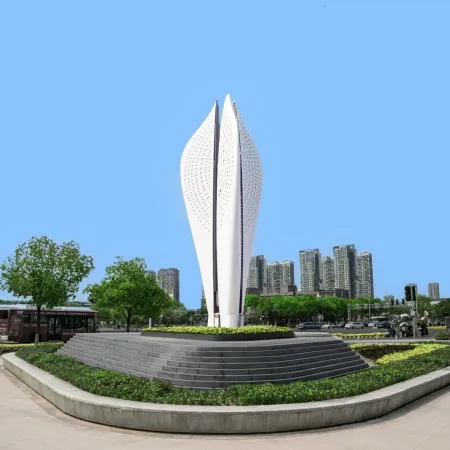
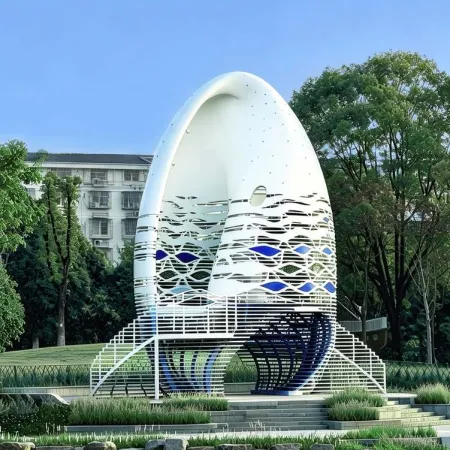
Two landmark-scale examples show the material's range: Peach Blossom, a twenty-meter stainless gateway of petals and light, and Fishing Net Canopy, a sweeping stainless structure that reads as lace at monumental scale; the services overview places stainless within our wider material practice.
The Alloys Behind the Finish
Not all stainless steel is the same, and the alloy choice decides how a sculpture behaves in its specific environment. The 304 family is the workhorse of public art — strong, formable and corrosion-resistant in most urban and rural settings. Where coastal salt, de-icing chemicals or industrial atmospheres are present, the 316 family adds molybdenum that significantly raises resistance to pitting and staining, making it the responsible choice for marine and harsh-exposure sites. Beyond those two families, specialist alloys serve niche demands, and duplex grades appear where exceptional strength is needed in slender sections. A stainless steel art installation is specified alloy-first, because the surface that looks identical in the workshop can have very different fifty-year stories in a coastal plaza versus an inland park.
Finish: How Stainless Learns to Speak
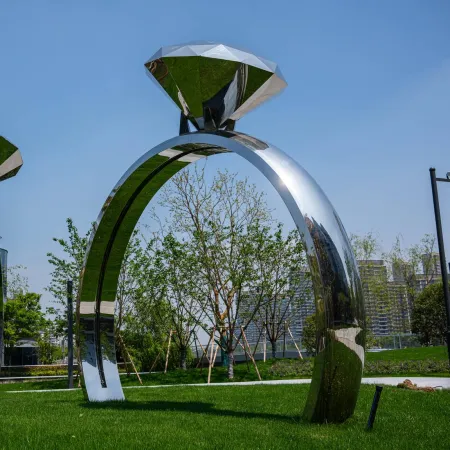
The finish is where stainless steel art installation becomes expressive, because the same alloy can be made to whisper or to shout. Mirror polishing transforms the metal into a liquid surface that reflects architecture, sky and passersby — a material that changes with every cloud and every season. Satin and brushed finishes soften the reflection into quiet elegance, hiding fingerprints and forgiving daily contact. Bead-blasting produces a soft uniform tone that photographs evenly, and colored or patterned treatments extend the vocabulary further. Each finish carries its own maintenance story: mirrors reward their environment but show marks in busy zones, while textured finishes stay calm under heavy use. We produce physical finish samples on every project, because stainless finish is a decision made in the hand and in the real light of the site, never from a photograph.
Surface quality in stainless also depends on how the metal is handled between the workshop and the site, a chapter of the process that separates experienced manufacturers from casual ones. Polished surfaces are protected with peelable films or padded covers during transport; lifting points are placed where slings will not mark visible faces; and assembly sequences are planned so modules never rub against each other. On site, the final clean removes every fingerprint and transit mark so the work is unveiled at full brilliance. We treat the journey from workshop to unveiling as part of the finishing process, because a stainless steel art installation that is perfect in the bay but scarred in the plaza has failed its only audience — the public who will see it first on opening day and judge it daily ever after.
Stainless Finishes Compared
| Finish | Visual Character | Care Profile |
|---|---|---|
| Mirror polish | Reflective, ever-changing, dramatic | Regular washing; polish in coastal zones |
| Satin / brushed | Quiet, elegant, forgiving | Simple washing; hides everyday marks |
| Bead-blasted | Soft, uniform, photogenic | Low maintenance; even aging |
| Patterned / colored | Graphic, contemporary, distinctive | Follow the treatment's specified care |
Structure and Welding: The Invisible Engineering
Stainless allows forms that other materials cannot hold — thin skins over large voids, cantilevers that appear to float, structures that read as weightless — but every one of those forms is a structural argument that must be won in engineering. Load paths must be calculated, local buckling resisted, wind uplift anchored and thermal movement absorbed across long spans. Welding is the craft heart of stainless work: weld zones must be purged to preserve corrosion resistance, heat input controlled to prevent distortion, and every weld finished so the surface reads as continuous rather than patched. We engineer and weld stainless to the standard its permanence promises, because a stainless steel art installation is built to be looked at for decades — and every compromise in its invisible structure eventually becomes visible.
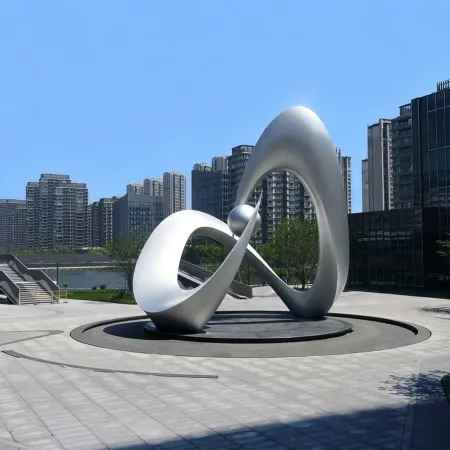
Designing in stainless also rewards a different kind of boldness, because the material's strength allows forms that would be impossibly heavy or clumsy in other metals. Thin edges that catch the light, large unbraced surfaces that read as pure geometry, cantilevers that appear to float and lattice structures that combine strength with lightness are all within stainless's reach when the engineering is honest. This is why so many of the world's most photographed contemporary landmarks are stainless: the material lets artists pursue forms that seem to defy their own weight, and the engineering makes those forms safe for the public who stand beneath them. The collaboration between the artist's ambition and the engineer's calculation is where stainless sculpture becomes architecture — and where our studio has spent two decades perfecting the balance.
What Our Studio Delivers With Every Stainless Commission
Alloy specified against the site's real climate, from 304 to marine-grade 316
Purged, corrosion-safe welds finished to read as one continuous surface
Physical finish samples and trial assembly approved before production
Maintenance: The Stainless Reality
Stainless is low-maintenance, not no-maintenance, and the honest conversation is simple. In clean urban and rural environments, periodic washing keeps the surface at its best, and the self-healing oxide film handles the rest. In coastal or industrial zones, a disciplined cleaning schedule prevents the surface staining that even 316 can suffer when salt and dirt are left to sit. Where mirror finishes meet heavy public touch, scheduled polishing keeps the reflectivity that made the material worth choosing. None of this is onerous, and all of it is predictable — which is exactly why the care manual we deliver names the intervals, the products and the procedures, so the owner's team can keep a stainless steel art installation looking as it did on opening day for as long as the city stands.
Frequently Asked Questions About Stainless Steel Art Installations
Does stainless steel rust?
Not in the way ordinary steel does. Stainless forms a self-healing oxide film that resists corrosion, but in aggressive environments — salt air, chemicals, neglect — surface staining can occur. Choosing the right alloy for the site and keeping a simple cleaning schedule prevents it entirely.
What is the difference between 304 and 316 stainless?
316 adds molybdenum, which substantially raises resistance to pitting and corrosion from salt and chemicals. For coastal sites, road-salt zones and industrial atmospheres, 316 is the responsible choice; for most urban and rural settings, 304 performs excellently.
Can stainless be combined with other materials?
Yes — stainless pairs beautifully with weathering steel, painted steel, stone, glass and light. The engineering rule is galvanic isolation at every junction so dissimilar metals do not corrode each other, and we detail each combination case by case.
Why choose stainless over painted steel?
Stainless eliminates the recoating cycle that painted steel requires, delivers reflective and metallic effects paint cannot imitate, and carries a prestige that reads as permanent. Painted steel wins where flat color and budget lead; stainless wins where permanence and material honesty lead.
What scale of stainless work is possible?
From intimate hand-finished objects to landmark gateways over twenty meters, stainless scales exceptionally well because its structural strength allows slender, dramatic forms. Our portfolio includes some of the largest stainless public works in the regions we serve.
A stainless steel art installation is a commitment to permanence: an alloy chosen for its climate, a finish tuned to its light, welds that preserve its integrity and a care routine that keeps its promise for decades. In return, the material gives a city a landmark that reflects its sky, weathers its seasons and still looks as though it were installed last week when the trees around it have grown twice their height. If your project deserves that kind of future, our studio would be honored to build it — share the site and the vision, and we will show you what a stainless steel art installation can become in the hands of a studio that has been perfecting the material since 2003.