How Urban Large Sculpture Becomes an Identity for a District
An urban large sculpture is more than a decoration in the city, it is a tool of placemaking that can give a whole district a name, an image and a reason to be visited, working at the scale of streets, towers and crowds. The urban environment is the most demanding stage in sculpture, dense with architecture, movement and competition for attention, and a work that succeeds there must be designed with the city itself as its material. After more than a decade creating and installing urban large sculpture across twenty-three countries, I have watched the right work transform how a district is perceived, photographed and remembered.
This guide explains how urban sculpture shapes the identity of districts and what it takes to commission a work that earns its place in the city.
Our urban sculpture services carry district landmarks from concept to site, the urban works archive documents our city installations, and the Heart of Changfeng shows how a large urban work became the symbol of its district.
Sculpture as the Identity Engine of a District
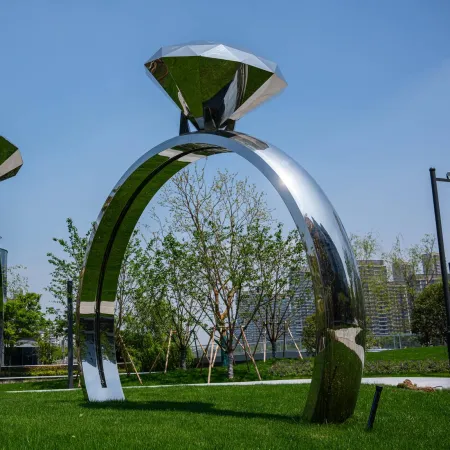
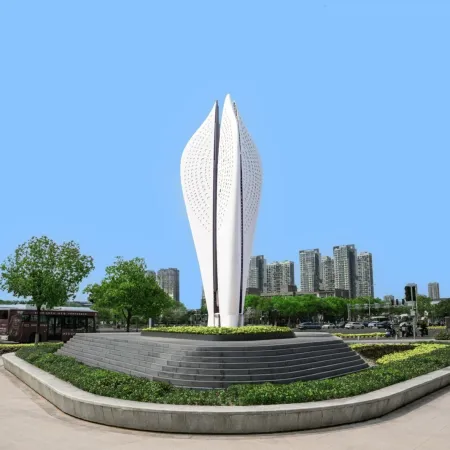
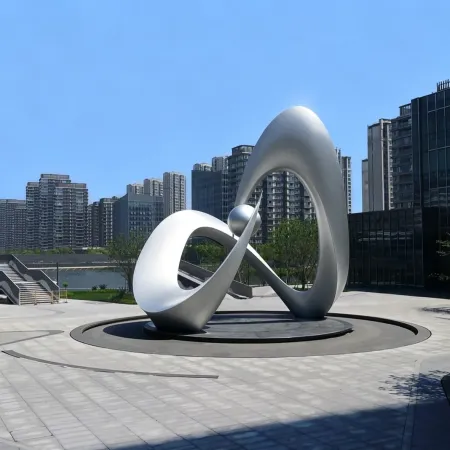
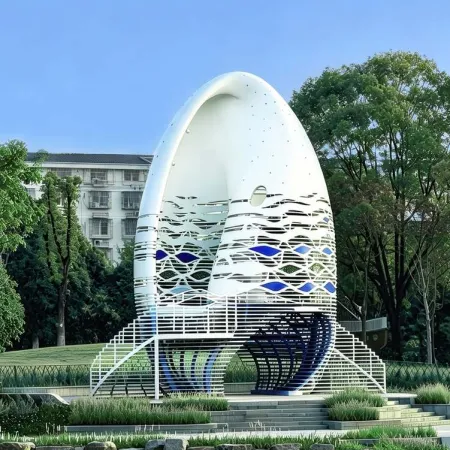
Districts are remembered by their landmarks, and an urban large sculpture can become the single image that carries a whole area in the public mind. A striking work gives people a way to describe where they are, gives the district a logo that needs no design agency and gives the media a visual that represents the place in every story. When a sculpture achieves that status, it stops being an artwork and becomes infrastructure of identity, an asset that works for its district every day in every photograph, broadcast and social post.
That identity pays measurable dividends. Districts with a recognised landmark attract more visitors, support higher property values, draw media coverage and give local businesses a shared point of pride, and the sculpture that provides it becomes one of the best-value investments the district ever makes. The key is commissioning work that can carry that weight: strong enough in idea to be worth remembering, original enough to belong to this district alone and excellent enough in execution to reward the attention it receives.
Designing at the Scale of Streets and Towers
An urban large sculpture must be designed at the scale of its environment, which means competing with buildings, streets and signs for the eye of people who are often moving fast. The silhouette must read from the distance of the whole block and from vehicles as well as pedestrians; the form must relate to the height and mass of the surrounding towers; and the presence must be strong enough to hold its own against the visual noise of the city without adding to it. Scale in the city is not about size alone but about the relationship between the work and everything around it.
The urban work must also perform at every hour of the city's long day. By day it competes with architecture and activity; at dusk it becomes a silhouette against the skyline; and at night it may need lighting to keep its presence, because a city landmark that vanishes after dark has failed half its job. We design urban commissions with the full cycle in mind, integrating the night strategy into the form itself so the work belongs to the illuminated city as completely as it belongs to the daylight one.
| Urban Setting | Role of Sculpture | Key Design Demand |
|---|---|---|
| City entrance | Gateway and first impression | Readable at traffic speed |
| Business district | Prestige and brand | Premium materials, bold form |
| Cultural quarter | Artistic leadership | Conceptual depth and originality |
| Waterfront | Destination and civic pride | Wind and water-resilient form |
The Discipline of Urban Materiality
An urban large sculpture must be made of materials that can survive the urban contract: pollution, vibration, crowds, cleaning and the harshest weather the city can produce. Stainless steel leads for its durability and its ability to reflect the city into the work; painted steel delivers the colour that makes bold urban statements; weathering steel offers an industrial warmth that suits regenerated districts; and bronze carries a civic dignity for ceremonial locations. The finish must be specified for the urban atmosphere and maintained on a realistic schedule, because a city work that loses its surface loses its voice.
Urban detailing must also plan for the realities of city life. The work must resist the grime of traffic, tolerate the touch of thousands of hands, survive the occasional impact of vehicles and machinery, and shed the water that urban drainage cannot always manage. These are not glamorous requirements, but they decide whether a landmark still looks intentional after a decade in the city or slowly degrades into neglect, and a studio with deep urban experience designs against them from the first sketch.
Commissioning an Urban Landmark
The commissioning of an urban large sculpture should be treated as a piece of city-building, with the same seriousness as the architecture around it. The process should begin with the district's identity and ambitions, develop concepts through dialogue with the people who own and use the space, and carry the chosen work through full engineering, fabrication and installation with professional discipline. Community and stakeholder engagement is not a formality but a source of strength, because a work that the district has helped to shape is a work the district will defend.
Since 2003 our studio has designed and installed urban large sculpture across twenty-three countries, working with cities, developers and communities to create works that define their districts. We bring the full chain, concept, engineering, fabrication and installation, under one roof, and we would be glad to study your district, listen to its story and help you commission the urban large sculpture that will carry its identity into the future.
- Think in districts: the sculpture serves the whole area, not one plot
- Design for speed and distance: the city is seen moving fast
- Own the night: lighting is part of the urban form
- Build for urban life: pollution, crowds and cleaning are design facts
A District Landmark Delivers to Its City
An identity that appears in every image of the area
A destination that draws visitors and media
A source of pride for the whole community
A strategic asset that appreciates with time
Coordinating Sculpture With the City Around It
An urban large sculpture never stands alone, because it shares its space with traffic systems, street furniture, underground services, planting and the daily choreography of the city, and its success depends on how gracefully it coordinates with all of them. The position of the work must respect sightlines from the street, pedestrian desire lines, the locations of services and the operational needs of the district, which demands early consultation with the engineers, planners and utilities who own the underground city. A sculpture that is designed in isolation will collide with these realities, while one that is composed with them from the start finds its place with an ease that makes it look inevitable.
The coordination continues into the details of the installation itself. Foundations must be placed around buried services, lighting must respect the street lighting and traffic signals, and the work must survive the maintenance operations, snow clearing and occasional impacts that are part of urban life. We manage this coordination for every urban commission we deliver, working with the district engineers and authorities so that the sculpture and the city serve each other rather than obstruct each other. The result is a work that belongs to its urban context as completely as the buildings around it, and that belonging is what allows an urban large sculpture to become the identity of its district rather than merely an object in it.
Frequently Asked Questions About Urban Large Sculpture
How does a sculpture become a district's identity?
By combining a strong single idea, a scale that suits the district and a form that appears in media and daily photography. Adoption grows when the community understands and claims the work as its own.
What makes urban sculpture different from other public art?
The urban work must compete with buildings and activity, read at speed and distance, perform by day and night, and survive the harshest conditions of city life. It is designed with the city itself as its context.
Should urban sculpture include lighting?
Almost always. A city landmark that vanishes after dark has failed half its job, so lighting should be designed as part of the form and engineered for public safety and maintainability.
How do we engage the community in an urban commission?
Through genuine consultation during the design process, sharing concepts and listening to response. A district that has helped shape its landmark will protect and promote it for generations.
What materials survive the urban environment best?
Stainless steel leads for durability and reflectivity, with painted steel for colour, weathering steel for industrial warmth and bronze for civic dignity. Finishes must suit the urban atmosphere and a realistic care plan.
An urban large sculpture is one of the most powerful tools a city has for giving a district a face, and it rewards the client who commissions with the seriousness the city deserves. Choose an idea with strength, a studio with a record and a form that honours its streets, and your work will define its district for generations.
Let our studio help you commission the urban large sculpture that will become the identity your district has been waiting for.