Why Outdoor Sculpture Installation Is the Moment Everything Is Won or Lost
Outdoor sculpture installation is the moment when years of design and fabrication finally meet the ground, and it is also the moment of greatest risk, because a work that has survived the workshop can still be damaged, misaligned or made unsafe by a poor installation. The finest sculpture deserves an installation as disciplined as its making, and clients who understand this protect everything they have invested.
This guide explains what outdoor sculpture installation really involves, from foundations and lifting to alignment and handover, and how to plan an installation that delivers the work complete and secure.
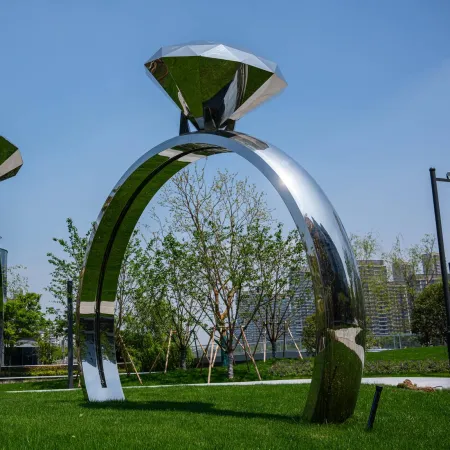
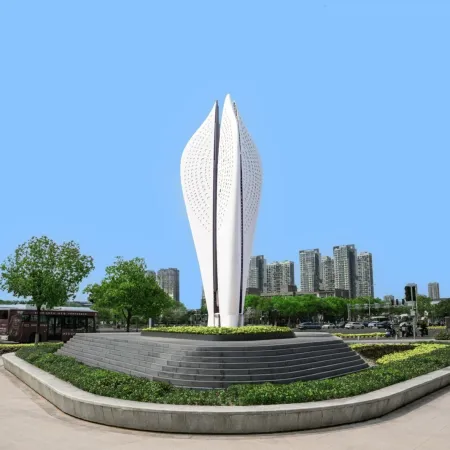
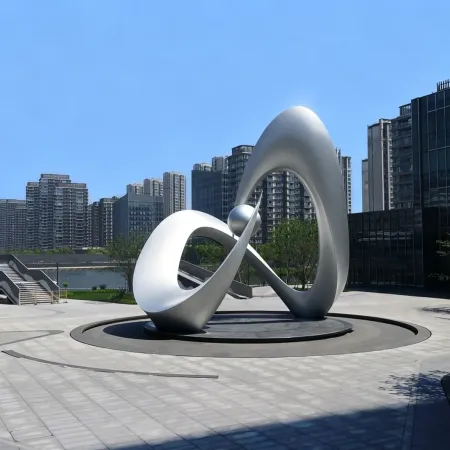
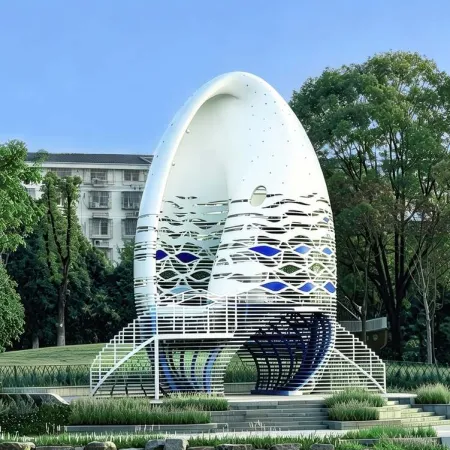
See works delivered to their sites in Zhong Gong Water Control, the ground integration of Honeycomb Pavilion and the site-specific placement of Artistic Light Columns.
The Foundation: What the Ground Must Carry
Outdoor sculpture installation begins underground, because the foundation is what carries the work through storms, frost and decades of public life. The foundation must be designed for the weight of the sculpture, the wind loads of the site and the real bearing capacity of the soil, which is why ground investigation matters for any significant work. In urban sites the foundation must also respect what lies beneath, car parks, services, tunnels and drainage, and the design is often coordinated with the engineers of the surrounding development.
The foundation also sets the geometry of the installation. Holding-down bolts and fixing points must be positioned to match the sculpture's base within tight tolerances, so the work rises plumb and true, and the details around the base, drainage, access for maintenance and the junction between sculpture and ground, must be resolved before the concrete is poured. Clients should treat the foundation as part of the sculpture itself, because a base that fails, settles or drains badly will compromise even the finest work above it.
Lifting, Rigging and the Fragile Surface
The visible drama of outdoor sculpture installation is the lifting, when sections weighing tonnes are raised by crane, swung over the site and lowered onto their fixings, and it is an operation that demands planning as precise as the fabrication. The rigging plan must consider the weight and balance of each section, the capacity and reach of the crane, the access for the vehicle, the ground conditions for outriggers and the weather, since wind can make a planned lift impossible. Every lift should be rehearsed on paper before it happens in the air.
The surface of the sculpture is most fragile at this moment. Lifting slings and clamps can mark a mirror finish, swinging sections can strike scaffolding or each other, and the final adjustments happen while the work hangs, so the installation crew must include people who understand the surfaces and how to protect them. The fabricators who built the sections should lead or supervise the lifting, because they know exactly where the work can be gripped, how it balances and how the sections must align, and their presence turns a risky operation into a controlled one.
| Installation stage | Activity | Key risk managed |
|---|---|---|
| Ground works | Excavation and foundation pour | Soil, services and tolerances |
| Delivery | Sections arrive on site | Access, transport and protection |
| Lifting | Sections raised and placed | Crane capacity, wind and balance |
| Alignment and fixing | Plumb, level and bolted | Precision and surface protection |
| Finishing and handover | Touch-up, clean and document | Final condition and care records |
Alignment, Fixing and the Invisible Craft
Once the sections are lifted into place, outdoor sculpture installation becomes a work of invisible precision. The sculpture must be brought to plumb and level, its orientation checked against the design and its sections aligned so that seams and surfaces meet as intended, and only then are the fixings torqued to hold it against every future force. This is the craft that no photograph shows, yet it decides whether the work stands true for decades or settles into a subtle wrongness that no one can quite name.
The fixing system itself deserves the same care as the sculpture. Bolts must be of the specified grade and torqued to the specified values; connections must allow the thermal movement the engineering requires while holding the work stable; and access for future maintenance must be preserved rather than sealed away forever. The installation records, what was fixed, how, with what torque and to what tolerance, should be documented and handed to the owner, because they are the reference for every future inspection and repair.
Safety, Logistics and the Public During Installation
Installing sculpture in a public space means managing the public through the works, and safety is the first duty of every plan. The site must be secured, the lifting zone kept clear, the pedestrian routes maintained or diverted safely and the work protected from interference through every stage, and all of this must be coordinated with the landowner, the local authority and often the traffic management teams. A professional installer treats the public as part of the site and plans their safety as rigorously as the engineering.
Logistics decide whether installation runs smoothly or becomes a saga. Deliveries must be scheduled for the site's access and the crane's reach, the ground must be ready for the loads and the weather must be watched, because wind, rain and frost all change what is safe. The programme should include contingency for the unexpected, a late delivery, a change in ground conditions, a day of high wind, and the client should choose an installer with the experience to adapt without panic. When the logistics are handled well, the installation disappears into the result, and the sculpture simply appears, as if it had always stood there.
Handover, Documentation and the First Care
Outdoor sculpture installation concludes with a handover that should be as careful as the installation itself. The work is cleaned, touched up where the lifting left marks and inspected in final condition, and the owner receives the documentation that carries the work into the future, structural records, fixing details, material information and a clear maintenance guide. The unveiling is the celebration, but the handover is the moment the owner truly receives the work, and a responsible studio makes it thorough.
The first months after installation also matter, because the work settles into its site, the ground around it matures and any issue that was hidden by the excitement of completion may surface. A good installer schedules a follow-up inspection, checks the fixings, the base and the surfaces after the first season and addresses anything that needs attention, and the client should expect this as part of the service. When the handover is complete and the follow-up is done, outdoor sculpture installation has delivered what it promised: a work that stands secure, documented and ready for its decades of public life.
- Engineer the ground first: the foundation carries everything
- Plan every lift: weight, crane, wind and access on paper
- Protect the surface: the work is most fragile in the air
- Document the fixing: records carry the work into the future
Installation That Delivers
A foundation engineered to the real ground
Lifts planned down to the rigging point
Alignment and fixing done with precision
A handover the owner can trust
Weather Windows and the Installation Calendar
The installation of outdoor sculpture is governed by the sky, because wind, rain, frost and even excessive heat each change what can be done safely and well, and a wise programme is built around weather windows rather than fighting them. Lifting is the most weather-sensitive stage, since wind can make a crane lift unsafe or impossible, so the installation calendar should allow flexibility, watching the forecast and using the good days rather than gambling on a fixed date. Rain affects surfaces and foundations, frost affects concrete and grout, and the plan should protect the work and the crew through every condition.
The calendar should also respect the life of the site, because a plaza, park or street is rarely empty and the installation must fit around events, commuters, planting seasons and public life. The best installations are planned with the site manager, choosing windows when disruption is least, scheduling the noisy and intrusive stages for the quietest hours and communicating with the public through the works. Contingency is part of the plan, a spare day for the weather, an alternative sequence for the unexpected, and the client should expect a fabricator-installer to manage this with experience rather than panic. When the calendar honours the weather and the site, outdoor sculpture installation delivers its result calmly, and the public barely notices the work that brought their new landmark.
Frequently Asked Questions About Outdoor Sculpture Installation
Who should install the sculpture?
Ideally the studio that fabricated the work, because it knows the sections, the surfaces and the fixings intimately. If installation is separate, ensure the installer works from the fabricator's drawings and under its supervision.
What foundations does a sculpture need?
Foundations are engineered for the weight, the wind loads and the real soil, and coordinated with anything below ground. Ground investigation and structural design are essential for significant works.
How long does installation take?
From a few days for small works to several weeks for large or complex installations, depending on foundations, lifting and site conditions. The programme should allow for weather and the unexpected.
Can a sculpture be installed in bad weather?
Some stages, especially lifting, are weather-sensitive. Wind, rain and frost can make lifts unsafe or damage surfaces, so the programme should watch the forecast and hold work when conditions demand it.
What should we receive after installation?
A proper handover includes structural and fixing records, material information, a maintenance guide and a final inspection. A follow-up visit after the first season is also good practice.
Outdoor sculpture installation is the final test of a commission and the beginning of its public life, and it rewards the same discipline as the design and the making. When the foundation is engineered, the lifts are planned, the surfaces are protected and the handover is complete, the sculpture stands ready to serve its place for decades, and the installation that made it possible disappears into the confidence of the result.
Plan your outdoor sculpture installation with the team that builds and installs as one.