What a China Public Art Sculpture Factory Handles for Overseas Clients
A China public art sculpture factory can deliver museum-grade public works to any country, provided the buyer chooses a maker that has turned cross-border delivery into a routine rather than an adventure. The right factory is not merely a workshop with cheap steel; it is a full partner that manages design development, engineering, fabrication, finishing, crating, shipping and on-site installation so the overseas client receives a standing work, not a collection of problems.
This guide explains what working with a China public art sculpture factory really involves, how to evaluate one from another continent, and what the delivery chain must include if the work is to arrive intact and install without crisis. Our factory has produced and shipped more than 3,000 installed works to 23 countries since 2003, and we write from the routines that distance has forced us to perfect.
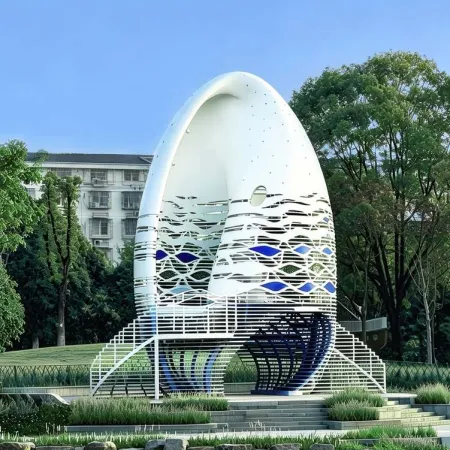
Review the range we ship worldwide in the project gallery, see the full capability in our services and inspect a shipped landmark like Hello Conch.
Why Buyers Look to China for Public Sculpture
Buyers choose a China public art sculpture factory for two reasons that are hard to find together elsewhere: serious fabrication capability and disciplined cost control. The country's industrial base supports large-scale metal forming, precision cutting, robotic and hand welding, advanced coating lines and engineering talent, which means a studio in China can build works that would strain smaller regional workshops. At the same time, the mature supply chain keeps the cost of materials, labour and logistics competitive for the quality delivered.
But the advantage is only realised when the factory understands export. A domestic workshop that has never packed for ocean freight will learn expensive lessons on your project, from corrosion during transit to sections that cannot fit through the port gates. The factory worth hiring has done the journey many times: it knows which finishes survive a month in a container, how to crate a 12-metre interactive landmark so it arrives unmarked and how to sequence delivery so the site crew is ready when the truck arrives.
| Export stage | What an experienced factory covers | Cost of a novice missing it |
|---|---|---|
| Design development | Engineering drawings in your standards | Local approvals that fail on arrival |
| Fabrication | Certified welds, outdoor finishes | Corrosion and joint failures in year one |
| Quality control | Inspection photos, third-party checks | Faults discovered after shipment |
| Crating and shipping | Export-grade packing, freight booking | Damage and delay at the destination |
| Installation | Local crews, supervision, commissioning | Assembly improvised far from help |
Evaluating a Factory You Cannot Visit This Week
Most overseas buyers cannot fly to the factory before committing, so the evaluation must happen through evidence. Ask for the engineering capability in writing: the structural calculation software the factory uses, the welding certifications of its crew and the finishing system it specifies for outdoor stainless steel in coastal climates. Request a live video walkthrough of the workshop, because the organisation of the floor, the housekeeping and the presence of real work in progress tell you more than any brochure.
Then test the communication, because a China public art sculpture factory is only as good as its ability to understand you. In our experience the decisive qualities are plain English updates, honest schedules and drawings that reflect your comments within days rather than weeks. We send clients progressive photo and video documentation through fabrication, and we welcome third-party inspection at agreed milestones, because a factory confident in its quality has nothing to hide from the buyer's eyes.
Engineering to the Standards of the Destination
A public sculpture built in China must be engineered for the rules of the country where it will stand, and an export-savvy factory asks about those rules early. Wind and seismic loading are calculated for the actual site, not guessed from the factory's home region, and the structural documentation is prepared so that a local engineer or authority can review and approve it without translation friction. Material grades are confirmed against the destination climate, with 316 stainless steel specified where salt and humidity demand it.
The factory should also plan the foundation interface before shipping. Anchor plans, base-plate details, load figures and grouting instructions must reach the local contractor early enough to pour correctly, because nothing stalls an installation like a foundation cast to the wrong dimensions. Factories with international experience keep a library of these interface drawings and can guide your local engineer through the handover, which is exactly the kind of detail that separates a shipment from a successful installation.
- Site-specific engineering for the destination's wind and seismic rules.
- Export-grade finishing that survives sea freight and outdoor life.
- Progressive documentation with photos and video at every milestone.
- Foundation interface drawings delivered before the concrete is poured.
- Local installation support with supervision and commissioning.
What Export Experience Adds
Finishes that survive a month at sea
Crates engineered for the freight route
Drawings your local engineer can approve
A foundation that fits on the first pour
Shipping, Installation and the Care Handover
The final test of a China public art sculpture factory is what happens after the work leaves the workshop. Crating must be engineered for the specific route, protecting surfaces against moisture, vibration and handling, and the packing list must make customs clearance straightforward. The factory should coordinate with your nominated freight forwarder or provide its own, confirm the delivery window with the site and prepare for the possibility that the work arrives before the foundation is ready.
Installation is where distance usually bites, and the experienced factory plans for it. Whether our own crew travels to the site or a local contractor works under our supervision, the assembly sequence, the lifting plan and the commissioning steps are documented in advance. The client receives a care handover that explains routine maintenance, inspection intervals and the simple repairs that keep the work beautiful, because a sculpture delivered is not a sculpture finished until it stands and will keep standing. That full chain is what makes a factory export-ready rather than merely export-curious.
Managing Distance, Time Zones and Expectations
Working with a China public art sculpture factory across time zones is manageable when the communication system is designed rather than improvised. The best arrangements fix a rhythm: a weekly call at a time that suits both sides, a written update before every call, a named contact who answers within a working day and a decision log that records what was agreed so nothing is lost in translation. The factory should also publish its calendar of holidays and production windows early, so the client can plan approvals and deliveries around the moments when the workshop will be quiet.
Expectation management is the quieter half of the relationship. A factory that promises a schedule it cannot keep, or absorbs a change without telling you it will cost time, is storing trouble for later, while an honest partner tells you early when a date is at risk and what the options are. We send clients progressive photo and video documentation, we flag risks in writing and we treat every change through a written variation that states its cost and its schedule impact before work proceeds. That transparency sounds simple and is rare, and it is the reason clients who start with one China public art sculpture factory often come back for the next.
The communication system is only as good as its outputs, so agree what the client receives and when. We work to a documentation rhythm that includes a written progress report at each milestone, a photo set of the work at every major stage, a short video where the process is hard to convey in stills and a signed inspection record where the client or their agent has attended. That documentation is shared through a single channel that both sides can search, so a question asked in week twenty can be answered from the record of week three rather than from anyone's memory. Clients who commission across borders tell us that this paper trail becomes their confidence, because it lets them verify progress, approve stages and hold the factory to its promises without boarding a plane.
Frequently Asked Questions About Using a China Public Art Sculpture Factory
How do I evaluate a factory from overseas?
Ask for engineering credentials, request a live video walkthrough, test the communication speed and demand progressive photo and video documentation through fabrication.
Can a Chinese factory engineer to my local standards?
Yes, when it calculates for the destination site and prepares structural documentation that your local engineer can review and approve without friction.
Who handles shipping and customs?
An export-experienced factory coordinates freight, prepares export-grade crating and provides packing documentation that makes destination clearance straightforward.
Who installs the sculpture in my country?
Either the factory's own crew travels to the site or a local contractor works under the factory's supervision using a documented assembly and lifting plan.
What protects quality before shipment?
Agreed inspection milestones, third-party checks and progressive documentation let you verify the work at every stage while it is still in the factory.
A China public art sculpture factory becomes a genuine partner when it covers the whole export chain, from site-specific engineering and certified fabrication to export-grade crating and supervised installation. Evaluate the evidence, test the communication and insist on progressive documentation, and your work will arrive as designed and stand as approved.
If you are comparing China public art sculpture factory partners and want one with a 23-country delivery record, send us your drawings and your destination and we will respond with a practical export plan.