Why a Landmark Park Sculpture Becomes the Soul of a Green Space
A landmark park sculpture works differently from a civic plaza landmark, because it must earn its place among trees, meadows and the quiet rituals of park life rather than compete with architecture and traffic. The best park landmarks are not simply large objects dropped onto grass; they are works that give a green space an identity, a meeting point and a reason to be remembered, becoming the place that families name when they arrange to meet and photographers frame against the seasons. I have spent more than a decade creating landmark park sculpture for clients across twenty-three countries, and this guide explains the particular art of sculpture for parks.
We will look at the roles a park landmark can play, the design language that suits green settings and the practical rules that keep a park sculpture safe, durable and loved.
Our landscape project archive shows park sculpture in its settings, the design and installation services cover the full journey, and the Homing Nesting piece demonstrates how sculpture can carry ecological and emotional meaning in a landscape.
The Many Roles of a Park Landmark
A landmark park sculpture can be many things to a green space, and the best commissions choose their role consciously. It can be an identity marker that gives the park a name in the public imagination; a meeting point whose base becomes the natural rendezvous; a destination that draws visitors into the deeper parts of the park; an interpretive piece that tells the story of the site ecology or history; a playable form that children adopt; or a contemplative work that gives the landscape a focal point. Clarifying the role at the start of the brief guides every later decision.
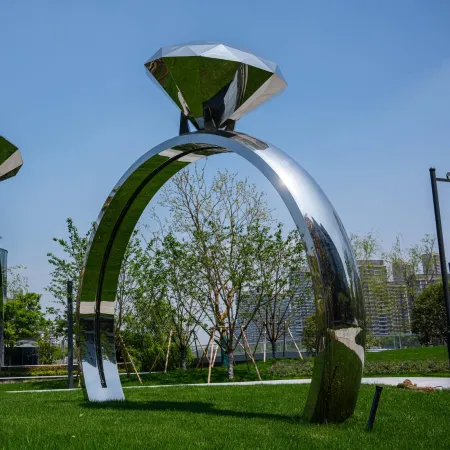
Parks also change the temporal life of a landmark. A park sculpture is seen against the full drama of the seasons, from blossom to autumn colour to snow, and its design can celebrate that cycle rather than merely survive it. A mirror surface catches the changing canopy, a form can be positioned to frame a famous view, and the sculpture can be composed so that the landscape completes it. The strongest park landmarks feel as though they grew from the ground, and that feeling is the result of designing with the park character, not against it.
Design Language for a Green Setting
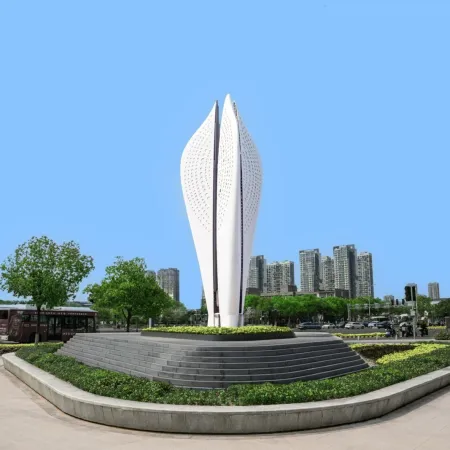
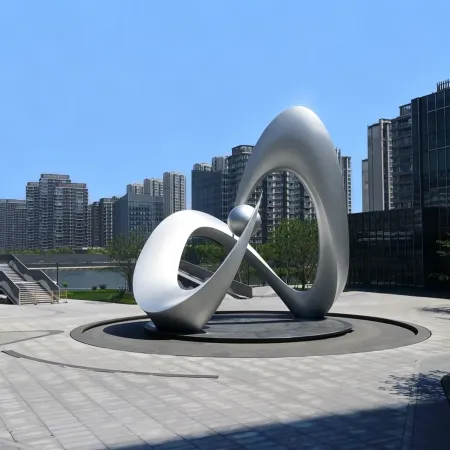
The formal language of a landmark park sculpture should answer the scale and character of its landscape. In a large natural park, a work can be monumental and abstract, reading across meadows and holding its own against mature trees; in an intimate garden park, a smaller, more intricate piece rewards close viewing; in a children or community park, playful and interactive forms extend the life of the space. Materials follow the same logic, with weathering steel and stone harmonising with nature, stainless steel catching the sky, and painted or composite forms bringing colour and joy.
| Park Type | Sculpture Character | Materials That Suit |
|---|---|---|
| Natural park | Monumental, land-art presence | Weathering steel, stone |
| City park | Identity marker, meeting point | Stainless, painted steel |
| Children and play | Playful, climbable, interactive | Composite, painted steel |
| Garden park | Intimate, contemplative detail | Bronze, stone, stainless |
Safety Rules That Are Non-Negotiable in a Park
Parks are used by the most vulnerable members of the public, so a landmark park sculpture carries safety responsibilities that a highway roundabout sculpture never faces. Children will climb what can be climbed, so either climbing is welcomed with safe, rounded, sturdy forms or it is made impossible with honest barriers and design; edges must be smooth or protected; materials must not splinter, corrode into sharp flakes or overheat in the sun; and the structure must tolerate the dynamic loads of children swinging and jumping. Safety certification and child-friendly detailing are part of the engineering, not an afterthought.
The ground around the sculpture matters as much as the sculpture itself. Fall surfaces beneath climbable forms, the protection of tree roots during installation, the management of runoff so puddles do not form at the base, and the placement of the work so it does not block sightlines for parents or maintenance vehicles are all siting decisions that decide whether a park sculpture is a pleasure or a problem. A studio experienced in park work will raise these questions before the concept is finalised, because they shape the design.
- Children: safe edges, materials and climbing design
- Ground: fall surfaces and root protection
- Sightlines: sited without blocking views or access
- Durability: finishes that tolerate play and weather
Interpretive and Ecological Park Sculpture
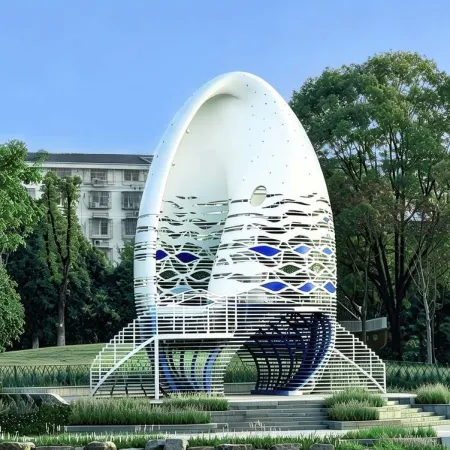
Some of the most successful landmark park sculpture carries meaning about the place itself, telling the story of its ecology, history or community. A work can celebrate the birds of a wetland, honour the trees of an ancient wood, mark the course of a lost river or interpret the geology beneath the grass, giving visitors a reason to look more carefully at the world around the sculpture. Interpretive sculpture enriches the park mission as well as its beauty, and it is particularly valued by parks that see themselves as educational as well as recreational places.
What Makes a Park Landmark Loved
It gives the park a name and meeting point
It reads beautifully in every season
It is safe for children and public life
It tells or honours the story of the place
Commissioning a Park Landmark the Community Adopts
The path to a beloved landmark park sculpture runs through the people who use the park. Engaging the community early, listening to how the space is used, sharing the concept before it is fixed and inviting the public to name the work all build the ownership that protects a sculpture from neglect and vandalism. The studio should also work with the landscape architects and park managers, because a sculpture that fights the planting plan or blocks the maintenance routes will always feel like an intruder, while one that collaborates with its landscape becomes part of the place.
Since 2003 our studio has designed and installed landmark park sculpture across twenty-three countries, in botanical gardens, city parks, children playgrounds and nature reserves. We design with the park character, engineer for the public who will use it and deliver every work with the maintenance guidance a green space needs.
A landmark park sculpture is the soul a green space shows the world, the work that turns a pleasant park into a place people carry in their memory. Designed with the landscape and adopted by the community, it becomes the heart of the park for generations.
Working With Landscape Architects and Park Managers
A landmark park sculpture never stands alone, because it lives inside a designed landscape, and its success depends on a genuine collaboration with the landscape architects and park managers who care for that landscape. The sculpture should be sited in dialogue with the planting plan, so that the trees frame the work as they mature rather than swallowing it; the ground treatment around the base should be designed with the landscape team; and the maintenance routes, lighting and access needs of the park should shape the detailing of the work. When the sculptor and the landscape architect work as partners from the earliest stage, the sculpture and the planting grow together into a composition that neither could have achieved alone.
The park managers bring knowledge that no drawing can capture, and their voice should be heard before the design is fixed. They know where the drainage fails in heavy rain, where the maintenance vehicles must turn, where the winter salt is stored and how the park is used after dark, and each piece of knowledge can save the project from a costly mistake. A studio that listens to the managers, adjusts the siting to their practical needs and details the work for the real conditions of the park is a studio that delivers park sculpture which serves its setting for decades. The best landmark park sculpture is the product of a team, and the client who brings that team together early gives the work its best chance of being loved.
Frequently Asked Questions About Landmark Park Sculpture
Can children climb on a park sculpture?
Only if it is designed and certified for climbing, with safe rounded forms, sturdy structure and appropriate fall surfaces. Otherwise the design should discourage climbing honestly rather than inviting accidents.
What materials are best for sculpture in a natural park?
Weathering steel, stone and bronze harmonise with natural landscapes, while stainless steel and painted or composite forms suit more managed or playful park settings. The choice follows the park character.
How is a park sculpture installed without damaging trees?
Root protection zones are mapped before installation, foundations are placed to avoid major roots, and construction traffic is routed carefully. A landscape-aware studio plans the installation around the living site.
How large should a park landmark be?
Scale follows the park size, the sightlines and the role of the work. A landmark should hold its own against mature planting without overwhelming intimate spaces, and scale is best tested on site before fabrication.
Should the community be involved in choosing a park sculpture?
Engagement builds ownership, and parks benefit when the public helps shape and name a landmark. Early consultation also reveals how the space is used, which makes the design more responsive.
A landmark park sculpture succeeds when it respects the green world around it, delights the people who live beside it and carries the story of the place into the future. That combination of humility and ambition is rare, and it is exactly what makes park landmarks so precious when they are achieved.
Tell us about your park, its people and its story, and we will show you the landmark park sculpture your green space deserves.