Why Commercial Abstract Sculpture Is the Strongest Signature a Building Can Own
A commercial abstract sculpture earns its place not by decorating a lobby but by doing commercial work: creating an identity visitors remember, framing a brand that photographs well, and giving people a reason to pause in a space designed for passing through. Abstract form is the commercial sector's natural language because it travels — across cultures, across marketing campaigns, across the changing tastes of a decade — without ever going out of style the way a literal figure can. Yifeng Sculpture Studio has designed and delivered commercial abstract sculpture for shopping districts, corporate campuses and mixed-use developments since 2003.
Below we explain how abstract commissions differ from decorative purchases, how to brief a sculptor so the outcome is both beautiful and on-strategy, and how to choose materials and scale that serve the commercial brief.
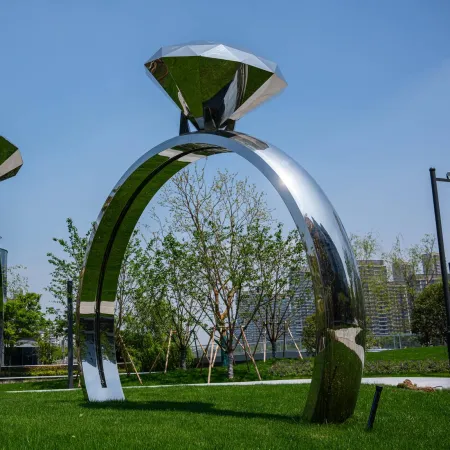
Our project archive shows commercial abstract works in real settings, the services overview explains how a commission is structured, and the Diamond Rings installation shows how pure geometry becomes a place's signature.
What Makes an Abstract Sculpture Commercial
The word commercial is not a criticism of the art; it is a description of the job. A commercial abstract sculpture is commissioned to perform — to be photographed from the right angles, to read clearly at the speed of a car and the pace of a stroll, to survive weather and cleaning chemicals, and to stay relevant as the tenants and campaigns around it change. That performance requirement shapes every decision: form must be strong from multiple sightlines rather than from one heroic viewpoint, materials must be chosen for maintenance budgets, and scale must be set by the architecture rather than by the artist's ego. The finest abstract works in commercial spaces succeed because they were briefed like brand assets and executed like public art.
Abstract Versus Decorative: Knowing the Difference
Many so-called abstract commissions are actually decorative purchases — pleasant shapes chosen from a catalog because a space felt empty. Decorative sculpture fills space; abstract sculpture makes space mean something. The difference shows in the brief: a decorative item is specified by size and style, while a genuine commission is briefed by idea and intent. What should the work say about this building, this brand, this district? What feeling should a visitor carry away? When the questions are about meaning rather than matching, the sculptor can design an abstract language specific to the place — a form that could not have been dropped into any other site. That specificity is what turns a purchase into an asset.
Signs You Are Briefing for Meaning, Not Decoration
- A named idea: the work responds to a concept — motion, connection, growth — not just a material
- A site strategy: placement is decided by sightlines and flow, not by whichever wall was empty
- An audience answer: the client can say whom the work is for and what they should feel
- A lifespan plan: materials and maintenance are chosen for a decade, not a grand opening
Writing the Brief That Produces Great Abstract Work
The single most important page in a commercial abstract sculpture project is the brief, and the best briefs share one quality: they describe the job the sculpture must do rather than the shape it must take. Describe the building's architecture and materials, the flow of visitors, the brand values and the feeling the space should project. State what must be true — visible from the entrance, safe for children, maintenance-light, weatherproof — and what is open — form, material, color, exact scale. Then step back. Sculptors respond to a well-drawn problem with invention; they respond to a prescriptive sketch with obedience. The commercial client who briefs the problem, not the solution, consistently receives the more valuable work.
Materials: Matching the Form to the Commercial Reality
Abstract form can be realized in almost any material, which makes material choice a genuine commercial decision. Stainless steel offers mirror polish for brand photography and low maintenance; painted steel delivers color at controlled cost; bronze brings warmth and permanence for flagship locations; and weathering steel suits outdoor commercial landscapes where its oxide tone complements planting and paving. Each carries different implications for cleaning, coastal environments and long-term appearance.
| Material | Commercial Strengths | What to Plan For |
|---|---|---|
| Stainless steel | Mirror finish photographs superbly | Fingerprint and smog management indoors |
| Painted steel | Full color range for brand identity | Periodic repainting in harsh sun |
| Bronze | Prestige, warmth, ages gracefully | Higher budget and patina maintenance |
| Weathering steel | Landscape-friendly oxide character | Runoff staining on pale paving |
Scale and Siting: Making the Work Read as a Landmark
Commercial spaces are sized for commerce, and a sculpture lost in a vast atrium or overwhelmed by a tall facade fails its brief no matter how beautiful it is. Scale should be set by the architecture's rhythm and the visitor's viewing distance — a work seen from an upper gallery needs a different presence than one encountered at ground level. Siting is equally strategic: near entrances it becomes a meeting point; along circulation routes it slows the walk and frames retail frontage; in arrival courts it creates the photograph that carries the brand. The most successful commercial abstract sculpture projects treat scale and siting as design work in their own right, studied with sightlines and mock-ups before a single piece of material is cut.
What Our Studio Delivers for Commercial Clients
A brief workshop that turns brand values into visual language
Concept models tested against sightlines and scale studies
Material and finish selection matched to maintenance budgets
Engineering, fabrication and installation under one roof
Measuring the Commercial Return
Commercial clients are entitled to ask what a sculpture returns, and the answer is measurable. A landmark abstract work appears in tenant marketing and city photography for decades, which is advertising the landlord did not pay for. It gives the development a name — the building with the rings, the plaza with the wave — that people use in directions and listings. It increases dwell time in retail adjacencies and creates the photo moment that social media carries free. None of this replaces the aesthetic reason for commissioning art; it simply explains why commerce and art are not opponents in a well-run project. The sculpture that is briefed as an asset, designed as art and engineered as infrastructure delivers on all three accounts at once.
Finally, consider how the work will be seen after dark and across the seasons. A commercial abstract sculpture that reads powerfully by day can disappear at night unless the lighting is designed with the form — uplighting that follows the silhouette, or integrated illumination that gives the piece a second life after sunset. Likewise a form chosen for summer greenery may look thin against winter branches, so the studio should test the sculpture against the site's full seasonal cycle. These considerations are not luxuries; they are part of making the investment work every hour of every day, which is precisely what a commercial brief demands of its art.
Frequently Asked Questions About Commercial Abstract Sculpture
Will abstract art date faster than figurative work?
Usually the opposite. Abstract form tied to a place's own geometry and materials tends to age with the architecture, while figurative styles often carry the fashion of the decade they were made in.
How do we help stakeholders accept a non-figurative work?
Show the logic, not just the image: how the form derives from the brand or site, how it will look in context renders, and how it photographs. A committee that understands the idea behind the abstraction rarely rejects it.
Can abstract sculpture include lighting or motion?
Yes — integrated lighting extends the work into the evening and is common in commercial settings; kinetic elements add a layer of life. Both add engineering and maintenance, so the commercial brief should weigh the gain deliberately.
What budget range should we expect?
Budget is driven by size, material and complexity rather than a fixed band. A serious studio will give a realistic estimate against a written scope, and it is wiser to size the work to the budget honestly than to stretch a number across an over-ambitious design.
How long does a commercial commission take?
Typically three to six months from brief to installation for a medium work, longer for large or technically complex pieces. A clear schedule with milestones protects both the opening date and the quality of the art.
A commercial abstract sculpture is one of the few investments that can give a building an identity no competitor can copy — a signature form that appears in every photograph, every campaign and every visitor's memory of the place. Our studio has built such signatures since 2003, working with developers and brands to create commercial abstract sculpture that earns its place in the hardest currency of all: the daily attention of the public. If your space is ready for a work that means business, bring us the architecture, the brand and the ambition — the commercial abstract sculpture we develop together will be briefed like an asset, designed like art and built to last like infrastructure.
Start with a conversation rather than a catalog: tell us what the space should say, and we will show you the abstract language that says it. That first exchange has begun every commercial abstract sculpture project in our archive, and it can begin yours.