How Outdoor Sculpture Design and Fabrication Must Work as One Discipline
Outdoor sculpture design and fabrication only deliver a lasting work when they are treated as a single discipline, because every artistic decision carries engineering consequences and every workshop decision carries artistic ones. A form that cannot be fabricated honestly, or a build that betrays the design, fails the client no matter how strong the other half was, and the commissions that endure are those where designer and maker think as one.
This guide explains how outdoor sculpture design and fabrication are integrated in a serious studio, what the milestones should be, and how to commission a work where the art and the making honour each other.
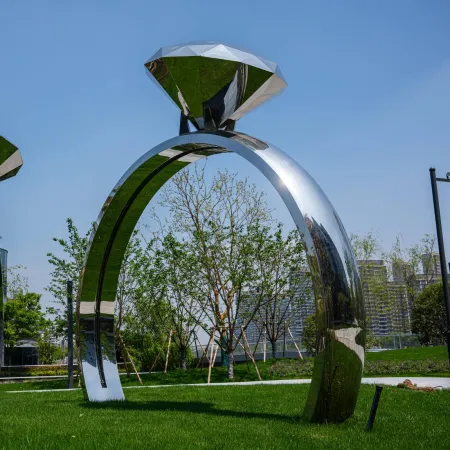
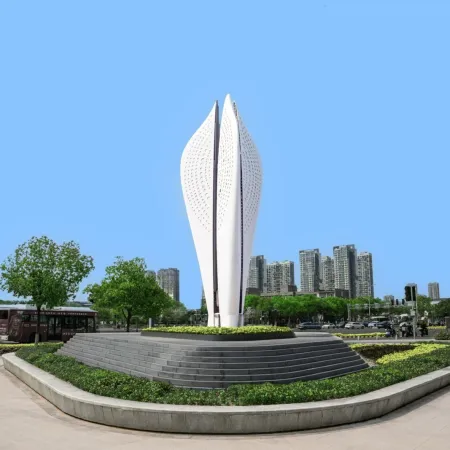
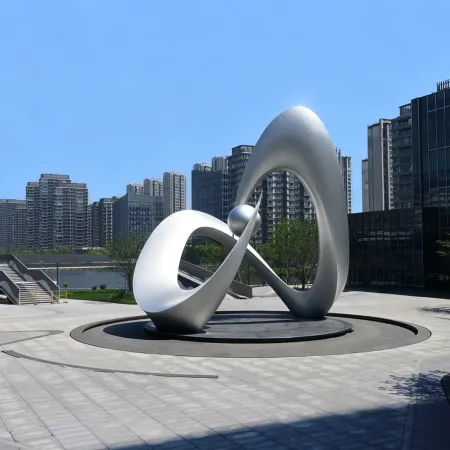
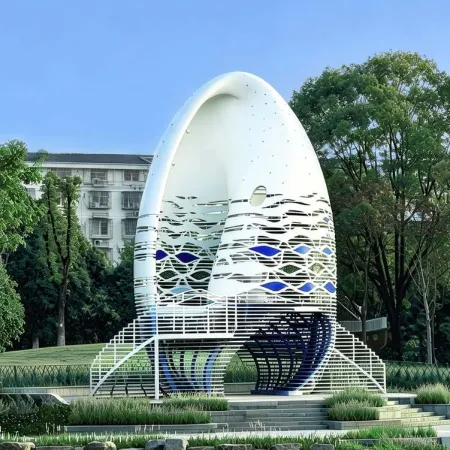
Trace the integration behind Weaving Shadows of Fishing Waves, the engineered elegance of Artistic Light Columns and the material discipline of The Diamond Rings.
Why Design and Making Cannot Be Separated
When outdoor sculpture design and fabrication are separated, quality leaks through the gap between them. A designer who has never made may specify forms that cannot be built soundly, curves that cannot be formed or joints that cannot be finished; a fabricator who has never designed may build what was drawn without understanding what the drawing intended. The sculpture that results is neither the designer's vision nor the maker's best work, and the client pays for the disconnect. Integrated studios close this gap by keeping authorship and making in the same hands.
Integration also protects the design through the realities of making. When the people who conceived the form are the people solving the problems of material, wind, transport and finish, the design is adapted with understanding rather than compromised by ignorance, and the sculpture that emerges is truer to its intention, not less. The fabrication stage stops being a threat to the art and becomes the art's completion, which is why the finest outdoor sculpture has always come from studios where design and making are one continuous act.
Designing for the Outdoor Reality
Outdoor sculpture design and fabrication begin with the brutal honesty of the site, because a form conceived in the studio must survive sun, rain, frost, wind and public life. The design must specify materials suited to the climate, from grade 316 stainless for coastal air to bronze or weathering steel where their characters fit, and it must detail drainage, sealing and movement so that water and temperature never work against the piece. Every drawing decision carries a consequence for the decades ahead, and the designer who makes understands those consequences as he draws.
Structure is part of the design from the first sketch. Wind load, weight, foundation and the way the form will be sectioned for transport and lifted on site all shape what is possible and what is wise, and an integrated team resolves these in the design rather than discovering them later. The result is a sculpture that is not merely beautiful but buildable, durable and installable, and that honesty at the drawing stage is what allows the ambition of the art to survive contact with gravity, weather and the road.
| Milestone | Purpose | Client action |
|---|---|---|
| Concept | Directions for the site and story | Choose the vision |
| Maquette and model | Test form in three dimensions | Approve the form |
| Engineering | Structure, wind and foundation | Review the calculations |
| Fabrication drawings | Translate design for the workshop | Confirm details and finishes |
| Fabrication | The work is built | Inspect at milestones |
| Installation | Foundation, lifting and finishing | Approve completion |
The Workshop as the Design's Completion
In an integrated studio, outdoor sculpture design and fabrication meet in the workshop, where the design is translated into material and the material tests the design. The sculptor models the form, the engineers resolve the structure, and the fabricators cut, form, weld and finish, with the same people moving between drawing table and bench. This continuity means that when a problem appears, it is solved by someone who understands both the art and the metal, and the solution serves both rather than sacrificing one to the other.
The workshop also completes the design in ways the drawing cannot. A curve is refined as it is formed, a surface is perfected as it is polished and a proportion is corrected as it meets the eye at full scale, and these adjustments, made by hands that respect the design, are what give the finished work its life. Clients should expect to see this process and to be part of it at key moments, because the approvals that matter, the maquette, the full-scale form, the finish sample, are the points where the design and the making are both still visible and both can still be guided.
Finishes, Materials and the Client's Choices
Material and finish decisions sit at the meeting point of design and fabrication, and they should be made with both in view. The design asks what character the surface should have, mirror brilliance, satin calm, painted colour, natural patina, weathered rust, while fabrication asks how that surface will be achieved and kept, which abrasives, which coatings, which maintenance. The integrated studio presents these choices honestly, showing samples and explaining the care each finish demands, so the client chooses with open eyes rather than discovering the consequences later.
The choice should also respect the site and the owner. A mirror finish that must be washed often may suit a well-staffed civic site but burden a private owner; a weathering steel that stains paving may be wrong for a polished urban square; and a painted finish may be perfect where a coating budget exists. The studio that advises on these realities, rather than defaulting to the showiest option, is practising the honesty that integrated design and fabrication make possible, and the client who listens receives a work that serves its place for decades.
Commissioning From an Integrated Studio
Commissioning outdoor sculpture design and fabrication from a single integrated studio gives the client a single point of accountability and the strongest protection of the artistic intent. The studio should demonstrate the whole chain, concepts that answer public briefs, engineering that is documented and workshops that build outdoor work daily, and the client should verify each link before signing. Ask who designs, who engineers and who makes, visit the workshop, review the completed works and confirm the maintenance guidance, because the quality of the integration determines the quality of the result.
The process itself should be a pleasure of collaboration. Agree the milestones, approve the design at the maquette, review the engineering and the drawings, inspect the fabrication at key points and plan the installation together, with each stage documented in writing. When the studio, the design and the making are aligned, outdoor sculpture design and fabrication deliver what every client hopes for but rarely dares to expect: a work that is exactly as imagined, built to outlast its makers and loved by the public that inherits it.
- Keep authorship together: designer and maker in one studio
- Design for the site: material, wind and drainage from the sketch
- Approve in the workshop: maquette, full scale and finish samples
- Verify the chain: one team accountable for the whole
One Discipline, One Result
Design that knows how it will be made
Making that honours the design
One team accountable end to end
A work true to its first intention
Sampling and Mock-ups Before Full Commitment
One of the quiet strengths of an integrated studio is the ability to prove the design before the full commitment, through finish samples, material mock-ups and full-scale details that let the client see and touch the future of the work. A finish sample shows exactly how the chosen surface will look in the chosen metal, a material mock-up demonstrates how the alloy and the treatment behave together, and a full-scale detail, a section of the form at true size, reveals the reality that drawings and models can only suggest. These proofs are the client's protection against the gap between intention and result.
The sampling stage is also where the design is perfected rather than merely confirmed. Seeing a finish sample in the light of the actual site, handling a material mock-up and standing before a full-scale detail often prompts refinements that improve the work, and an integrated studio welcomes that process because it is still cheap to change the design before the full fabrication begins. Clients should insist on these proofs as part of the programme and should visit or video-call to see them, because a decision made over a sample is a decision made with evidence. When design and fabrication are one discipline, sampling turns commissioning from an act of faith into an act of knowledge.
Frequently Asked Questions About Outdoor Sculpture Design and Fabrication
Should we use one studio for design and fabrication?
Integration gives single accountability and protects the artistic intent through making. If they are separate, bind both parties in one contract and define who answers for defects and who owns the design.
What approvals should a commission include?
Concept, maquette, engineering, fabrication drawings, finish samples and installation. Approving at each stage protects both the art and the client, because changes are easy early and costly late.
How do designers and fabricators work together?
In an integrated studio the same team moves between drawing and bench, solving problems with both art and engineering in view. This continuity protects the design from the compromises of separation.
What if the design cannot be fabricated as drawn?
An integrated studio resolves this during design, adapting the form with understanding rather than compromising it later. The client approves the adapted design at the maquette stage, so there are no surprises.
Why is outdoor fabrication harder than indoor?
Outdoor work must survive weather, wind, public use and decades of exposure, so materials, drainage, structure and finishes all demand greater rigour. That rigour is designed in from the first sketch.
Outdoor sculpture design and fabrication are one art, and the studios that practice them together deliver works that no divided process can match, forms conceived with the making in mind and made with the design in the maker's heart. For the client, that integration is the surest path to a sculpture that stands exactly as imagined.
Experience integrated outdoor sculpture design and fabrication with a studio that keeps both in one hand.