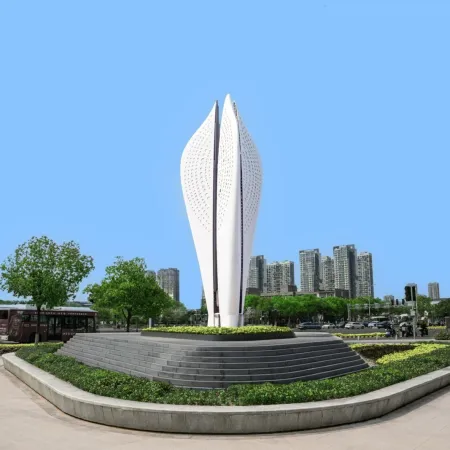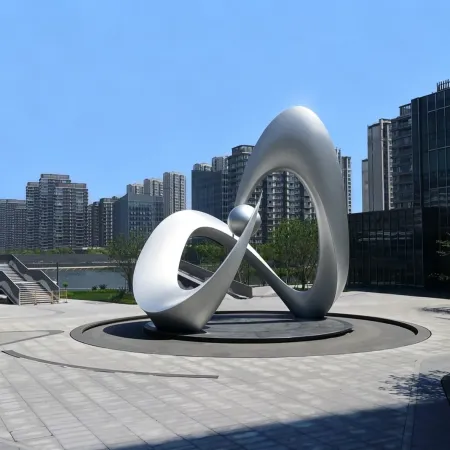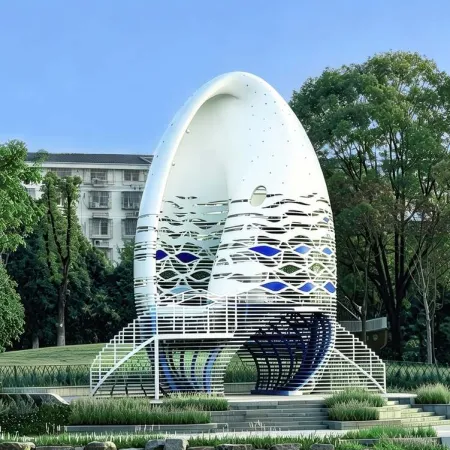
What an Outdoor Sculpture Manufacturer Must Survive
An outdoor sculpture manufacturer is designing for an environment that never rests. Sun, rain, frost, salt, wind, pollution and the slow chemistry of water on metal all work on the piece every hour of every day, and a finish that looks perfect at handover can be visibly failing within a few seasons if the material and the detailing were chosen for the showroom rather than the site.
Yifeng Sculpture Studio has delivered outdoor work since 2003, with more than 3000 installed works across 23 countries and climates ranging from coastal salt air to freezing continental winters. An outdoor sculpture manufacturer earns a reputation not at the unveiling but in the fifth and tenth year, when the difference between good and adequate material selection becomes impossible to hide.
The Weather Loads That Decide the Design
Wind is the first load to consider, and it is almost always underestimated. A work with an open lattice, a perforated screen or a large flat face catches far more wind than its visual mass suggests, and the loads rise with the square of wind speed and with height above ground. Structural analysis for the site's design wind speed is not optional, and the connections must be designed for the forces the analysis produces rather than chosen by habit.
Water is the second. Rain combined with wind drives moisture into joints, crevices and hollow sections, where it sits and starts corrosion. The remedy is detailing: drainage holes in the lowest points of every closed section, drip edges, joints that shed rather than trap and fixings that do not create a water pocket. An outdoor sculpture manufacturer who designs drainage into the form avoids the most common cause of premature failure.
| Exposure | What it attacks | Design response |
|---|---|---|
| Coastal salt air | Pitting of mild steel, staining of finishes | Higher stainless grades, bronze or a robust coating system |
| Freeze and thaw | Trapped water splitting joints and lifting coatings | Drainage, sealing and materials that tolerate movement |
| Intense UV | Fading and chalking of paints, resins and gelcoats | UV-stable topcoats and colour-fast pigments specified for the climate |
| Pollution and dust | Surface soiling and acidic attack on coatings | Finishes that clean easily and resist chemical attack |
Anchoring, Movement and Ground Conditions
An outdoor work has to be held down. The foundation must resist uplift from wind, overturning moments from a tall form and, in some locations, frost heave and seismic movement. Anchor design depends on the ground: rock, dense gravel and soft clay require different solutions, and the anchor group must be positioned to suit the sculpture's geometry rather than adjusted on site. The foundation drawing and the sculpture drawing must be made for each other.
Movement also has to be accommodated. A long metal work will expand and contract with temperature, and if it is rigidly fixed at every point the movement will find a weak spot and crack it. Slotted connections, flexible joints or a single fixed point with the rest free to slide are standard solutions, and they must be detailed so that water cannot enter and so that the movement does not produce noise or wear.
- Wind analysis: structural loads calculated for the site's design wind speed, height and the form's actual wind-catching area.
- Drain every hollow: the lowest point of every closed section gets a drain, because trapped water is what starts decay.
- Anchor to the ground: foundation and anchor group designed from real soil information and the sculpture's actual loads.
- Allow thermal movement: slotted or flexible connections so expansion does not crack a rigid joint.
- Detail the fixings: no upward-facing pockets, no crevices that hold water and no mixed-metal contact without isolation.
Finishes That Age Well in Public
The best outdoor finish is the one that looks deliberate as it ages. Bronze develops a patina that most clients find more beautiful than the original surface; weathering steel settles into a stable rust that suits landscape settings; stainless steel holds its appearance with simple cleaning; stone acquires the marks of weather and time. Painted finishes, by contrast, age by degrading, and they need a recoating programme to stay presentable.
A coating system should therefore be specified with the recoat cycle in mind. Preparation standard, primer, intermediate coat and UV-stable topcoat all need to be appropriate to the exposure, and the total dry film thickness should be measured rather than assumed. An outdoor sculpture manufacturer who records those details hands the client a maintenance plan that can be costed, rather than a surprise.
Built for the Weather
Wind loads calculated, not estimated
Drainage designed into every closed section
Anchors and movement detailed for the real ground
A finish that ages deliberately, with a plan to care for it
Cleaning, Inspection and Seasonal Care
Outdoor work needs a care regime, and the manufacturer should make it practical. Cleaning frequency depends on the site: a coastal location may need washing several times a year to remove salt, while an inland park may need little. Inspection should be simple enough for a grounds team to perform and should focus on the places where problems start, drainage holes, fixings, joints, coatings and the base.
Seasonal care makes the regime realistic. Before winter, drainage should be cleared and any damage to coatings touched up so freeze-thaw cannot exploit it. After winter, the work should be inspected for movement and cleaned. An outdoor sculpture manufacturer who supplies a simple seasonal checklist and a matching repair system gives the owner everything needed to keep the work in good order without specialist help.
- Set the cleaning interval: based on the real exposure, with more frequent washing on coastal and polluted sites.
- Inspect the vulnerable points: drainage holes, fixings, joints, coating edges and the anchor area, in that order.
- Prepare for winter: clear drainage, touch up coating damage and check fixings before the freeze begins.
- Supply matching repair: the correct touch-up materials and a written method, applied by the owner when needed.
- Keep the records: coating products, thicknesses and the specification archived so future work matches the original.
Site Conditions We Ask About First
Before proposing a material or a finish, we ask a set of questions that decide most of the technical brief. How far is the sea, and which way does the wind come from? Is the site exposed, sheltered or in a frost pocket? What are the winter temperatures and how much snow or ice is expected? Is there industry nearby, and what kind? What does the ground consist of, and how deep is the water table? The answers narrow the material options quickly and prevent an expensive mistake.
We also ask how the site is used. Is the work in a place where people will sit on it, climb it or pass it at speed? Will vehicles come close, and how often? Is there irrigation, and does it spray onto the sculpture? Are there trees that will drop leaves or sap onto the surface, or birds that will leave deposits on a horizontal face? These questions are not hypothetical; each one has a design consequence that can be handled at the drawing stage and cannot be handled afterwards.
Finally we ask who will look after the work. Is there a maintenance team, what equipment do they have and how often can they visit? A finish that needs monthly washing is wrong for a site that receives an annual visit, and a design that requires a crane for routine cleaning is wrong for any site at all. Matching the specification to the real capacity of the owner is one of the most useful things an outdoor sculpture manufacturer can do.
Frequently Asked Questions About an Outdoor Sculpture Manufacturer
Which finish survives best outdoors?
Bronze patina, weathering steel and stainless steel all age well with modest care. Painted finishes work too, but they need a planned recoating cycle.
How do you stop water getting inside the sculpture?
By designing drainage holes at the lowest point of every closed section, sealing joints and avoiding upward-facing pockets where water can collect and freeze.
How is an outdoor sculpture anchored?
Through a foundation designed from real soil data and the calculated wind and weight loads, with an anchor group positioned to suit the sculpture's geometry.
How often does an outdoor work need cleaning?
It varies with exposure. Coastal and polluted sites may need several washes a year, while a sheltered inland park may need very little. We set the interval at handover.
What causes most premature failures outdoors?
Trapped water and inadequate surface preparation. Both are design and process decisions, which is why we treat drainage and preparation as non-negotiable.
An outdoor sculpture manufacturer is really designing against the weather for the next fifty years. The wind loads have to be calculated, the water has to be given somewhere to go, the anchors have to suit the ground and the finish has to age in a way the client finds acceptable. Get those four right and the work becomes part of its place; neglect any of them and the site becomes a maintenance diary.
Outdoor work in many climates is shown in our project gallery, the delivery process is described in the services overview, and Rainbow Windmills shows how an outdoor work can be detailed to survive both weather and public contact.
Send us the site and the climate, and we will advise on material, drainage and finish before anything is made. An outdoor sculpture manufacturer who talks about drainage and wind before aesthetics is one whose work will still look right after ten winters.