How Public Space Art for Parks Serves Nature and People Together
Public space art for parks must serve two masters at once, the living landscape and the people who come to it for rest, play and wonder, and the works that succeed are the ones that strengthen both rather than choosing between them. A park is not a plaza with grass; it is a place where nature sets the mood and people arrive with different expectations, and art in that setting has to earn its place among the trees.
Since 2003 our studio has designed works for parks, gardens and natural settings across 23 countries, from playful playground sculptures to landmark gateways. This guide explains how park art differs from urban plaza art, what makes a work succeed among trees and pathways, and how to commission public space art for parks that the whole community will love for generations.
See park and family work in our project gallery, the full delivery chain in our services overview and a park-scale playful work such as Family Playground Elephant Troop.
How Park Art Differs From Urban Plaza Art
A plaza asks a work to hold its own against architecture and traffic; a park asks a work to hold a conversation with living nature. Public space art for parks must therefore be designed at a different scale, softer in its relationship to the ground, responsive to the trees, water and wildlife already there, and aware that people encounter it at walking pace, often with children, often in a mood of leisure rather than transit. A work that shouts in a park will not be forgiven as easily as one that shouts in a square.
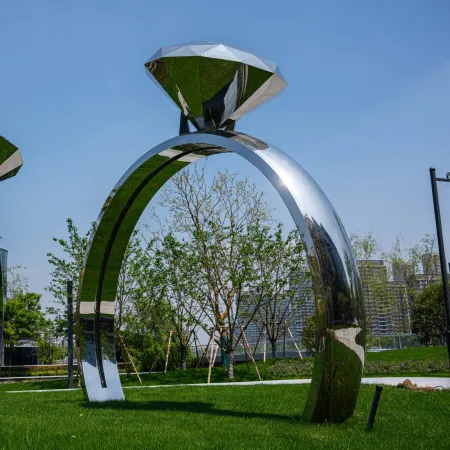
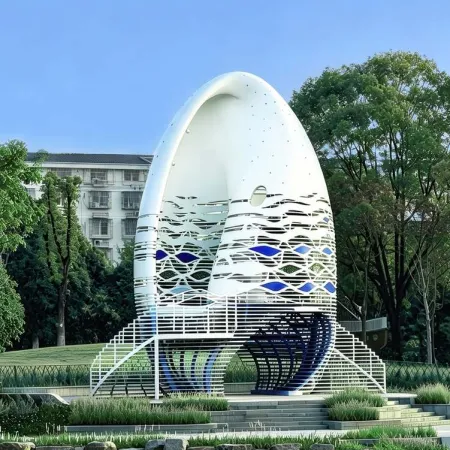
The material palette also shifts. In a plaza, mirror-polished steel plays against glass and concrete; in a park, the same mirror may feel alien, while weathering steel, bronze and naturally textured surfaces settle into the landscape and age with it. Park art can borrow the language of nature, the curve of a branch, the movement of a fish, the shelter of a canopy, without imitating it, and works that echo their surroundings in this way feel as if they grew there.
Designing With the Living Landscape
The first principle of public space art for parks is to design with the landscape rather than against it. The mature trees should be protected, their root zones respected and their shade used; the sightlines along paths and across lawns should frame the work at the moments people actually see it; the planting around the work should be chosen so it complements rather than competes; and the work should change with the seasons, gaining and losing the company of foliage, blossom and snow.
Water and wildlife deserve the same respect. A work beside a lake should not disturb nesting birds; a piece in a meadow should not interrupt the movement of insects and small animals; and a sculpture in a wetland should be specified with materials and foundations that protect the ecology. The most successful park commissions treat the art as one more inhabitant of the landscape, and the landscape repays the courtesy by making the work look as if it has always belonged.
Art That Invites Children and Families
A park is one of the few public places where touching is expected, and public space art for parks should be designed for the hands and imaginations of children without becoming a playground in disguise. The ideal work is robust enough for climbing over and around, smooth enough that no edge or crevice harms, and open enough that its meaning does not depend on a plaque. The works families remember are the ones that become part of their games, their photographs and their stories.
Safety in a family setting is a design responsibility, not a list of disclaimers. Edges are rounded or protected, heights and climbing opportunities are judged against the ages the park serves, materials are chosen to stay cool enough to touch on hot days and warm enough to be pleasant, and the finishes are specified to resist the wear of constant use. We design with the actual users in the room, because a sculpture that delights a four-year-old and reassures her grandparents has served the whole community at once.
| Park setting | Design approach | Materials that suit |
|---|---|---|
| Play lawn | Robust, climbable, imaginative forms | Powder-coated steel, stainless |
| Woodland edge | Echoes of branch, leaf and shelter | Weathering steel, bronze, timber accents |
| Lakeside | Reflections, water life, wind movement | Stainless, kinetic elements |
| Entry gateway | Landmark that welcomes and orients | Steel structures, integrated lighting |
Durability in the Open Landscape
A park exposes public space art for parks to the full force of nature with fewer excuses than any urban setting. There is no building to shelter the work, no night cleaning crew to keep it presentable and often no irrigation system to wash it, so the specification must be chosen for the harshest season of the site. Stainless steel is specified in the right grade for coastal or industrial air, coatings are chosen for UV and weather resistance, and drainage and ventilation are designed so moisture never hides inside the form.
Maintenance access matters more in a park because the crews are smaller and the distances are longer. We design park works so that the routine care, cleaning, inspection of fixings and seasonal checks can be done by the park's own grounds team without specialist equipment, and we document the care routine in plain language. A park work that needs a specialist every month will quietly fall into neglect; one that asks little and gives much becomes a permanent part of the landscape's life.
Commissioning Park Art That Earns Its Place
The commissioning of park art should begin with the park itself: its ecology, its users, its management team and its history. Involve the landscape architects and the grounds managers in the conversation, because they know the drainage, the maintenance calendar and the places where people actually gather; study how the park is used in each season; and write a brief that asks what the work should add to the life of the place rather than what shape it should take.
The selection should value a studio's landscape sensitivity as highly as its sculptural portfolio. Ask how the studio has worked with trees, water and ecology before; how it will protect the site during installation; and how it plans for the work's life across the seasons and the decades. The studios that answer these questions with real experience are the ones that will deliver public space art for parks which the landscape adopts as its own.
Park Art Commissioning Checklist
- Map the seasons of the park and design for each of them.
- Protect the ecology, the root zones and the wildlife in every decision.
- Design for children's hands and family gatherings, safely.
- Match materials to the harshest season of the site.
- Plan maintenance for the park's own team, simply and clearly.
What Great Park Art Gives Back
A reason for families to linger and return through every season
A landmark that helps visitors find their way and their place
A form that ages gracefully with the landscape around it
A work the community protects because it feels like its own
Planning Park Art Across the Whole Year
Seasonal planning extends the life of park art beyond the summer crowds. A work near the entrance can carry the park's identity through winter when the leaves are gone; a piece in a sheltered glade can host the spring blossom and the autumn colour; and the lighting, if the work has any, should be programmed for the shorter evenings of the colder months when the park closes early. We design park works with the full calendar in mind, because a park that is used in every season deserves art that earns its place in every season, and the client who plans the year receives a work that never has an off-season.
Frequently Asked Questions About Public Space Art for Parks
How is park art different from plaza art?
Park art must serve the living landscape and the leisure mood of its visitors, using softer scale, natural materials and forms that hold a conversation with trees, water and seasons.
Can children safely touch and climb park sculptures?
Yes, when the design rounds every edge, judges climbing against the ages served, chooses safe materials and specifies finishes for constant use, families can enjoy the work hands-on.
What materials work best in a natural landscape?
Weathering steel, bronze and naturally textured stainless settle into the landscape and age with it, while powder-coated steel suits playful family forms and stainless suits lakeside reflections.
How do we protect trees and wildlife during a commission?
By designing around root zones and sightlines, specifying foundations that respect the ecology, and agreeing installation and seasonal constraints with the park's landscape managers.
How much maintenance does park art need?
With the right specification, routine seasonal care that the park's own grounds team can manage, which is why material, finish and access are designed with the real maintenance crew in mind.
Public space art for parks is a covenant between art and nature, and the works that honour it become part of the landscape's memory, the tree a child climbed past, the sculpture under which a family picnicked, the landmark that says you have arrived. Serve the park and its people together, and the work will be loved through every season.
If your park is ready for a work of public space art for parks, we will walk the grounds with your landscape team, study the seasons and develop a piece that the whole landscape will welcome.