Designing Interactive Public Art Projects People Actually Use
Interactive public art projects promise engagement but deliver it only when the interaction is designed for real people in real conditions: a family on a windy evening, a child who cannot read the instructions, a crowd at a festival and a maintenance team who must keep it working for years. Interaction that fails in the field does more than disappoint; it turns a promised landmark into a broken curiosity.
This guide explains what makes interactive public art projects succeed, the technologies and mechanisms behind durable interactivity, and the design decisions that keep a work engaging and dependable in public use. We build interactive and kinetic works from our studio and have carried them across more than twenty countries since 2003.
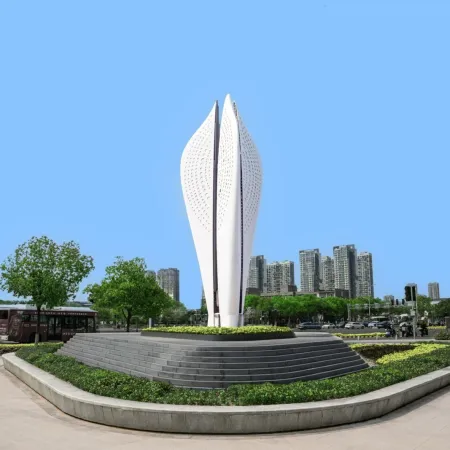
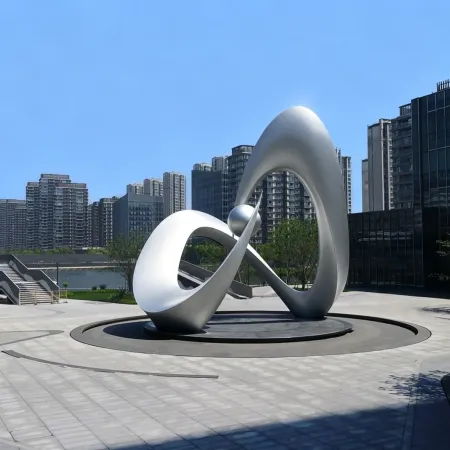
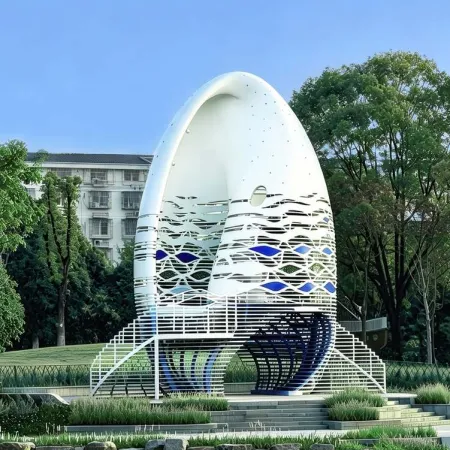
See interactivity at scale in Wisdom Tree, the interactive landmark Hello Conch and the kinetic Fish Swarm kinetic device.
Why Interactivity Fails in the Field
Interactive public art projects usually fail for reasons that have nothing to do with the art: the interaction is not obvious, so people walk past; the mechanism cannot survive the weather, so it breaks in the first season; the maintenance is beyond the owner's capacity, so the work is switched off and left dark; or the interaction excludes the very audiences it should delight, requiring skills or movements that part of the public does not have. We have seen each failure many times, and each one traces back to a design that treated interactivity as a feature to add rather than an experience to engineer.
The fix begins with a question that should precede any technology choice: what should a person feel, do and remember? A work that responds to a passerby's movement with light or sound creates one kind of delight; a work that invites a child to turn a wheel and watch a pattern change creates another; a work that changes through the day and the seasons rewards the repeat visitor. When the desired experience is defined first, the mechanism follows it, and the mechanism is chosen for durability rather than for novelty. When the technology is chosen first, the experience is shaped by the gadget, and the public senses it.
Mechanisms That Keep Working in Public
The palette of interactive public art projects ranges from purely physical interaction to fully electronic response, and the right choice depends on the site, the audience and the owner's capacity to maintain the work. Purely physical mechanisms, such as wind-driven elements, hand-turned components and gravity-activated forms, need no power and very little maintenance, which makes them extraordinarily robust for exposed public sites. Sensor-driven works, using presence, motion or sound to trigger light and audio responses, create the magic that draws crowds and photographs, but they carry power, electronics and weatherproofing requirements that must be engineered to outdoor standards and planned for in the maintenance regime.
Between the two lies the kinetic middle ground: works moved by the wind, the water or the visitor's own body, which feel alive without depending on electronics that can fail. Wind-activated sculptures give a site a living presence that changes with every breeze; water-driven elements bring movement and sound; and manually operated mechanisms give visitors a direct, tactile role in the work. The most successful interactive projects often combine these layers, a durable physical core that works forever, with an electronic layer that adds magic when it operates and falls silent gracefully when it does not, so the work is never broken, only resting.
| Interaction layer | How it works | Durability reality |
|---|---|---|
| Physical | Wind, water and hand-driven movement | Very high; no power, little maintenance |
| Kinetic | Living motion driven by nature or people | High with sound bearings and seals |
| Sensor | Presence and motion trigger light and sound | Needs outdoor-rated electronics and care |
| Lighting | Programmed color and pattern at night | High with specified outdoor fixtures |
Designing for the Whole Public
Interactive public art projects engage the whole public only when the interaction is legible to everyone. The work should invite participation without instructions, because few people will read a plaque before pressing a button and many cannot. The response should be visible from a distance, so that watching others interact teaches newcomers what to do; the delay between action and response should be short enough to feel causal; and the scale of the effect should reward both the single visitor and the crowd, because a work that responds to one person and ignores the gathering around them frustrates the very social moment it should amplify.
Accessibility must be engineered in, not added on. The interaction should be achievable by a child and by a person in a wheelchair, by someone who cannot hear the audio and by someone who cannot see the light, which usually means layering the experience so that each sense receives its own invitation. Physical interactions should be reachable and operable by different body sizes and strengths, and the work should never require a movement that excludes. We design the interaction to be discovered by watching, enjoyed by touching and shared by photographing, because those three verbs cover the way the public actually adopts an interactive work.
Engineering for Weather, Crowds and Years
The engineering of interactive public art projects is where most ambitions meet reality, because interactive elements add moving parts, power and electronics to structures that must already survive wind, rain, temperature swings and public contact. Bearings and mechanisms must be rated for outdoor life and protected from moisture and grit; electronics must be housed to outdoor standards with proper sealing and thermal management; and every component that can wear must be replaceable by the owner's maintenance team with ordinary skills. We specify materials such as 304 or 316 stainless steel according to the site environment and design the access so that servicing does not require dismantling the art.
The maintenance plan is part of the design, not an afterthought. A sensor-driven light work needs a schedule for cleaning the sensors, checking the seals and testing the response; a wind-driven mechanism needs an annual inspection of its bearings and fixings; every interactive work needs a documented procedure for the owner's team and a contact for the studio behind it. Interactive public art projects that fail do so most often in the third year, when the novelty has passed and the maintenance budget has thinned, and the works that beat that curve are those whose designers planned the care from the first sketch and built the art to be serviced, not just admired.
- Legible invitations so people understand the interaction by watching others.
- Layered senses so every visitor can participate in some way.
- Outdoor-rated parts from bearings to electronics for the site climate.
- Serviceable access so maintenance never means dismantling the art.
- Graceful failure so a resting work never looks broken.
What Interactive Works Must Deliver
An invitation everyone can read
A response that rewards the crowd
Mechanisms that survive the seasons
A care plan the owner can run
From First Sketch to Living Landmark
Bringing interactive public art projects from concept to a living landmark requires the same sequence as any serious public commission, with interaction treated as a core discipline at every stage. The concept phase resolves the experience: what the visitor does, feels and remembers, and how the interaction serves the site and the community. The design phase engineers that experience into mechanisms, electronics and structures, with the durability and the maintenance planned alongside the beauty. The fabrication phase builds the work under quality control that covers the interactive systems as strictly as the structural steel, testing the mechanisms before they leave the workshop.
The installation phase commissions the work on site, testing every interaction in its real environment and training the owner's team before handover. And the life after installation is where the work proves itself: the owner runs the documented maintenance, the studio stands behind the systems it delivered, and the work keeps inviting, responding and delighting through the seasons. An interactive work that is engineered for its whole life becomes the landmark its community photographs, visits and protects, and that is the standard we hold every interactive commission to, from the first sketch to the years of public life.
Frequently Asked Questions About Interactive Public Art Projects
Why do interactive works stop working?
Mechanisms and electronics fail when they are not specified for outdoor life and not maintained. Durability engineering and a real care plan are part of the design.
Which interaction is most durable?
Pure physical and wind-driven mechanisms need no power and very little maintenance, which makes them the most robust choice for exposed public sites.
How do people learn to interact?
They watch others. The response should be visible from a distance so that observing the work teaches the interaction without instructions.
Can interaction be accessible to everyone?
Yes, when the experience is layered across senses and movements, so a child, a wheelchair user and every visitor can participate in some way.
What keeps an interactive work alive in year ten?
Design for serviceability, replaceable components, a documented maintenance regime and a studio that stands behind the systems it delivered.
Interactive public art projects reward the public only when the interaction is engineered for real life: legible to everyone, robust against the weather, serviceable by the owner and designed so that a resting work never looks broken. Start from the experience you want people to feel, choose mechanisms for durability, and plan the care of the work with the same seriousness as its beauty, and your interactive commission will draw crowds and photographs for decades rather than for a season.
If you are considering interactive public art projects for your site, bring us your space and your audience early, and we will help you design an interaction that people actually use and a mechanism that actually lasts.