Why Abstract Metal Sculpture Gives Public Space a Timeless Signature
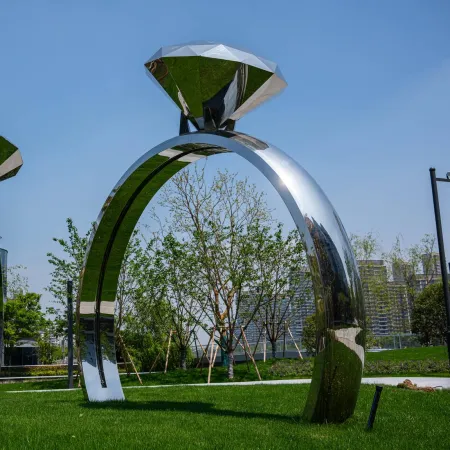
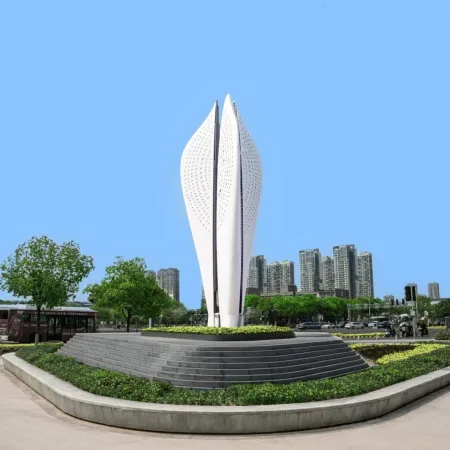
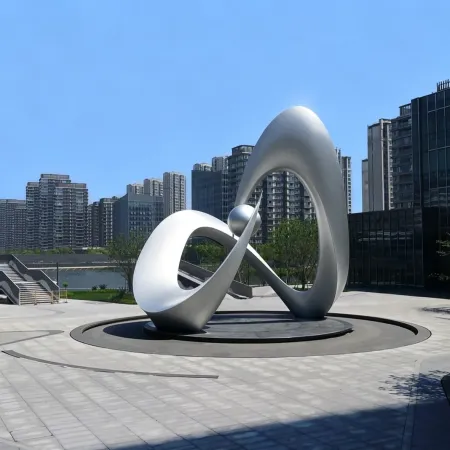
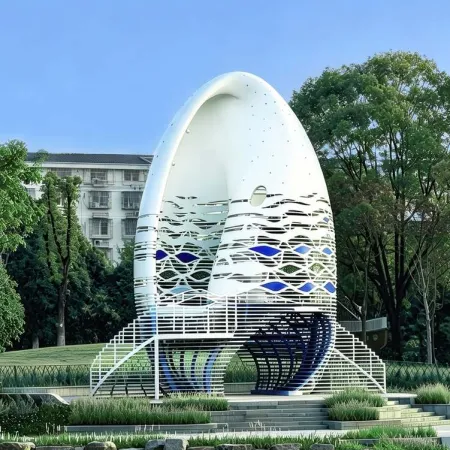
Abstract metal sculpture has become the quiet engine of modern placemaking because it lets a plaza, park or campus say something permanent without shouting a literal story. A polished stainless form that catches the sky, a rust-toned arc that frames a view, a cluster of painted steel ribbons that dance in the wind, these works build identity through shape, material and light rather than through narrative, which is exactly why they age so well with the people who live around them. After more than two decades designing and fabricating abstract metalwork across twenty-three countries, I have seen how a well-considered abstract piece becomes the most photographed corner of a district.
This guide explains why abstraction works in public space and how to commission an abstract metal sculpture that truly belongs to its site.
Our sculpture services cover design, engineering and fabrication under one roof, the Artistic Light Columns show abstraction in vertical rhythm, and the Eye of the Phoenix demonstrates how a non-figurative form becomes a civic emblem.
What Abstract Metal Sculpture Says That Words Cannot
A figurative statue tells you who or what it represents, and that clarity is a strength in memorials and historical settings, but an abstract metal sculpture works on a different level of meaning. It communicates through proportion, rhythm, balance, tension and the behaviour of light across a surface, and because those qualities are universal rather than literal, the work can carry different meanings for different people without ever becoming wrong. A developer may read a soaring stainless arc as ambition, a resident may read the same arc as shelter, and a child may read it as a slide of light, and all of them are right.
That openness is precisely what makes abstraction valuable to a place that must serve many publics over many decades. Public taste changes, leadership changes and the demographic of a district changes, but a strong abstract form built in enduring materials rarely falls out of fashion, because it never tied itself to a single moment. The best abstract commissions feel as though they have always been part of the site, and that sense of inevitability is the signature of a form language that was resolved with real discipline rather than decoration.
Reading Abstraction at Every Distance
The first discipline of abstract public work is scale, because an abstract metal sculpture must read from the road, from the plaza and from the bench directly beneath it, and each distance demands a different quality of form. From two hundred metres a piece must have a bold silhouette that separates it from buildings and trees; from twenty metres the play of volumes and voids must compose into a satisfying rhythm; and from two metres the surface, the seams and the finish become the experience. A design that looks strong in a render but dissolves at one of these distances will fail in the real world.
Good studios therefore design abstract work from the outside in, resolving the silhouette first and the detail second, and they test the design against the actual sightlines of the site before committing to fabrication. Scale models and digital simulations only help if they are checked against photographs and sightlines taken from the real location, and an experienced fabricator will insist on this step because it is where most public art goes wrong. When the form is right at every distance, the sculpture stops being an object placed in a space and becomes part of how the space is experienced.
| Viewing distance | What the viewer reads | Design priority |
|---|---|---|
| 200 m and beyond | Bold silhouette against sky and buildings | Overall proportion and massing |
| 20 m to 50 m | Rhythm of volumes, voids and openings | Composition and balance of parts |
| 2 m to 10 m | Surface, finish, seams and craftsmanship | Fabrication quality and detailing |
The Metals That Make Abstraction Possible
Abstract metal sculpture owes its freedom to the family of metals that can be rolled, pressed, cut, welded and finished into almost any form. Polished stainless steel delivers the mirror surfaces that reflect the life of a place into the work itself; brushed stainless offers a quieter, satin light; weathering steel develops a stable rust-brown patina that belongs to landscape settings; and painted steel opens the full spectrum of colour. Bronze and aluminium add warmth and lightness, and each material changes not only the look but the whole character of the abstraction.
The choice of metal should follow the climate, the setting and the statement the client wants to make. A mirror stainless piece in a coastal plaza demands a marine-grade alloy and disciplined fabrication; a weathering steel work beside water needs its runoff managed; a painted steel sculpture relies on a complete coating system. These are not details to be decided at the end of a project, they are decisions that shape the design from the first sketch, and a studio that fabricates in-house will guide clients through them with real evidence rather than guesswork.
- Mirror stainless: reflects the sky, trees and people into the work
- Weathering steel: ages with the landscape in warm rust tones
- Painted steel: brings the full spectrum to public form
- Bronze and aluminium: add warmth or lightness where needed
Commissioning Abstract Work for a Real Site
Commissioning an abstract metal sculpture begins long before any sketch, with a disciplined reading of the site and the people who use it. We start by walking the location at different hours, studying the light, the traffic, the gathering points and the sightlines, and we ask the client what the place must become, a landmark, a meeting point, a quiet pause or a symbol of a district renewal. The answers shape a design brief that is specific enough to guide the artists yet open enough to allow genuine creativity.
That brief then moves through concept studies, scale models and material recommendations before a single plate is cut, and every stage is documented so the client always knows what they are approving. Engineering verification, wind loading and foundation design happen in parallel with the art, because an abstract form that cannot stand safely in a public square is not art, it is a hazard. When the design, the engineering and the budget are aligned at every review, the commission proceeds without the surprises that so often sink public projects.
From Maquette to Landmark: The Studio Behind the Form
The difference between a good abstract concept and a great installed abstract metal sculpture is almost always the studio behind it. A maquette that looks charming on a desk must survive the leap to full scale, and that leap demands fabricators who can roll true curves, weld invisible seams, polish mirror surfaces and lift sections that weigh tonnes without distorting the form. This is why Yifeng Sculpture Studio, founded in 2003, has always kept design, engineering and fabrication under one roof in our own workshops, so the hands that build the work are the same hands that resolved its geometry.
The studio's academic roots, with artists trained at the China Academy of Art and ties to the Royal Society of Sculptors, inform the design language, while more than three thousand installed works across twenty-three countries inform the practical judgement. Every commission follows our four-step process, consultation, concept development, fabrication and installation, so that nothing is left to chance between the first conversation and the day the crane releases the work. For clients, this single-source accountability is the surest protection an abstract commission can have.
- Universal meaning: abstraction serves every public without a fixed story
- Enduring materials: stainless, weathering and painted steel built to last
- Site-first method: form resolved against real sightlines and light
- One-roof delivery: design, engineering and fabrication in our own workshops
Abstraction Built to Become a Landmark
Forms that read from road to bench
Materials matched to climate and meaning
Silhouettes that outlive passing taste
One studio accountable from sketch to site
When Abstraction Is the Wrong Answer
For all its strengths, abstraction is not the right answer for every brief, and an honest studio will say so. A memorial that must carry specific names and dates, a historical tribute that must identify a particular figure, or a themed environment that must tell a defined story may all be better served by figurative or symbolic work, and recommending abstraction in those cases would be a disservice. The best advisers match the form language to the purpose of the commission rather than pushing the style they happen to make.
There are also sites where the brief is genuinely open, a new plaza with no identity yet, a campus gateway, a park entrance, a waterfront waiting for a reason to stop, and those are the places where abstract metal sculpture shines brightest. In those settings the work is free to create meaning rather than illustrate it, and the public, free of a prescribed reading, makes the piece their own. Knowing the difference between the two situations is the mark of a mature studio.
Frequently Asked Questions About Abstract Metal Sculpture
Will an abstract work age better than a figurative one?
Generally yes for civic settings, because abstraction does not tie itself to a fixed story or a single moment. Built in enduring materials and resolved against the site, a strong abstract metal sculpture tends to remain relevant as neighbourhoods and tastes change.
Which metal is best for an abstract piece outdoors?
It depends on the climate and the desired character. Marine-grade stainless suits coastal sites and mirror finishes, weathering steel suits landscape settings, and painted steel allows full colour. A fabricator should advise with site-specific reasoning.
How do we know an abstract design will look right at full scale?
Through sightline analysis, scale models tested against photographs of the real site, and fabrication by a studio that understands how forms translate from maquette to monument. The silhouette must be resolved before detail work begins.
Can abstraction still suit a memorial or commemorative site?
Yes, when the commemoration is about feeling rather than specific names, abstraction can carry grief with dignity. Where names and dates are required, they are usually better served by symbolic or figurative elements within the design.
What should we verify before commissioning?
That the studio designs and fabricates in-house, holds installed public work and references you can contact, provides engineering documentation and offers a clear contract covering fabrication, finishing, delivery, installation and aftercare.
Abstract metal sculpture rewards the site and the client who commission it with patience, because its meaning grows as a place grows around it. Choose a form resolved for your light and your sightlines, and choose a studio that can carry that form from maquette to monument under one roof.
Let our studio develop an abstract metal sculpture concept for the space you have in mind.