How a Stainless Steel Sculpture Fabrication Manufacturer Holds Quality
A stainless steel sculpture fabrication manufacturer is judged by consistency, because stainless steel exposes inconsistency more than any other material. A variation in the abrasive sequence shows as a patch in the reflection, a difference in heat input shows as a ripple along a seam and a missed passivation shows as a rust streak within a season. Manufacturing a stainless sculpture means controlling every one of those variables on every shift.
Yifeng Sculpture Studio has manufactured stainless steel works since 2003 and delivered more than 3000 pieces to 23 countries, from kinetic devices to large architectural gateways. Our production, engineering and finishing teams work in one building, which is what allows a stainless steel sculpture fabrication manufacturer to keep a mirror finish consistent across a form the size of a building.
Production Discipline in a Stainless Workshop
Manufacturing stainless steel requires separating it from other metals, because carbon steel dust will contaminate a stainless surface and cause rust spots that appear to come from nowhere. A serious manufacturer keeps dedicated tools, brushes and grinding discs for stainless work, and it keeps the material segregated in storage. This discipline is invisible to a visitor and it is one of the clearest indicators of whether a manufacturer really understands the material.
The second discipline is process control. Welding procedures are qualified for the material and the thickness, welders work to those procedures and the sequence of assembly is planned so that distortion is managed rather than corrected. Where a form is large, temporary bracing holds the geometry until the structure is self-supporting, and dimensional checks are recorded at each stage. Manufacturing at this level is a system, and the system is what produces a sculpture that looks as intended rather than as it happened to come out.
| Manufacturing control | How it is applied | What it protects |
|---|---|---|
| Contamination control | Dedicated tools and segregated storage for stainless | Rust spots that appear from carbon contamination |
| Qualified welding | Procedures and welders matched to material and thickness | Weld decay and structural weakness |
| Distortion management | Sequenced welding, bracing and dimensional checks | A form that is out of true before finishing |
| Finish control | Documented abrasive sequence and passivation | Patchy reflections and rusting joints |
Keeping a Finish Consistent Across a Large Surface
Consistency is the hardest part of manufacturing a large stainless work. The same abrasive sequence applied by different hands can produce a subtly different grain, and a difference in grain reads as a patch when the sun moves across the form. A manufacturer solves this by standardising the sequence, by training and rotating the finishing team and by inspecting the surface in raking light, which reveals irregularities that a straight-on view hides.
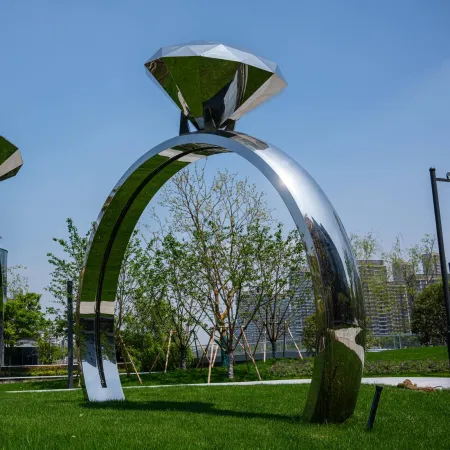
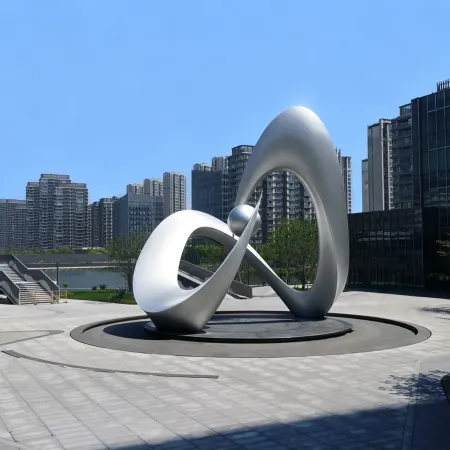
For a mirror finish the challenge increases, because the surface must be flawless from every angle. We finish in controlled stages, check the reflection against a reference and refine until the panels match, and we protect the finished surfaces immediately so that the work of the polishing team is not undone by the next trade to walk past. That combination of standardisation, inspection and protection is what allows a stainless steel sculpture fabrication manufacturer to deliver a large form that reads as one continuous surface.
Capacity, Tooling and Series Production
A manufacturer adds value when the project requires more than one of a component. A repeated element across a landscape, a family of markers or a set of identical panels all demand that the tenth unit match the first, and that consistency comes from jigs, tooling and documented settings rather than from a craftsman's memory. A manufacturer with real production experience will build the jig and keep the tooling, which makes the series both more consistent and more economical.
Tooling also supports repair. If a stainless element is damaged years later, a manufacturer that retained the tooling and the records can reproduce it to match rather than approximate it. We photograph and archive tooling with every job file, so a client who returns in a decade receives a matching part rather than a visible repair. That archival habit is one of the least visible and most valuable services a manufacturer can offer, and it costs the client nothing at the time of production.
What Stainless Manufacturing Requires
Dedicated tools so carbon never contaminates stainless
Qualified welding procedures and recorded dimensional checks
A standardised abrasive sequence across the whole surface
Tooling retained so future parts can match exactly
Documentation and Traceability
Stainless steel work should be traceable from the mill certificate to the finished surface. We record the alloy and the heat number of the material used, the welding procedure and the welder for each joint, the abrasive sequence applied to each area and the passivation record for the work. If a question arises in year ten about a particular panel, the answer is in the file rather than in someone's recollection.
That documentation also supports the maintenance team. Knowing the exact grade and finish allows a cleaner to use the right products and a repairer to match the grain, and it prevents the well-meaning damage that occurs when someone treats a satin stainless surface with an abrasive cleaner. A stainless steel sculpture fabrication manufacturer that hands over a complete record is handing over the means to keep the work looking new, which is the whole purpose of manufacturing it carefully in the first place.
Protecting Finished Surfaces Through Production
In a manufacturing environment a finished stainless surface is at risk from the moment it leaves the polishing bay, because the next trade to walk past can undo hours of work. We protect panels with a removable film as soon as the finish is approved, separate finished parts from work in progress and set aside a protected area for completed sections. Those measures are simple and they prevent the most frustrating kind of defect, the one caused by handling rather than by the process.
Packing is the final stage of that protection. Finished faces never touch each other, soft materials are used at every contact point, and sections are braced so that they cannot move within the crate. We photograph the packing before the container is sealed, so that any damage discovered on arrival can be attributed and resolved rather than argued about. A manufacturer that treats packing as part of production rather than as a transport detail delivers a surface that is as good on site as it was in the workshop.
Traceability also protects the finish. When each panel is identified and its finish recorded, a problem discovered later can be traced to the sequence, the operator and the material batch, and the cause can be corrected rather than guessed. That record also allows a replacement panel to be matched to the originals years later, which is valuable when a piece is damaged in service. A manufacturer that records its finishing is a manufacturer that can reproduce it.
Finally, protection must continue after delivery. We supply touch-up instructions and a small quantity of the correct abrasive material so that a minor mark can be addressed locally without guesswork, and we brief the installation crew on handling. A scratch treated correctly within days can be invisible; the same scratch treated with the wrong abrasive becomes a permanent patch. Teaching the owner how to protect the finish is the last and most useful act of a stainless steel sculpture fabrication manufacturer.
Frequently Asked Questions About a Stainless Steel Sculpture Fabrication Manufacturer
Why does stainless steel sometimes develop rust spots?
Usually from carbon contamination carried on shared tools or from welding that was not passivated, both of which a disciplined manufacturer prevents.
How do you keep a finish consistent on a huge surface?
By standardising the abrasive sequence, training and rotating the finishing team and inspecting in raking light so any patch is found before delivery.
Can a manufacturer produce repeated identical elements?
Yes, using jigs and documented settings so the tenth piece matches the first, which is difficult to achieve in purely bespoke work.
What records should accompany a stainless sculpture?
Material certificates with heat numbers, welding procedures and records, the abrasive sequence used and the passivation record for the finished work.
How do I check a manufacturer's stainless discipline?
Look for dedicated stainless tools, segregated storage, qualified welding procedures and finish samples that can be compared against delivered work.
Stainless steel is the most revealing material in the workshop, because it hides nothing and rewards discipline. A manufacturer that controls contamination, welding, sequence and finish will deliver a surface that stays flawless, and a client will see the difference every time the sun moves.
If you need a stainless work manufactured to a consistent standard, come and see how we control it. Review our stainless output in our project gallery, see the full production chain on the services overview, and study Heart of Changfeng, a stainless form whose finish had to remain consistent across a demanding curved surface.
Stainless steel hides nothing and rewards discipline at every stage. A manufacturer that controls contamination, welding, sequence and finish will deliver a surface that stays flawless, which is the only standard a stainless steel sculpture fabrication manufacturer should accept.