How Metal Sculpture Installation Turns a Delivered Work Into a Landmark
Metal sculpture installation is the final act that decides whether a work arrives as a triumph or a disappointment, because every quality built into the workshop can be undone in the final hours on site. A foundation that settles, a section lifted out of sequence, a mirror surface scratched during rigging or a seam aligned a few millimetres off can all compromise a sculpture that was perfect when it left the factory. After more than two decades installing metal sculpture across twenty-three countries, I have learned that metal sculpture installation is an engineering discipline with its own rules, its own risks and its own craftsmen.
This guide explains what professional metal sculpture installation involves and why it deserves a place in your budget and your schedule.
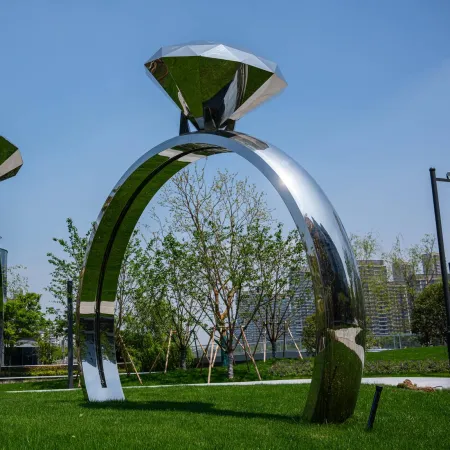
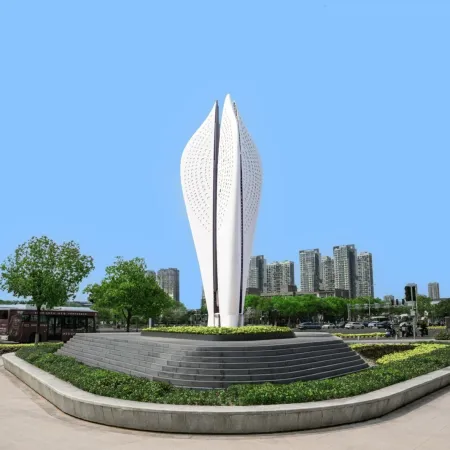
Study how Heart of Changfeng was set as a civic landmark, see The Diamond Rings as a multi-section placement challenge and review Summit of Nine Peaks as an engineered installation of many parts.
Why Metal Sculpture Installation Is a Discipline of Its Own
Many clients treat metal sculpture installation as an afterthought, a matter of hiring a crane and some labour to stand the work up, and that assumption has damaged more sculptures than any other single cause. Installation actually involves foundation verification, rigging plans, lifting studies, alignment procedures, on-site finishing and public safety, each with its own engineering. A sculpture that took months to fabricate can be damaged beyond repair in a single careless hour, and no workshop can restore a dented mirror surface once it is bolted to a plaza.
Professional installation is planned long before the truck arrives. The installation sequence is decided during fabrication, when the section breaks are designed for the lifts that will happen on site; the rigging points are specified for the weight and balance of each section; and the foundation design is coordinated with the structure. When installation is planned as part of the sculpture rather than as an event after it, the risks are managed before they can become disasters.
Foundations: The Invisible Half of the Work
Metal sculpture installation begins underground, with foundations that keep the work true for decades. The foundation must be designed for the sculpture's weight, its wind loading and the local ground conditions, with anchor systems that hold the structure against overturning and settlement. The interface between the sculpture and its foundation, the base plates, the anchor bolts and the levelling system, must be engineered so that the work can be set true and adjusted if the ground moves over time.
The practical lesson of foundation work is that it must be coordinated, never improvised. The fabricator's drawings must reach the foundation contractor before the concrete is poured, because anchor bolts that are misplaced by even a few centimetres can make a sculpture impossible to set. Clients should insist that the same engineering that designed the sculpture designs its interface with the ground, and that the foundation contractor works from those drawings rather than from guesswork.
| Installation stage | Key work | Risk to manage |
|---|---|---|
| Foundation | Anchors set to the fabricator's drawings | Misplaced bolts make setting impossible |
| Rigging and lifting | Sections lifted at engineered points | Wrong pick points distort or drop sections |
| Assembly and alignment | Sections joined and set true | Misalignment is visible forever |
| On-site finishing | Seams finished and surfaces restored | Scratches and marks must be repaired |
Rigging, Lifting and Placing Heavy Sections
The most dramatic hour of metal sculpture installation is the lift, and it is also the hour of greatest risk. Every section must be lifted from engineered pick points that respect its balance and its structure, with rigging that cannot mar the finish and a crane that can handle the load with margin. The lift plan must consider the wind, the reach, the obstacles around the site and the path of every section from truck to foundation, and it must be executed by riggers who have done this work before.
Large sculptures are often installed in sections that must be joined on site, and the sequence of those joins is critical. The first section must be set and secured before the next is lifted, each joint must be aligned to the tolerances the design demands, and the structure must be stable at every intermediate stage, because a half-assembled sculpture is at its most vulnerable. An installation crew that understands the structure will choreograph the lifts so that the work is never at risk.
Assembly, Alignment and On-Site Finishing
Once the sections are placed, metal sculpture installation moves to the patient work of assembly and alignment. Seams are joined to the standard of the workshop, the whole form is checked against its drawings, and the work is levelled and secured so that it stands true for decades. This is the stage where the sculpture either looks as though it grew from the ground or as though it was dropped there, and the difference is measured in millimetres of care.
After assembly, the surfaces must be restored to the standard the design demands. Welds made on site are ground and finished to match the surrounding surface, scratches from handling are polished out, and protective films are removed only when the work is complete. The on-site finishers are the last artists to touch the sculpture, and their care determines the quality the public sees on day one and for years after.
- Plan the lifts early: section breaks follow the installation sequence
- Verify the foundation: anchors follow the fabricator's drawings
- Use engineered rigging: pick points protect structure and finish
- Finish on site: seams and surfaces restored to the standard
Who Should Install the Work
The safest answer to the question of who should perform metal sculpture installation is the studio that fabricated the work, because the people who built the sections know their balance, their rigging points and their seams better than anyone. Yifeng Sculpture has installed or supervised the installation of the majority of the works it has delivered across twenty-three countries, sending its own crews where the project demands and supervising local contractors where distance makes that the practical choice. In both models, the fabricator's knowledge protects the work.
When a local contractor performs the physical installation, the fabricator should provide complete installation drawings, rigging specifications and on-site supervision, so that the contractor works under the fabricator's direction rather than in its place. Clients should resist the temptation to save money by handing a complex installation to a general contractor without the fabricator's involvement, because the savings vanish the moment a section is damaged or a seam is misaligned. Installation expertise is not an optional extra, it is part of the sculpture's integrity.
Safety, Access and the Public Realm
Metal sculpture installation in the public realm carries duties beyond the sculpture itself, because the work happens where people live, walk and work. The site must be secured for every lift, the public kept at a safe distance, and the work scheduled to minimise disruption to the life of the place. A professional installation plan includes traffic control, pedestrian management and contingency for weather, and it coordinates with the authorities whose permissions the work requires.
The public also becomes part of the installation in the best sense, because the moment the barriers come down and people approach the new work is the moment the sculpture begins its public life. A well-managed installation ends with a handover that is clean, safe and celebratory, the sculpture standing true, the site restored and the community invited in. That is the finish line of every commission, and it is worth planning for from the very first sketch.
- Secure every lift: public safety is planned, never improvised
- Coordinate authorities: permissions and traffic handled early
- Plan for weather: wind and rain change the lifting schedule
- End with handover: the site restored and the public invited in
Installation That Protects the Work
Foundations set to the fabricator's drawings
Lifts engineered from the right pick points
Sections aligned and finished on site
Public safety planned at every stage
Commissioning Installation as Part of the Contract
The lesson of every installation story, successful or otherwise, is that metal sculpture installation should be commissioned as part of the fabrication contract rather than added afterwards. When installation is in the contract, the fabricator plans the section breaks for the lifts, prepares the rigging specifications, coordinates the foundation drawings and schedules the crew, all before fabrication begins. The client gains one accountable team from steel to site and a price that covers the whole journey.
Clients should ask every fabricator how installation is handled before signing, and should treat vagueness on the subject as a warning. The right answer is specific, who installs, who supervises, what drawings are provided and what the price includes, and the right fabricator gives that answer in writing. Installation is the last act of the sculpture's creation, and it deserves the same seriousness as the first sketch.
Frequently Asked Questions About Metal Sculpture Installation
Why can't a general contractor install the sculpture?
A general contractor can provide the crane and the labour, but the fabricator holds the knowledge of the section balance, rigging points, alignment tolerances and finishes. Without that knowledge, the risk of damage and misalignment rises sharply.
Who designs the foundation for the sculpture?
The sculpture's engineering should define the foundation interface, with anchor layout and loads provided to the local engineer and contractor. The foundation itself is then designed for the local ground conditions from that specification.
How long does installation take on site?
It depends on scale and complexity, from a single day for a modest work to several days of lifts and finishing for a large multi-section landmark. The schedule should be planned in the contract and coordinated with the site's needs.
Can installation happen while the site remains open?
Usually yes, with proper planning. The heavy lifts are scheduled in short, secured windows, and finishing work continues around the site's normal use, with pedestrian management in place throughout.
What happens if the sculpture is damaged during installation?
When the fabricator installs or supervises, responsibility is clear and repairs follow the fabricator's own standards. When a third party installs without supervision, accountability blurs and repairs become disputes, which is why installation belongs in the fabrication contract.
Metal sculpture installation is the moment when months of design and fabrication meet the ground, and it deserves planning, expertise and accountability equal to the work itself. Commission installation with the fabrication, and the sculpture that rises on your site will stand as the landmark it was always meant to be.
Let our team plan the metal sculpture installation for your project from the first sketch.