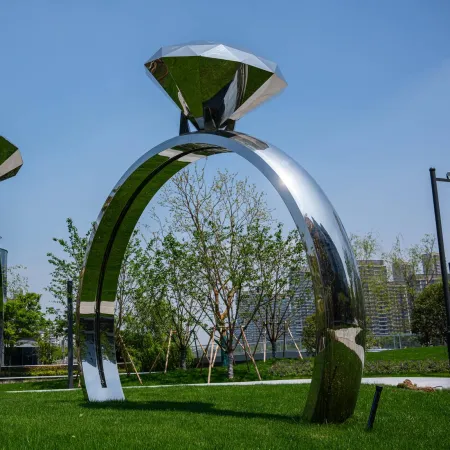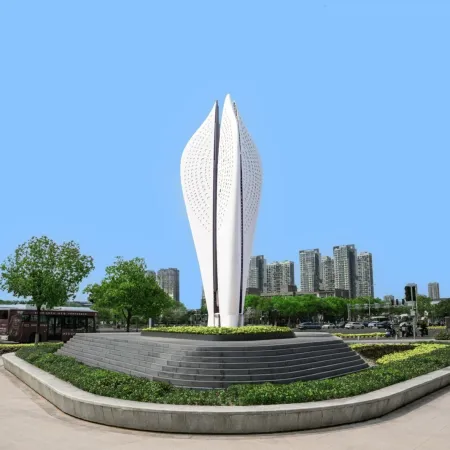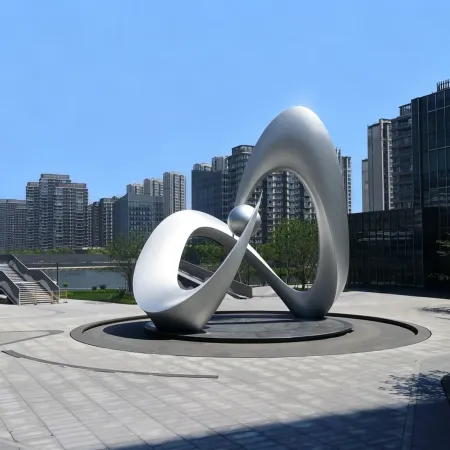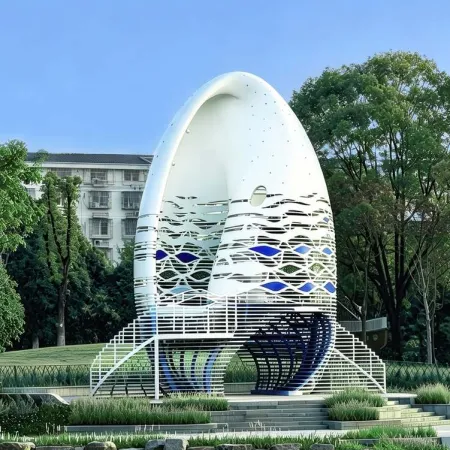
Why Structural Sculpture Design Is Where Art Becomes Engineering
Structural sculpture design is the discipline where a sculpture stops being an image and becomes a load-bearing reality, because every work that stands in the open air is a structure whether its designer admits it or not. The question is whether the structure is designed with intention, hidden with craft and built with margin, or discovered through failure.
Yifeng Sculpture Studio has practised structural sculpture design since 2003, delivering more than 3000 works across 23 countries. Our works from the 20.8-metre gateway of Peach Blossom to the 47-metre span of Fishing Net Canopy are engineered in-house, so the structural analysis is not an afterthought but a creative partner in every design.
Every Sculpture Is a Structure
The first truth of structural sculpture design is that there is no such thing as a sculpture without structure. A vertical form must resist overturning, a cantilever must carry its own weight without sagging, an open form must transfer its loads to the ground and every element must survive the wind, the snow and the thermal movement of its site. A studio that treats structure as a later engineering task is designing sculptures that will need to be engineered after they fail, and the client will pay for that omission twice.
The discipline begins with load paths, the routes by which every force in the sculpture travels to the ground. A resolved structural design knows each load path, sizes each member to carry it and details each connection to transfer it cleanly, and the form is shaped so the hidden structure can do its work without distorting the art. When the load paths are clear, the sculpture can be daring; when they are muddled, even a modest form is a gamble.
The Structural Considerations in Sculpture
The table below sets out the principal structural considerations that sculpture design must resolve, each of which can reshape the form if it is not handled early.
| Consideration | What it governs | Failure if ignored |
|---|---|---|
| Load paths | How forces reach the ground | Overload and progressive failure |
| Wind behaviour | Dynamic response and stability | Fatigue, vibration and overturning |
| Foundation | Ground bearing and anchorage | Settlement, tilt and collapse |
| Connections | How members join and transfer load | Local failure and hidden corrosion |
| Thermal movement | Expansion and contraction stress | Cracking, distortion and finish failure |
Wind: The Unseen Designer
Wind is often the dominant force on a public sculpture, and structural sculpture design must take it seriously from the first sketches. A tall slender form can be excited by the wind into motion that fatigues its connections; a large open form can catch the wind like a sail and demand foundations far larger than its weight suggests; and a form that is perfectly safe structurally can still vibrate audibly or visibly in a way that alarms the public. Each of these behaviours is predictable with analysis and preventable with design.
The studio should therefore study the site's wind environment and analyse the work's response, tuning the stiffness, the mass and the damping until the behaviour is calm across the full range of conditions. Where a work is intended to move, as in kinetic sculpture, the wind analysis governs both the delightful motion and the safe limits, and the engineering becomes the guardian of the art. See how wind has been mastered in works such as Sailing Competition and Fishing Net Canopy in our project gallery.
Hidden Structure, Visible Freedom
- The art of hiding: the finest structural design is invisible, carrying the form with internal ribs, spines and counterweights that the eye never sees.
- Structure as expression: where the structure cannot be hidden, it can become the art, with honest members composed as part of the form.
- Margin with meaning: structural margin protects the public without betraying the form, when it is placed in the members that carry the real risk.
- Fatigue thinking: repeated loading from wind and use can fail a connection that static analysis says is fine, so fatigue must be designed for in moving and flexing works.
A studio that masters hidden structure gives the client both freedom and safety, a form that looks impossible and stands as if it were inevitable.
Engineering That Serves the Art
The most productive relationship in structural sculpture design is between the artist and the engineer, and it must be a partnership rather than a sequence. The engineer should sit beside the artist while the form is alive, revealing what the structure can afford and what it cannot, and the artist should welcome that knowledge as creative material. The cantilever that can be lengthened, the canopy that can be thinned, the tower that can be slenderised, all of these discoveries come from the dialogue, and the works that result are bolder because the engineering made them certain.
That dialogue is a permanent feature of our studio, where artists and engineers share the same room and the same project from the first sketch. The services that surround that integrated process, from concept through structural design to fabrication and installation, are set out on the services overview, and the outcomes are visible in the landmarks our communities trust every day.
What Structural Sculpture Design Provides
Load paths that make daring forms certain
Wind engineering that keeps behaviour calm
Hidden structure that frees the visible form
Foundations and connections built for decades
Commissioning Work That Stands With Certainty
Clients commissioning structural sculpture design should demand the engineering evidence, not just the beautiful image. Ask who performs the structural analysis and what qualifications they hold, ask how wind behaviour has been assessed for the site, ask what foundation the work will require and what ground conditions it assumes, and ask to see the engineering behind delivered works of a similar type. A studio that answers with documents and references is engineering for the public's safety; one that answers with reassurance is asking the client to gamble with it.
The engineering should also be documented for the life of the work, because the people who maintain a sculpture in year twenty need to understand how it stands and what to check. We hand over structural documentation with every major work, naming the critical connections, the inspection points and the signs of distress that should never be ignored, so the client's care team becomes a partner in the work's long life. That documentation is the final gift of structural sculpture design, a sculpture that stands not only because it was engineered well but because it will be understood and cared for well.
The Structural Record: A Gift to the Future Caretakers
Structural sculpture design should end with a record that serves the people who will care for the work long after the designers have gone, because every monumental sculpture eventually belongs to those who maintain it. The structural record names the critical connections, the load paths and the inspection points; it explains which signs of distress matter and which are cosmetic; and it gives the maintenance team the knowledge to keep the work safe without calling in an engineer for every small question. That record is part of the responsible delivery of any engineered work.
The record also protects the public through the work's whole life. When a sculpture is inspected in year ten or year thirty, the inspectors work from the original structural intent, comparing what they find against what was designed and understanding whether any change is significant. We deliver that documentation with every major commission, and we make ourselves available to the owners as the work ages, because the relationship between a structural designer and a public work does not end at installation. A sculpture that is understood by its caretakers is a sculpture that will be kept safe for the public it serves, and that continuity is the final responsibility of structural sculpture design.
Frequently Asked Questions About Structural Sculpture Design
What is structural sculpture design?
The discipline of designing sculpture as a load-bearing reality, resolving load paths, wind behaviour, foundations, connections and thermal movement within the art.
Does every sculpture need structural engineering?
Every sculpture that stands in the open is a structure; the question is whether it is engineered with intention or left to be discovered through failure.
Why is wind such a concern for sculpture?
Wind can excite motion, fatigue connections and demand huge foundations, so its effects must be analysed and designed for rather than discovered after installation.
Can structure be hidden inside a sculpture?
Yes, with internal ribs, spines and counterweights; where it cannot be hidden, it can be composed as an honest part of the form.
What documentation should come with a major work?
Structural documentation naming critical connections, inspection points and signs of distress, so the owners can care for the work through its long life.
Structural sculpture design is where art becomes engineering and engineering becomes freedom, and it rewards studios where artists and engineers work as one. Choose a team that analyses, documents and builds what it designs, and your sculpture will stand with a certainty that lets the public enjoy it without a thought.
If you have a form that should dare to stand, bring us the ambition and the site, and we will show you what structural sculpture design can make certain.