What a Public Art Installation Company Should Bring to Your Project
A public art installation company is the bridge between a public art vision and the built work that stands in a real place, and the choice of company shapes everything from the strength of the concept to the safety of the final installation. The right company brings more than fabrication skill; it brings the whole discipline of taking art from idea to public reality.
This guide explains what a public art installation company should offer at every stage of a project, how to assess whether a company can truly deliver, and what clients should look for when choosing a partner for public work.
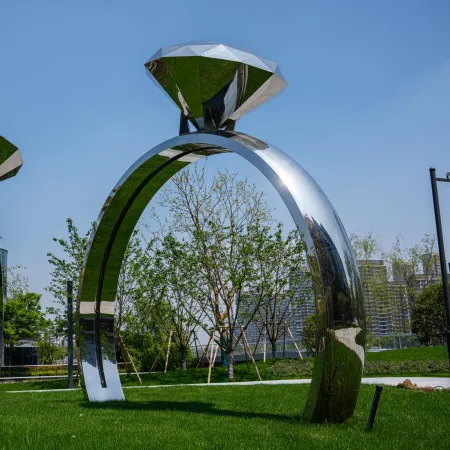
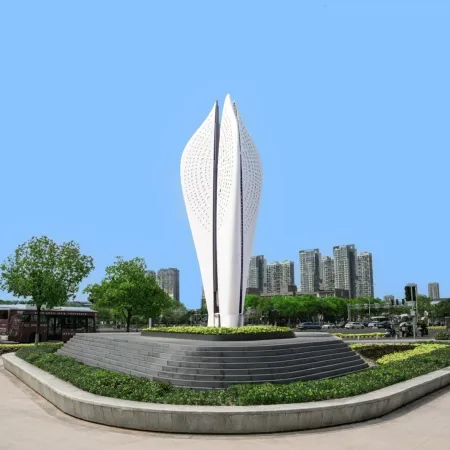
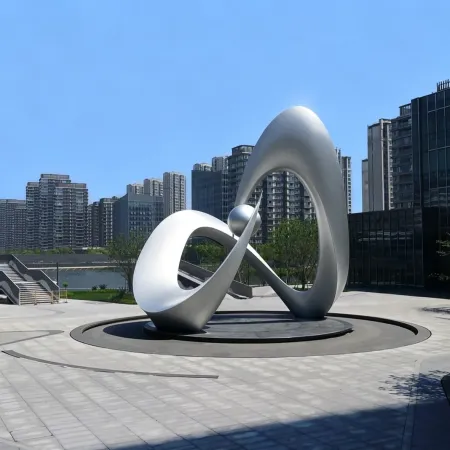
See the range of a full-service company at Wisdom Tree, Honeycomb Pavilion and our services page.
The Full Journey a Company Must Hold
A public art installation company that serves its clients well holds the whole journey of a public work, because every handover between separate suppliers is a place where vision and responsibility leak away. The journey opens with listening and concept development, moves through design and the approvals that public art requires, continues into the engineering that makes the work stand, and then enters the workshop for fabrication, finishing and quality control before the work is transported, lifted and installed on a foundation engineered for its site. The company that can carry all of these stages offers its clients a single point of accountability, and that accountability is the foundation of trust in public art commissioning.
The value of the full journey is most visible when problems arise, as they always do in projects of ambition. When the engineering reveals a difficulty in the design, a full-service company resolves it internally, between its own designers and engineers, rather than passing the problem to the client to arbitrate; when the fabrication uncovers an issue with the material, the company decides and explains, rather than blaming a subcontractor; and when the installation meets an unexpected site condition, the company adapts because it owns the outcome. The client who commissions a company that holds the whole journey is buying insurance against the fragmentation that ruins so many public projects.
Creative Depth and the Design Conversation
The creative depth of a public art installation company is its first asset, because every public work begins as an idea that must be found, shaped and defended. A company with genuine creative capability will listen to the client's ambitions and the place's character, propose concepts that surprise and serve in equal measure, and develop the chosen idea through models and visualisations that let the client see the work before it is built. The design conversation should be a true dialogue, in which the company challenges what will not work, refines what is promising and brings its own vision to the table rather than simply executing the client's sketch.
The client should look for evidence of this depth rather than take it on faith. Ask to see the range of a company's own work, not only its fabrication but its concepts, and look for originality across different sites and briefs, because a company that repeats one visual formula is a fabricator wearing an artist's coat. Ask how the company responds when a client brief is vague, because the answer reveals whether it can find the idea that the client could not yet name, and ask how it defends a concept when a committee wants to dilute it. The public art installation company that can conceive, develop and defend a strong idea is the company whose works will still command their places in twenty years.
Engineering, Fabrication and the Public Standard
The engineering and fabrication capacity of a public art installation company is what turns its concepts into works that are safe and permanent, and this capacity must meet the public standard. The company should be able to engineer the structure of the work, calculating its behaviour under its own weight, under wind and, where relevant, under seismic loads, with reports signed by qualified engineers; it should fabricate in its own workshop, with the cutting, welding, forming and finishing capacity that the work demands; and it should control the quality at defined stages, documenting the work so that the client can verify it across any distance. Public art is public responsibility, and the company must carry that responsibility in steel and calculation.
The client should verify the workshop rather than assume it. Ask for a live tour of the floor, whether in person or by video, and look for the equipment and the works in progress that match the company's claims; ask which processes happen in house and which are subcontracted, because a company that outsources its core work has quietly become a coordinator; and ask to see the quality records, the weld qualifications and the inspection points that prove the system is real. A public art installation company that opens its workshop and its records is a company that is confident in what it does, and that confidence is the client's best protection.
| Company capability | Why the client needs it | How to verify it |
|---|---|---|
| Creative depth | Finds the idea the place deserves | Range of original installed work |
| Engineering | Makes the work safe and sound | Signed reports shared openly |
| Workshop | Owns the quality of the making | Live tour and floor evidence |
| Installation | Delivers the work safely to site | Installation case studies |
| Aftercare | Keeps the work healthy for years | Maintenance plans and warranty |
Installation: The Moment of Truth
The installation phase is where a public art installation company earns its name, because it is the moment when the work leaves the workshop and meets its real site. The company should provide the lifting plan and the method statement, coordinate the foundation with the site's engineers, and supervise the positioning, the alignment and the securing of the work with the care that its finishes and its structure demand. A work that is damaged during installation, or installed on a foundation that does not suit it, can lose in an afternoon what months of fabrication achieved, and the company that treats installation as a discipline rather than an afterthought protects the whole investment.
The client should ask who will lead the installation and what authority that person holds, because the site is where decisions must be made quickly and safely. Ask how the company handles the surprises that sites always hold, from buried services to unexpected ground conditions, and how it coordinates with the other contractors working around the installation. The company should also plan for the protection of the work after it is placed, because the moments after installation, when scaffolding comes down and the public first approaches, are when a fresh work is most vulnerable. A public art installation company that owns the installation with this care delivers works that arrive whole and stay whole.
Contracts, Budgets and the Honest Partnership
A professional public art installation company proposes terms that protect both the client and itself, and the client should read those terms as the map of the relationship. The contract should name the design ownership, the scope, the materials, the milestones, the payment schedule and the responsibilities at every handover, and it should state how variations are priced and how delays are handled, because public projects always meet both. The company should also be honest about the budget from the start, quoting the real scope and flagging the costs that sit outside the fabrication, from foundations to transport to the maintenance that will follow.
The partnership between client and company matters as much as the contract, because public art is made by people working together over many months. The client should expect a company that communicates clearly, warns early and stands behind its work, and the company should expect a client who decides promptly and carries the approvals and the community with the project. Our studio has served as a public art installation company across more than twenty countries since 2003, and the projects that succeeded were those where the client and the studio worked as partners, each respecting the other's craft, from the first conversation to the last bolt and beyond, into the years when the work lives in its public home.
What a Full-Service Company Offers
One team from first idea to final bolt
Creative depth that finds the right idea
Engineering for the public standard
Care that continues after installation
Frequently Asked Questions About a Public Art Installation Company
What services should a full-service company provide?
Concept, design, engineering, fabrication, finishing, transport, installation and aftercare under one accountable roof. Every handover to a separate supplier is a place where quality can leak.
How do I judge a company's creative capability?
Look at the range of its original installed work, ask how it develops vague briefs and how it defends concepts. A company that repeats one formula is a fabricator, not a creative partner.
Should the company own a workshop?
Ideally yes. An owned workshop means the people who quote the work control its quality. Verify with a live tour and by checking which processes are truly in house.
What engineering should the company provide?
Structural calculations for the work's loads and site, foundation details, installation method statements and quality documentation, signed by qualified engineers and shared openly.
What happens after the work is installed?
The company should provide a maintenance plan, a warranty and a named contact, and should remain answerable as the work weathers its first years. Aftercare is part of the service.
A public art installation company earns its place by holding the whole journey of a public work, from the first conversation to the decades of life that follow. Choose a company with creative depth that can find the idea your place deserves, engineering that meets the public standard, a workshop it owns and opens, and an installation discipline that delivers the work whole to its site. The public works that define our cities were carried by companies that treated every stage with the same seriousness, and the company that does that for you will deliver a work your community lives with, and loves, for generations.
Choose a public art installation company that holds the whole journey, and your project will be carried from vision to lasting reality.