How a Custom Stainless Steel Sculpture Keeps Its Mirror and Its Strength for Decades
A custom stainless steel sculpture is chosen for two qualities that few materials combine: a mirror finish that reflects its surroundings like liquid light, and a structural permanence that lets it stand outdoors for decades with minimal care. Yet both qualities depend entirely on how the steel is specified, fabricated and finished, because stainless steel is not maintenance-free by accident but by engineering. I have delivered custom stainless steel sculpture for plazas, lobbies, waterfronts and campuses, and the difference between a mirror that still dazzles after ten years and one that dulls and stains within two is decided in the workshop. This guide explains what makes stainless sculpture endure and what to demand from the studio that builds yours.
We cover grade selection, fabrication and welding, mirror finishing, structural design and the care that keeps stainless sculpture brilliant.
Our services overview outlines our stainless fabrication capability, the project archive shows polished works in their settings, and the Fish Swarm kinetic work demonstrates stainless used for moving, reflective sculpture.
Choosing the Right Stainless Grade for Your Site
Not all stainless steel is the same, and the grade chosen for a custom stainless steel sculpture must match the site where it will live. The common grades 304 and 316 both resist corrosion, but 316 adds molybdenum, which gives it markedly better resistance to chlorides, making it the standard choice for coastal and marine environments. An inland courtyard sculpture may perform perfectly in 304, while the same form on a waterfront would risk pitting without 316. The grade affects cost, so the decision should be made deliberately rather than by default. A responsible studio asks about the site environment before specifying the steel, and it documents the grade in the material certificate so you know exactly what was installed. Never accept a sculpture without knowing which grade of stainless stands inside it.
Fabrication: Where Stainless Is Won or Lost
Stainless steel punishes careless fabrication. During welding, the metal can be contaminated by carbon steel tools, grinding dust or the atmosphere, causing rust spots that appear months later on a supposedly stainless surface. A serious workshop protects the material through fabrication: dedicated stainless tooling, careful cleaning between operations and the right shielding gas during welding. The welding itself must be performed by welders experienced with stainless, because the heat can distort thin sheet and the weld zone must be prepared for finishing. After welding, heat discolouration must be removed and the surface re-passivated so the protective oxide layer is restored. These invisible steps are why two stainless sculptures can look identical on delivery and age completely differently. Ask your fabricator how it protects stainless during production; the answer reveals whether your mirror will survive.
| Stage | What Quality Demands | Failure If Skipped |
|---|---|---|
| Grade selection | 304 or 316 matched to site | Pitting in coastal conditions |
| Welding | Stainless-dedicated process | Contamination and rust blooms |
| Finishing | Progressive polishing to mirror | Visible seams and dull patches |
| Passivation | Oxide layer restored | Reduced corrosion resistance |
The Mirror Finish: A Craft of Its Own
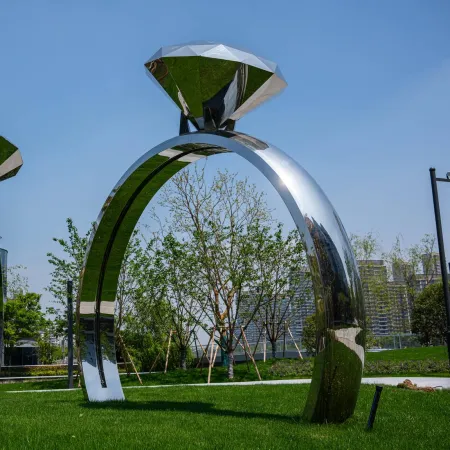
The mirror finish that makes stainless sculpture so striking is achieved by progressively polishing the surface through finer and finer abrasives until it reflects like glass. The quality of that mirror depends on the skill of the polisher and the patience of the process: rushing the stages leaves subtle waviness that distorts reflections, while a true mirror is flat and undistorted across large surfaces. For sculpture with complex curves, the polishing is even more demanding, because the surface must be worked evenly around compound geometry. Some commissions choose a satin or brushed finish instead, which diffuses light more softly and hides fingerprints, a practical choice for pieces the public will touch. The finish decision is aesthetic and practical at once, and samples should be approved before the full surface is committed. A mirror that will be touched, for example, may need a different specification than one viewed from a distance.
Structure, Wind and the Invisible Engineering
A custom stainless steel sculpture is a structure as much as a surface, and its engineering must protect both its safety and its beauty. The internal frame must carry the sculpture's weight and the wind loads on its broad surfaces, and the base and foundation must be designed together with the form. For polished work, the engineering must also prevent distortion: a frame that pulls on the skin can create visible ripples in a mirror finish, so the structure and the shell must be designed to work in harmony. Tall slender works need particular attention to dynamic wind behaviour. The engineering is normally confirmed by a qualified structural engineer, and the client should receive the calculations with the handover. This invisible discipline is what lets a gleaming stainless landmark stand calmly through storms while lesser structures fail around it.
What Protects Your Stainless Sculpture
Correct grade selected for the site environment
Contamination-free welding and finishing
Structural design that prevents distortion
Routine cleaning suited to the finish
Caring for Stainless in the Real World
Clients sometimes believe stainless steel never needs attention, and the truth is more nuanced. In most inland environments, a stainless sculpture needs only occasional cleaning to keep its brilliance, and rain does much of the work. In coastal or industrial environments, salt and pollutants can create brown surface deposits that require more regular rinsing to prevent etching of the finish. The care regime should be matched to the site and the finish: mirror surfaces show marks more readily and may need more frequent cleaning, while satin finishes are more forgiving. Your studio should hand over a care manual that tells your team how to clean the sculpture safely, what products to avoid and how often to inspect it. With the right care, a custom stainless steel sculpture remains the brightest object in its setting for decades, which is exactly what its owners expect.
Weathering Steel, Aluminium and the Alternatives
Clients sometimes arrive wanting stainless steel and discover that another metal may serve their vision better, so an honest conversation about alternatives is part of the material selection. Weathering steel develops a stable rust-brown patina that suits landscape and heritage settings, offering a warmth that mirror stainless cannot match, though its runoff must be managed near paving and water. Aluminium offers light weight for large forms and accepts a range of finishes, though it lacks the mirror brilliance of stainless. Painted steel allows full colour but depends on its coating system for protection. Each material has a character and a discipline, and the right choice serves the design rather than forcing the design to serve the material.
The comparison is not only visual but practical. Stainless steel is the strongest choice for coastal corrosion and for finishes that must stay bright with minimal care. Weathering steel and painted steel can be more economical for certain forms, but they carry different maintenance expectations. Aluminium can solve weight problems that stainless cannot. When we discuss material with a client, we present the honest trade-offs, including the maintenance each option will demand on their specific site, and we let the design and the budget guide the decision. A studio that recommends the material your project truly needs, even when it is not the one you first imagined, is a studio that puts your sculpture first.
Frequently Asked Questions About Custom Stainless Steel Sculpture
What is the difference between 304 and 316 stainless for sculpture?
Both are corrosion-resistant, but 316 contains molybdenum, giving it superior resistance to chlorides and salt. For coastal or marine sites, 316 is the standard choice; for inland settings, 304 often performs perfectly and costs less. The grade should match your site.
How do I stop fingerprints showing on a mirror sculpture?
Mirror finishes show fingerprints by nature, which is why touched pieces often use a satin or brushed finish. If a mirror is essential, position it beyond reach or plan a cleaning regime. Anti-fingerprint coatings exist but should be evaluated for outdoor durability.
Will stainless steel rust?
True stainless does not rust in the way carbon steel does, but it can develop surface discolouration if contaminated during fabrication or exposed to aggressive conditions. Proper grade selection, clean fabrication and routine care keep the surface sound for decades.
Can a stainless sculpture be painted or coloured?
Yes, through techniques such as PVD coating, which can produce gold, bronze, black and other colours while retaining the metal's durability. These finishes should be specified and sampled carefully, and matched to the site's exposure and the maintenance the client can provide.
How do I maintain a mirror-polished outdoor sculpture?
Clean it periodically with mild detergent and water, rinsing thoroughly, and increase frequency in coastal or polluted environments. Avoid harsh abrasives that would scratch the mirror. Your studio should provide a care manual suited to your specific finish and site.
A custom stainless steel sculpture is an investment in brilliance and permanence, and it pays that investment back only when the grade, the fabrication and the care are all engineered for the site. Since 2003 our studio has designed and delivered custom stainless steel sculpture across twenty-three countries, with the fabrication discipline, structural engineering and finishing craft that keep mirrors bright and structures sound for decades. We specify the right grade, protect the metal through every weld and hand over the care knowledge your team needs.
If you are considering a custom stainless steel sculpture, tell us where it will stand and how you want it to reflect its surroundings, and we will show you how the right grade and finish turn that vision into a mirror that lasts.