What Public Space Metal Art Demands of Material and Maker
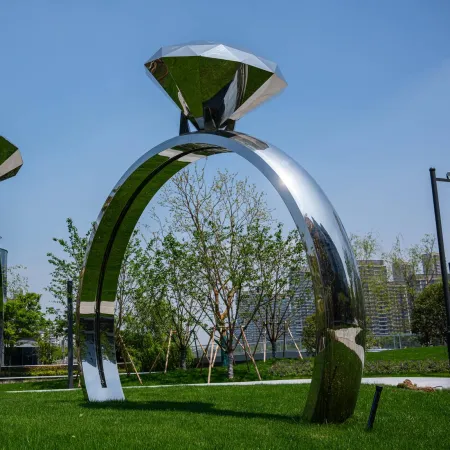
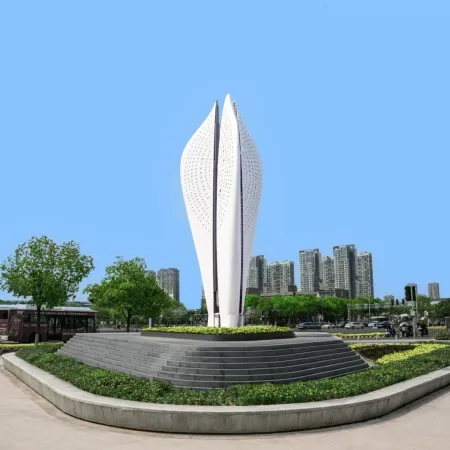
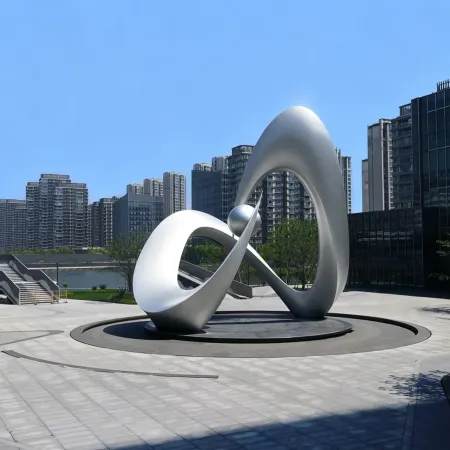
Public space metal art is the art of the workshop, where the honesty of steel, bronze and aluminium meets the permanence of public life, and its quality is decided by material knowledge and fabrication craft that no rendering can fake. Metal is the material of the modern public realm, and the works that succeed in it carry the signature of makers who understand exactly what their chosen metal will do over fifty years of weather and public touch.
Since 2003 our studio has made public space metal art across 23 countries, building everything from mirror-polished stainless landmarks to weathering steel landscape pieces in our own workshop. This guide explains the metals of public art, what each one offers and demands, and how the craft of the workshop turns sheet and section into works the public will live with for generations.
See metal work in our project gallery, our metal capabilities in the services overview and a kinetic metal piece such as Fish Swarm in stainless steel.
The Metals of Public Art and What Each One Offers
Public space metal art is built from a small family of metals, each with a distinct character and a distinct discipline. Stainless steel offers the mirror of the present and extraordinary longevity when the right grade is chosen for the atmosphere; weathering steel brings the warmth of rust that protects itself and deepens with time; bronze carries tradition and develops a patina of great dignity; and aluminium offers lightness, colour and forms that steel cannot easily achieve. The choice between them is artistic before it is technical, and the maker should be fluent in all of them.
The atmosphere of the site should drive the grade as much as the aesthetic does. Coastal salt air attacks some stainless grades and suits others; industrial atmospheres carry chemicals that stress coatings; freezing winters and hot summers fatigue joints and finishes; and the maker should specify the metal and its protection for the actual climate of the site, not for a generic outdoor condition. We have built works across very different climates in 23 countries, and the first question we ask of any new site is what the weather will do to the metal over the next fifty years.
The Craft That Turns Metal Into Art
The craft of public space metal art is where the material is transformed from industrial stock into a work with presence. Plates must be cut, rolled, pressed and formed to the exact curvature of the design; sections must be welded by qualified welders using procedures that control distortion; and the welds must be ground, blended and finished until the joint disappears. In a mirror-polished surface the weld is invisible only when the shielding, the filler and the grinding are all right, and that standard is the signature of a serious workshop.
The finishes of metal art are its first impression and its longest-lived feature. A mirror polish must be built up through graded abrasives and protected from contamination; a brushed finish must be consistent in direction across every section; a painted or powder-coated surface must be applied over the specified preparation; a bronze patina must be controlled chemically and sealed; and weathering steel must be allowed to develop its protective layer without interference. We hold finish samples in the light of the actual site and match the finished work to them, because in metal art the surface is the message.
| Metal | Character | The maker must master |
|---|---|---|
| Stainless steel | Mirror, longevity, the present tense | Grade selection and flawless surface work |
| Weathering steel | Protective rust, landscape warmth, time | Detailing that rusts evenly, stains nothing |
| Bronze | Tradition, warmth, living patina | Casting, chasing and controlled patination |
| Aluminium | Lightness, colour, dynamic form | Welding technique and coating adhesion |
Engineering Metal for the Public Realm
Metal art in public space is engineering as much as craft, because metal carries load, moves with the wind and reacts with the atmosphere. The structure must be analysed for the weight of the form, the wind loads of the site and the fatigue of any moving parts; the connections must be designed to resist corrosion and to be inspectable; and the foundations must transfer the loads to the ground without disturbing the setting. The engineering is the invisible half of the work, and in metal art it can never be an afterthought.
Kinetic metal art adds a further layer of engineering discipline. Moving elements must be balanced so they run true in the wind, bearings must be sealed against the weather and lubricated for the life of the work, and the whole system must be designed so a public crew can maintain it with simple access. We have built kinetic works from 3-metre devices to 9-metre wind-driven forms, and the lesson of every one is that a moving sculpture is only as good as the reliability of its least accessible component.
Auditing the Workshop Behind the Metal
Because public space metal art lives or dies by craft, the client should audit the workshop where it will be made. Visit in person or by live video and look for the signs of real metalwork: material stock in the specified grades, machines that can roll and press the forms, welders at their benches, a polishing room isolated from contamination and a quality area with records. Ask which welders would work on your piece and what qualifications they hold, and look at the samples on the wall, because a workshop's normal standard is what your work will receive.
The records of the workshop are its memory. Material certificates confirm the grades; weld procedures and inspection reports confirm the quality; dimensional surveys confirm the geometry; and finish approvals confirm the surface. A workshop that documents its work can be held to its promises, and the client should collect those records and keep them with the work, because the engineers and conservators of the future will need them to maintain the piece.
Commissioning Metal Art With Confidence
The commissioning of public space metal art should seek a studio that combines design authority with real workshop depth, because the form and the craft are inseparable in metal. Ask about the artistic training behind the designs and the collaborations that shaped them; then verify the workshop, the engineering and the quality systems that will realise them. A studio that cannot show both sides of that equation will disappoint in one of them, and the disappointment will be cast in metal for decades.
The specification should be as precise as the vision. Name the metal, the grade and the finish; require samples approved in the light of the site; define the inspection gates and the records; and attach the approved samples to the contract as the standard of acceptance. Metal art rewards precision at every stage, and the client who specifies it precisely is the client who receives the work it approved rather than an approximation of it.
Metal Art Commissioning Checklist
- Match the metal and grade to the site's climate, not only to the look.
- Approve finish samples in the light of the site before production.
- Audit the workshop's live craft and its welders' qualifications.
- Verify the engineering of structure, wind and any kinetic parts.
- Collect and keep every quality record with the work.
What Masterful Metal Art Delivers
A material chosen for its site and its fifty-year life
Surfaces that pass every public eye at every distance
Engineering that disappears into the form
Records that protect the work for its whole life
Frequently Asked Questions About Public Space Metal Art
Which metal lasts longest in public space?
Stainless steel in the right grade for the atmosphere offers exceptional longevity, while weathering steel and bronze age with character where their site conditions and care are respected.
Why does the grade of stainless steel matter?
Different grades resist different atmospheres, and a coastal or industrial site can corrode the wrong grade, which is why the specification must match the metal to the actual climate.
Can weathering steel stain surrounding paving?
It can, if the detailing is wrong, so the maker must control runoff, design drainage and allow the steel to develop its protective layer without staining the landscape around it.
How do I verify the craft of a metal workshop?
Visit or video-walk the live workshop, inspect works in progress and finish samples, audit welder qualifications and require quality records at defined fabrication gates.
Is kinetic metal art reliable in the public realm?
Yes, when the bearings, seals and balance are engineered to public standards and the maintenance access is designed for the crew that will care for it across the years.
Public space metal art is the art of material truth, and the works that endure are the ones whose metal was chosen for its site, formed by master craft and engineered to disappear into the art. Commission it from a studio that owns both the design and the workshop, and the metal will serve the public for generations.
If you are planning public space metal art, we will bring material samples, show you our workshop in action and discuss which metal and finish will serve your site for the next fifty years.