How an Architectural Metal Sculpture Is Engineered for the Long Term
An architectural metal sculpture is a commissioned artwork fabricated from steel, aluminum, copper or other metals and designed to live with a building or public space for decades. Metal is the workhorse material of architectural sculpture because it combines strength, form freedom and weather resistance, but those advantages only appear when the work is engineered with discipline. In our studio we fabricate metal sculpture daily, and we have learned that the difference between a landmark and a liability is decided in the details.
Clients often assume that once a metal sculpture is built it will simply last, and the assumption is half right. The metal itself is durable, but the sculpture is only as permanent as its joints, its drainage, its foundations and its surface protection. Water trapped in a hollow form, a weld left unpassivated, or a galvanic pairing of incompatible metals can all shorten the life of a work that was built from excellent material. Engineering for the long term means designing those details before the first sheet is cut.
The craft behind durable metal work is exactly what Yifeng Sculpture Studio practices every day. Each commission follows our four-step route of consultation, concept development, fabrication and installation, described on our services overview, and the range of delivered works is visible in our project archive. A compact example of metal pushed to artistic purpose is Fish Swarm, a kinetic stainless steel work where material, movement and engineering meet.
Choosing the Right Metal for an Architectural Metal Sculpture
There is no single best metal for architectural sculpture; there is only the right metal for the site, the form and the budget. Stainless steel in 304 grade is our default for most polished and brushed work, while 316 grade is specified where salt air or aggressive environments demand higher corrosion resistance. Weathering steel offers a warm, stable oxide that suits landscape and industrial contexts. Aluminum provides light weight and excellent painted finishes, and copper alloys bring a living surface that ages with character. Each choice changes the engineering and the maintenance story.
- 304 stainless steel: strong, corrosion-resistant and available in mirror, brushed and colored finishes; suited to most climates.
- 316 stainless steel: added molybdenum improves resistance to chlorides; the right call for coastal and de-icing-salt environments.
- Weathering steel: develops a stable patina that needs no painting and harmonizes with natural settings.
- Aluminum: roughly a third of the weight of steel, ideal for facade and rooftop forms where structure is precious.
- Copper alloys: bronze and brass bring warmth and a traditional gravity that suits civic and memorial work.
Fabrication Quality Decides the Finished Result
A metal sculpture is only as good as its fabrication, and fabrication quality is invisible in a render. The visible difference appears in the welds, the seams, the surface continuity and the precision of the assembly, which is why we keep fabrication in-house rather than subcontracting it. Our welders work to standards appropriate for architectural exposure, our finishing team blends and dresses every joint, and our quality control checks each module against the approved samples before it leaves the workshop.
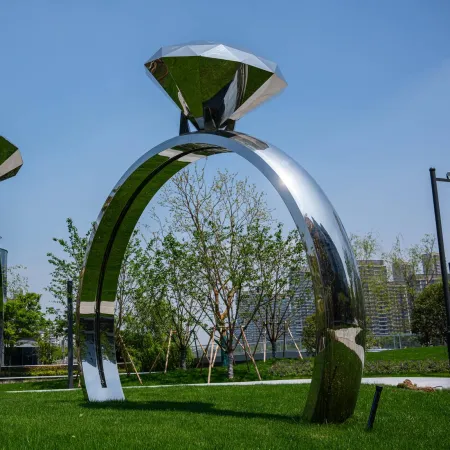
Surface finish is the personality of a metal sculpture. A mirror-polished stainless form reflects its environment and changes with the sky; a brushed finish gives a quiet, controlled light; a colored or patterned surface can carry imagery or brand identity; and a textured finish can soften the glare of large surfaces. We develop finish samples for every commission and approve them with the client under realistic light, because the finish is the part of the artwork that people will judge every single day.
Structural and Corrosion Engineering
Every architectural metal sculpture is a structure, and we engineer it accordingly. Wind loads, self-weight, thermal movement and, where relevant, seismic forces are calculated and documented. Connections are designed so that dissimilar metals are isolated from each other to prevent galvanic corrosion, drainage is detailed so water never sits against the metal, and concealed armatures are specified with corrosion protection that matches the expected life of the work. These are not optional extras; they are the engineering that keeps the sculpture safe and beautiful.
Thermal movement is a detail that separates experienced fabricators from the rest. A large metal panel in direct sun can expand significantly between morning and afternoon, and if the structure does not allow that movement, the result is buckling, cracking or loosened fixings. We detail sliding connections, correct tolerances and anchoring strategies that let the metal breathe without compromising the form. The sculpture looks static, but it is designed to move within itself every day.
Integrating Metal Sculpture with Architecture
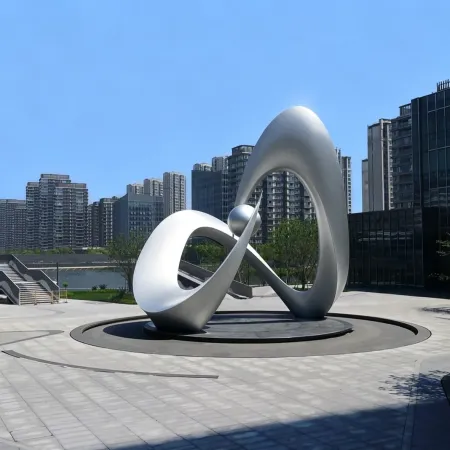
An architectural metal sculpture can stand beside a building, project from its facade, span a courtyard or crown a roof, and each position brings its own integration questions. Beside a building, the work must respect the architecture's scale and material language. On a facade, it must share the envelope's structural and waterproofing systems. Across a courtyard, it may need to clear vehicle and service routes. We resolve these questions with the architect and the engineers early, when the answers are still cheap.
Lighting is part of the integration. Metal surfaces respond strongly to light, and the night-time reading of the sculpture can be designed through uplighting, downlighting or integrated illumination. We coordinate with lighting designers so the fixtures, the power supply and the maintenance access are planned with the sculpture rather than added around it. The result is a work that performs from sunrise to late evening.
Long-Term Care of an Architectural Metal Sculpture
Every metal sculpture needs a care plan, and the plan differs by material. Stainless steel generally needs periodic cleaning to keep its finish; weathering steel needs almost nothing once its patina has stabilized; painted aluminum needs inspection for coating damage; and bronze needs wax renewal in exposed conditions. We deliver a maintenance schedule with every commission, and we remain available for periodic inspection and refinishing. The clients who follow the schedule are the ones whose artwork still looks new a decade after installation.
The wider record matters too. Since 2003 our studio has delivered thousands of installed works across more than twenty countries, and that history has taught us which details survive real weather, real cleaning crews and real public contact. We bring those lessons into every new commission, so the client benefits from experience that cannot be found in any catalogue.
Pattern, Texture and Light on Metal Surfaces
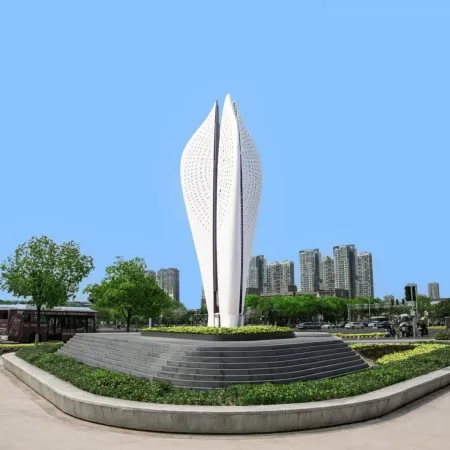
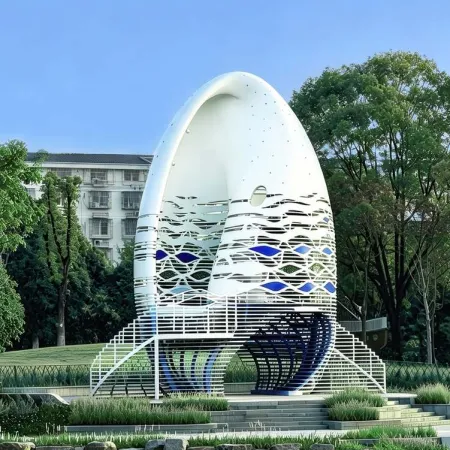
Beyond the standard finishes, metal sculpture offers a rich territory of pattern and texture that architects are increasingly exploring. Perforated stainless panels can carry imagery while filtering light, and cut-metal layers can create depth and shadow that change through the day. Laser-cut screens turn a facade element into a patterned surface that plays light across a wall, while textured and embossed surfaces add a tactile quality that rewards close contact. Each of these treatments is a manufacturing process with its own tolerances, and we develop them in-house so the pattern, the material and the structure resolve as one design.
Light interacts with metal surfaces in ways that must be designed rather than discovered. A polished surface behaves differently under direct sun, overcast sky and artificial light, and a perforated pattern reads differently at noon than at dusk. We study these behaviors with samples and mock-ups before production, and we coordinate with lighting designers where the night-time appearance matters. The goal is a sculpture whose surface performs through the full cycle of the day, rewarding the morning commuter and the evening visitor alike.
From Raw Plate to Finished Metal Sculpture
- Plate cutting and forming against the approved scale model
- Welding and dimensional control at every module
- Surface finishing with client-approved sample panels
- Protective treatment, final inspection and crating
Common Questions About an Architectural Metal Sculpture
Which metal finish is lowest maintenance?
For most sites, a brushed or bead-blasted stainless steel finish is very forgiving, while mirror polish shows fingerprints and requires more frequent cleaning. We advise based on your site and usage.
Can you color a stainless steel sculpture?
Yes. Colored stainless is achieved through PVD coating or painted systems, and we will confirm the color stability expected for your climate.
How heavy will the sculpture be?
Weight is driven by the structural design, not just the material. We engineer the lightest structure that meets the loads and document the foundation requirements for your engineer.
Can different metals be combined in one work?
Yes, with the junctions engineered properly. Where dissimilar metals meet, we apply isolation detailing so galvanic interaction cannot degrade the contact surfaces, which keeps mixed-material designs safe for decades outdoors.
What finishes are available for metal surfaces?
Brushed, mirror, colored, painted and patinated finishes are all produced in-house. Each finish is sampled on the actual alloy before full production, so the client approves the exact surface that will arrive on site rather than a brochure approximation.
Metal sculpture earns its place in architecture because it can do what few other materials can: hold a bold form in the open air for decades while asking little in return. But the promise is only kept when the material is chosen for the site, the fabrication is held to a high standard, and the engineering details are resolved before the build begins. That is the standard our studio applies to every metal commission, and it is the standard we will apply to yours.
Whether you are at the sketch stage or already have a design that needs expert fabrication, send us your drawings and site conditions. We will respond with honest material advice and a clear view of what your architectural metal sculpture will take to build right.