How a Landmark Large Sculpture Earns the Right to Define a Place
A landmark large sculpture is not simply a big sculpture, it is a work that a community adopts as the symbol of its place, appears in its photographs and gives directions by, and that transformation from object to landmark is earned through design intelligence, engineering integrity and public generosity. Not every monumental work becomes a landmark, and the difference is not size alone but the quality of the idea and how completely it belongs to its site. After more than a decade creating landmark large sculpture across twenty-three countries, I have studied closely what separates a beloved icon from a merely large object.
This guide explains what makes a large work become a true landmark and how to commission one with confidence.
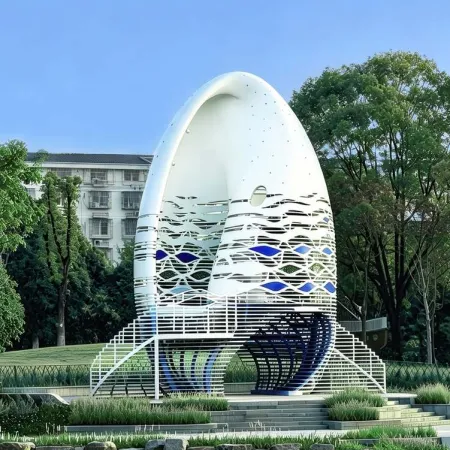
Our design-build services carry landmarks from concept to site, the landmark works archive documents our icons, and the Eye of the Phoenix shows how a single work became the identity of its district.
Size Is Necessary but Not Enough
Scale gives a work presence, but presence alone does not make a landmark, because the public can ignore a large object as easily as a small one if it does not reward their attention. A landmark large sculpture must offer an idea worth returning to: a form that changes with the light, a story connected to the place, a silhouette that becomes part of how people picture the city. The great landmarks are not the biggest objects in their cities but the most meaningful ones, and meaning is designed, not merely scaled.
Size does, however, change the terms of success. A small work can be loved by a few; a monumental work must earn the tolerance of everyone who lives with it, because it cannot be avoided. This raises the standard of design: the form must be excellent from every angle, at every hour and in every season, because a landmark has no back, no off-season and no moment when it is not part of the public realm. That total exposure is what separates the discipline of landmark design from all other sculpture.
The Anatomy of a Work That Becomes a Symbol
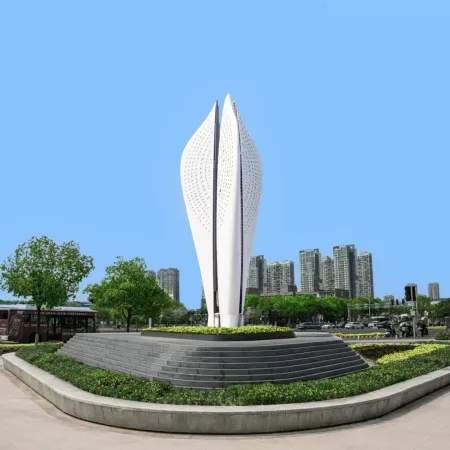
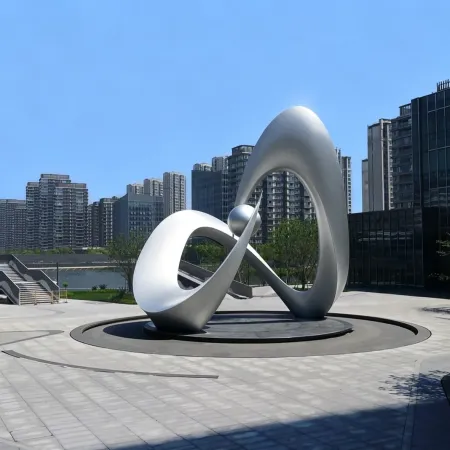
Every successful landmark large sculpture shares a recognisable anatomy. It has a single strong idea that can be described in one sentence; a silhouette that reads from distance and speed; a scale that relates to its surroundings without being crushed by them; a material presence that rewards close inspection; and a relationship to its site that makes it feel inevitable rather than imported. When these elements align, the work passes from being seen to being remembered, and from being remembered to being used as the identity of the place.
The most powerful landmarks also carry a layer of meaning that the public can discover gradually. A child sees a beautiful form; a resident sees the story of the district; a historian reads the cultural reference; and each layer adds depth without demanding that anyone master all of them. This generosity of meaning is what allows one sculpture to serve a whole community, because everyone can find their own entry point and their own reason to care.
| Quality | Why It Matters | How It Is Achieved |
|---|---|---|
| One clear idea | People adopt what they can describe | Concept distilled to a single gesture |
| Strong silhouette | Recognisable from afar and at speed | Silhouette tested against sky |
| Site inevitability | Feels born of the place, not dropped in | Design begins with site analysis |
| Layered meaning | Serves every level of the public | Story, form and craft woven together |
Engineering the Icon for the Long Century
A landmark large sculpture is built to be part of a place for a very long time, so its engineering must anticipate decades of weather, public life and changing conditions. The structure must be calculated for the worst wind the site can see, the materials must be chosen for the local climate, and the details must drain water, shed dirt and resist the wear of daily contact. A landmark that fails structurally is not merely a repair problem but a public crisis, which is why serious landmark work is engineered to standards far beyond those of decorative sculpture.
The engineering should also protect the work's beauty over time. Finishes must be specified for the maintenance the owner can actually provide, lighting must be designed to flatter the form without creating glare, and the foundation must be robust enough that the sculpture never visibly shifts. We treat the long-term behaviour of every landmark large sculpture we deliver as a design responsibility, because an icon must look as intentional in its thirtieth year as it did on the day it was unveiled.
Commissioning a Landmark Rather Than an Object
The commissioning process for a landmark large sculpture must aim higher than procurement. It should begin with the identity of the place, the ambitions of the community and the story the work could carry, and it should invite sculptors who think in landmarks to respond with original concepts rather than catalogue forms. The selection should weigh the strength of the idea, the sculptor's record of delivered public icons and the studio's engineering depth, because a landmark is bought with public trust as much as with budget.
Community engagement strengthens the outcome without diluting the art. When the public understands the story behind the work and has had a genuine voice in the process, they adopt the sculpture as their own and defend it through changing administrations, and that ownership is the surest path from commission to landmark. A studio experienced in public art can help structure that engagement so it informs the design without reducing it to a committee compromise.
- Commission an idea: buy original authorship, not a scaled object
- Think in decades: specify materials and finishes for the long term
- Involve the public: ownership grows from genuine engagement
- Verify the studio: delivered landmarks you can visit and judge
The Return of a True Landmark
A symbol that appears in every photograph of the place
A source of pride the community defends
A driver of visits, media and investment
An asset that appreciates with every year
Why Some Large Works Fail to Become Landmarks
For every landmark that succeeds, many monumental works fade into the background, and the reasons are instructive. Some fail because they are generic, forms that could stand anywhere and therefore belong nowhere; some because they are purely decorative, adding visual interest but no meaning to remember; some because they overwhelm their site, crushing the human life around them; and some because they are engineering showcases rather than art, impressive for how they stand but empty of why. In every case the failure is a failure of idea and site, not of budget or scale.
The antidote is disciplined authorship. A sculptor who thinks in landmarks will refuse a form that does not earn its place, will push the client toward a stronger idea rather than a safer one and will measure success by whether the work is adopted, not merely installed. That is the standard we hold in our own studio, and it is the standard we recommend every client demand of the teams they invite to compete for a landmark large sculpture commission.
How a Landmark Survives Changing Public Taste
A landmark large sculpture is judged across generations, so it must be designed to survive the shifts of taste that defeat lesser works, and the discipline that protects it is the same discipline that made it strong in the first place. Forms that depend on the fashion of the moment, on novelty for its own sake or on references that only one generation understands will fade as the context changes, while forms built on enduring principles of proportion, material and meaning keep their power regardless of the era. The most durable landmarks are those that were never trying to be fashionable, because they were designed to serve the place and the people rather than the moment, and that intention is legible in the work for as long as it stands.
The materials and finishes chosen for the landmark also decide how it meets the future. A surface specified for the maintenance the owner can provide will stay beautiful through changing administrations, while a finish that demanded heroic care will decline the moment the original champions move on. The engineering must anticipate not only the weather but the evolution of the site around the sculpture, because trees grow, buildings rise and sightlines change, and a landmark that was composed for one moment may find itself in a different conversation decades later. We design every landmark large sculpture with this long view, so that the work our clients commission today will still hold its place with dignity when the city around it has changed beyond recognition.
Frequently Asked Questions About a Landmark Large Sculpture
What size does a work need to become a landmark?
The size must match the scale of the site and its sightlines, typically several metres to over ten metres. But scale alone never makes a landmark; the idea and the site relationship do.
How do we know a design will be adopted by the public?
No outcome can be guaranteed, but the odds rise with a strong single idea, genuine community engagement and a studio with a record of delivered landmarks people have embraced.
Which materials are proven for landmark icons?
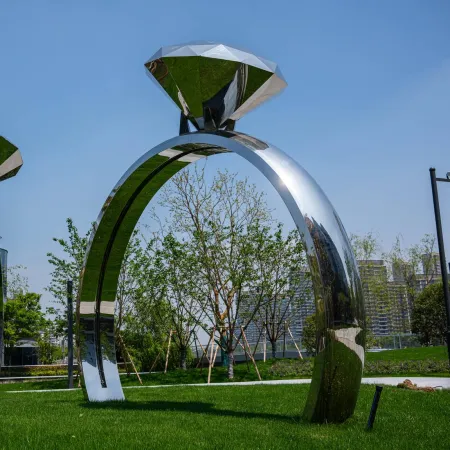
Mirror stainless steel, painted steel, weathering steel and bronze dominate the field. Each offers different presence and maintenance, and the site climate should guide the choice.
Can a landmark carry lighting or interactive elements?
Yes, and lighting is often essential for a night-time presence. Interactive, kinetic and water elements can deepen the experience when engineered for public safety and long-term maintenance.
How should a landmark commission be procured?
Through a competition or invited process that weighs the idea, the sculptor's record and the engineering team, followed by staged approvals from concept to installation with the community informed throughout.
A landmark large sculpture is one of the most enduring gifts a community can give itself, and it deserves to be commissioned with the seriousness of a cathedral rather than the casualness of a decoration. Choose the idea, the sculptor and the engineering with equal care, and your place will gain a symbol for the centuries.
Let our studio help you shape a landmark large sculpture that your community will carry into its future.