Why Stainless Steel Public Art Installation Keeps Its Brilliance
Stainless steel public art installation has become a defining language of contemporary public sculpture, prized for a brilliance that holds its own against the sky and a permanence that shrugs off weather and time. But the stainless works that stay stunning are those whose grade, fabrication and finish were chosen with expertise from the start.
This guide explains how stainless steel public art installation is specified, fabricated and finished for lasting brilliance, and what clients should understand before commissioning work in this most rewarding and demanding of materials.
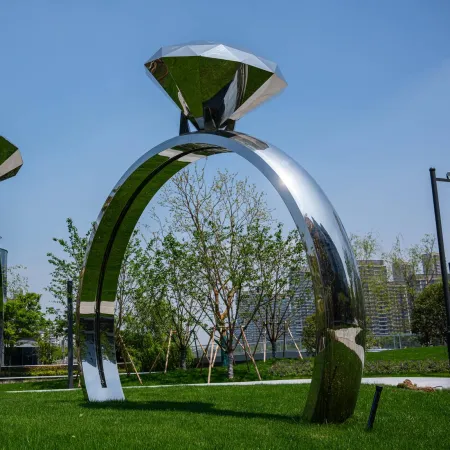
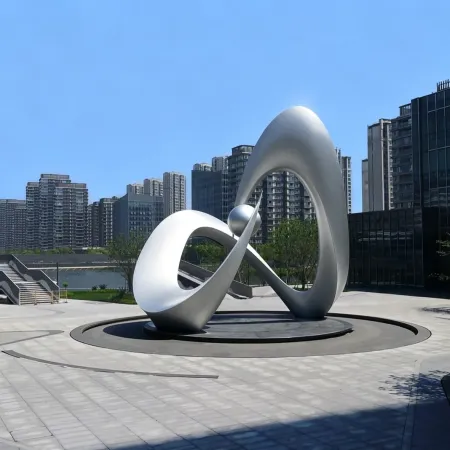
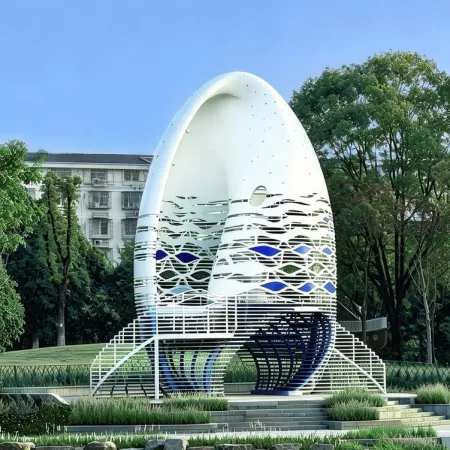
See the brilliance of stainless public works at The Diamond Rings, The Radiant Galaxy and Zhong Gong Water Control.
Why Stainless Steel Leads Public Sculpture
Stainless steel public art installation leads contemporary public sculpture for reasons that are both visual and practical. Visually, stainless steel offers a brilliance that no other material matches: a mirror surface that reflects the sky, the trees and the passing public, changing with every light and every season, or a satin surface that glows with a quiet luminosity, and either finish gives a work a presence that reads across a plaza or against a skyline. Practically, stainless steel is one of the most durable materials available to the sculptor, resisting the corrosion that destroys lesser metals and holding its quality through decades of weather and public life.
The material also suits the forms of our time. Stainless steel can be rolled, pressed and welded into the sweeping, seamless curves that characterise so much contemporary public work; it can be brought to a mirror finish that turns a sculpture into a living reflection of its place; and it can be combined with light, water and movement to create effects that other materials cannot hold. For clients seeking a work that feels modern, that commands attention and that will still look new when lesser materials have aged, stainless steel public art installation offers a combination of qualities that has made it the signature material of public sculpture in the twenty-first century.
The Grade Question: Not All Stainless Is Equal
The first secret of lasting stainless steel public art installation is the choice of grade, because not all stainless steel is equal and the wrong grade will fail even as the right one endures. The standard grades serve inland sites well, but coastal environments, where salt hangs in the air, and urban sites where de-icing salts are used in winter demand grades with higher resistance to the chloride attack that causes pitting and staining. The studio must ask where the work will live before it specifies the material, and must be prepared to explain why a higher-grade steel is worth its cost for a site that demands it.
The client should hear the grade conversation honestly. A studio that quotes the same stainless steel for every project, whatever the climate, is designing for convenience rather than for the work's future; a studio that asks about the site and adjusts its specification accordingly is protecting the investment. The grade also affects the finish, because different grades accept different qualities of polish, and the interaction of grade and finish is part of the expertise that separates a specialist from a generalist. Stainless steel public art installation is a craft of specifications as much as of forms, and the specifications are where longevity is won.
Fabricating the Seamless Form
The fabrication of stainless steel public art installation is where the material's promise is kept or broken, because stainless punishes poor workmanship without mercy. The cutting, rolling and pressing of the sheet must be done with care that avoids the contamination that can mar the surface; the welding must be performed by craftsmen who understand stainless, since a poor weld will discolour, corrode and betray the whole work; and the assembly must achieve a precision that allows the final finish to read as one continuous surface. The workshop that fabricates stainless sculpture is practising a specialist craft, and the client should verify that craft before commissioning.
The invisible details of fabrication decide the visible quality of the work. The sequence of welding and finishing must be planned so that every weld is accessible and every surface can be brought to its final quality; the handling of the sheet must protect it from the scratches and dents that a mirror finish will expose; and the whole form must be built to tolerances that allow the seams to disappear. The client should ask about the workshop's experience with stainless, its welding qualifications and its finishing process, and should look at completed stainless works to judge the standard, because a seamless stainless form is one of the most demanding achievements in sculpture and only genuine skill can deliver it.
| Finish choice | Character of the surface | Best suited to |
|---|---|---|
| Mirror polish | Reflects the world around it | Landmark and statement works |
| Satin finish | Soft, even, luminous glow | Everyday and tactile settings |
| Brushed texture | Linear grain with quiet depth | Contemporary and architectural |
| Coloured coating | Colour with metallic depth | Branded and playful works |
The Finish: Mirror, Satin and the Art of Polish
The finish of stainless steel public art installation is its soul, and the choice between mirror and satin is a decision about the work's whole character. A mirror polish transforms the sculpture into a living mirror, reflecting the sky, the buildings and the people who pass, so that the work changes with every moment and becomes a participant in its place; a satin finish gives the work a quieter luminosity, a soft glow that catches the light without the drama of reflection and that shows the daily marks of public life far less readily. The choice should follow the character the client wants the work to carry, and the studio should present both possibilities honestly.
The maintenance of the finish should be part of the same conversation. A mirror surface is magnificent and demanding, showing every fingerprint, every smudge and every mark of the weather, and it will need a cleaning regime to keep its brilliance; a satin surface is more forgiving, hiding the marks of daily life while still holding a quiet beauty. The client should choose the finish with its care in view, and the studio should specify the cleaning regime that each finish demands. Stainless steel public art installation that is finished with honesty about its care is work that will still be brilliant in its tenth year, because its owners knew from the start what its surface would ask of them.
Living With Reflections and the Public
A stainless steel public art installation lives a particular public life, because its surfaces reflect everything around them, and the designer must consider what the work will reflect before it is placed. A mirror work beside a busy road will reflect traffic; beside a fine building, it will double the architecture; in a green space, it will carry the trees and the sky, and each reflection changes the experience of the work and the place. The siting should consider the reflections deliberately, placing the work where its mirror will show the place at its best, and the design should anticipate how the reflected scene will change with the seasons and the years.
The public will also touch a stainless work, drawn by its surface as by no other material, and the design must live with that contact. Fingerprints on a mirror surface are inevitable and should be anticipated in the cleaning regime; the warmth of hands on a polished surface in cold weather is part of the work's life; and the reflections of children making faces in the steel are among the joys of stainless public art. The client who commissions stainless steel public art installation should understand that it is a social surface as well as a sculptural one, and that its reflections and its contact with the public are part of what makes it loved.
Why Stainless Endures
Grade chosen for the site's true climate
Fabrication by craftsmen of the material
A finish matched to its maintenance
Brilliance that holds for decades
Commissioning a Stainless Work With Confidence
Commissioning stainless steel public art installation is an investment in a material that rewards expertise and punishes guesswork, so the choice of studio should be made with care. Look for a studio that has delivered stainless works and watched them live in public, ask to see installed pieces and to hear how they have aged, and verify that the workshop has the stainless-specific skills of welding, forming and finishing that the material demands. The studio should also demonstrate its knowledge of grades and finishes, asking about your site and its climate before it quotes, because that questioning is the sign of a specialist who understands the material's true demands.
The brief for a stainless work should describe the character the client wants the sculpture to carry, the role it should play in its place and the maintenance the client can sustain, and should leave the material's possibilities to the studio's imagination. Our studio has delivered stainless steel public art installation across more than twenty countries since 2003, and the works that still command their places are those whose grade was chosen for their climate, whose fabrication was carried by stainless specialists, whose finish was matched to its care and whose owners understood that stainless brilliance is a partnership between the material and the people who look after it. A stainless steel public art installation conceived with that understanding will keep its brilliance for decades.
Frequently Asked Questions About Stainless Steel Public Art Installation
Why does the grade of stainless steel matter?
Different grades resist corrosion differently. Coastal and de-iced sites demand higher-grade steel that resists chloride attack, while standard grades serve inland sites well. The grade must follow the site.
What is the difference between mirror and satin?
Mirror reflects the world around the work and changes with every light; satin glows with a quieter luminosity and hides daily marks better. The choice should match the work's character and its care.
Does stainless steel need maintenance?
Stainless is low maintenance but not no maintenance. Mirror surfaces need regular cleaning to keep their brilliance, and all surfaces benefit from periodic washing to remove atmospheric deposits.
Can stainless steel be coloured?
Yes, through specialised coating processes that add colour while keeping a metallic depth. Coloured stainless suits branded and playful works, though the coating adds its own maintenance considerations.
How do I judge a studio's stainless expertise?
Look at installed stainless works and how they have aged, ask about the workshop's welding and finishing qualifications, and listen for real knowledge of grades and finishes in the first conversation.
Stainless steel public art installation offers a brilliance and a permanence that have made it the signature material of contemporary public sculpture, and it rewards those who commission it with expertise. Choose a studio that knows the grades and the finishes, verify the craft of its workshop, match the surface to the maintenance you can give it and place the work where its reflections will serve the place, and your stainless sculpture will hold its brilliance through the decades. The stainless works that still dazzle in their plazas are those whose every specification was chosen with the future in mind, and a stainless steel public art installation commissioned with that care will be a landmark of light for generations.
Choose stainless steel public art installation specified for your site and your care, and its brilliance will be your place's signature for decades.