How Outdoor Public Art Installation Design Keeps Works Standing for Decades
Outdoor public art installation design is the discipline of designing a work so that it can be installed correctly, stand securely and be maintained easily across the decades of outdoor life, and it is the difference between a sculpture that greets the city for fifty years and one that begins its decline on the day it is unveiled. Every outdoor work is an installation project waiting to happen, and the studios that succeed treat installation as a design problem from the very first sketch.
This guide explains what outdoor public art installation design covers, why the outdoor environment demands a different discipline from indoor work, and how to commission a piece that will still be standing and still be beautiful decades from now.
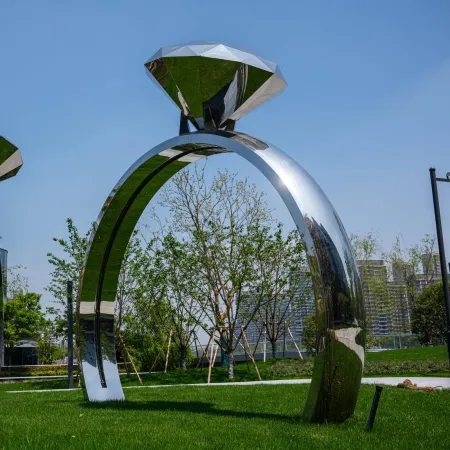
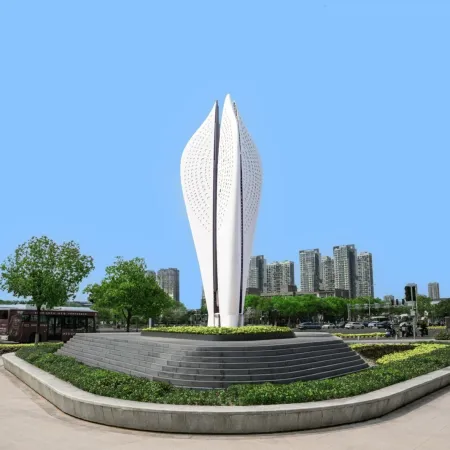
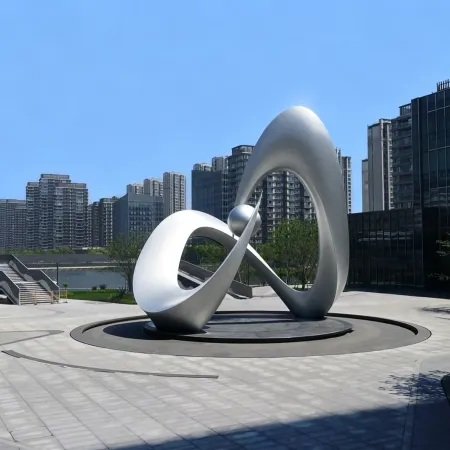
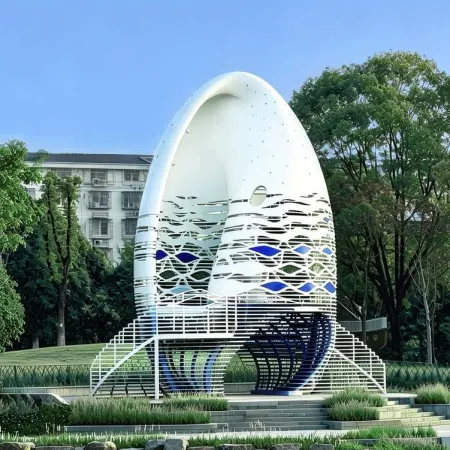
See enduring outdoor works in Heart of Changfeng, Artistic Light Columns and The Diamond Rings.
Designing for the Full Violence of the Outdoors
The outdoor environment is a slow assault on everything a sculpture is made of, and outdoor public art installation design begins by accepting that reality rather than hoping against it. The work will face rain and frost, sun and ultraviolet light, salt air on coasts and pollution in cities, wind that pushes and vibrates, birds and insects, and the public, who will touch, lean on and occasionally climb the work. Every material choice, every joint, every drainage detail and every finish must be specified for this environment, because the outdoors forgives nothing and hides its damage until it is too late to correct cheaply.
The design must also plan for how water behaves on and inside the work, because water is the quiet destroyer of outdoor sculpture. Surfaces should shed water rather than pool it; hollow forms need drainage so that internal condensation and leaks can escape rather than corrode from within; joints should be detailed so that water cannot enter and freeze; and the base should keep the work clear of standing moisture. A studio that shows you the drainage details of its outdoor work is a studio that has watched water destroy the work of others and learned from it.
| Outdoor threat | Design response | Failure if ignored |
|---|---|---|
| Rain and frost | Drainage, sealed details, drainage falls | Internal corrosion and freeze damage |
| Wind | Structural analysis and secure fixings | Overturning, fatigue and loosening |
| Sun and pollution | Stable pigments and protective finishes | Fading, chalking and surface erosion |
| Public contact | Robust edges and maintainable surfaces | Damage that becomes permanent |
The Foundation: The Half You Never See
Every outdoor work stands on a foundation, and outdoor public art installation design treats that hidden half with the same seriousness as the visible whole. The foundation must be engineered for the weight of the work, the wind loads it will carry, the soil conditions of the exact site and the frost depth of the local climate, and it must be designed before the base of the sculpture is finished, so that the fixing points, the access for future maintenance and the drainage all align. A foundation that is too small will let the work move and crack its own base; a foundation that ignores frost will heave with the seasons; and a foundation that was an afterthought will be paid for many times over in repairs.
The fixing system that joins the sculpture to its foundation is where installation design is most visible, and it deserves the same engineering care. The fixings must carry the loads with a margin for the unknown, resist corrosion in a joint where water will linger, and allow the work to be levelled and aligned during installation and, if ever necessary, removed without destroying it. A work whose fixings are hidden and sealed may look cleaner, but a work whose fixings are accessible and documented is a work that can be inspected, adjusted and repaired, and that serviceability is part of what makes it last.
Wind, Movement and the Life of the Structure
Wind is the load that most often defeats outdoor sculpture, and outdoor public art installation design must account for it in ways that a purely visual design never will. A tall slender work will feel every gust; a broad plate will catch the wind like a sail; a structure with natural frequencies that match the wind will vibrate and fatigue its joints; and a work that is fine in calm weather may be a danger in a storm. The structural analysis should consider the worst wind the site can see, not the average, and the fixings and foundation should be designed for that extreme with an honest safety margin.
Movement is not only a threat but sometimes a design intention, and kinetic or wind-activated works add another layer of engineering discipline. Every moving part needs bearings or pivots that will survive years of weather, a design that cannot jam or shed parts, and a maintenance regime that keeps the motion safe and beautiful; the boundary between a charming wind work and a liability is written in the quality of its bearings and the honesty of its maintenance plan. Whether the work is still or moving, the studio should document how it will behave in wind, how it will be inspected and what the owner must check and when.
Installation as a Rehearsed Performance
The installation day concentrates years of work into hours of risk, and outdoor public art installation design prepares for it like a performance that has been rehearsed. The studio should plan the delivery route, the crane and its reach, the sequence of assembly, the protection of the public and the surrounding landscape, the weather window and the contingency if the plan meets reality; it should pre-assemble and test the work in the workshop wherever possible, so that the site work is a reunion of parts that have already met. A studio that arrives on installation day with a method statement and a rehearsed crew is a studio that has done this before.
The handover after installation is the beginning of the work's real life, and it should be treated as seriously as the unveiling. The owner should receive a maintenance manual that says what to clean, how often, with what and by whom; a schedule for inspecting fixings, drainage and finishes; and the name of the studio that will answer when something needs attention. Outdoor works fail slowly and quietly, and the difference between a work that is maintained and one that is forgotten is usually not money but knowledge, which is why the documentation handed over at installation is one of the most valuable parts of the commission.
Designed for a Long Outdoor Life
Materials and drainage specified for real weather
A foundation engineered for soil, frost and wind
Fixings that are accessible and documented
A maintenance manual that protects the future
Choosing a Studio That Thinks in Decades
Because outdoor public art installation design is a discipline of anticipating the future, the client should choose a studio that demonstrably thinks in decades. Ask to see outdoor works the studio installed ten or twenty years ago and how they look today; ask what maintenance they have required and what problems taught the studio lessons; ask whether the studio will provide the structural reports, the drainage details and the maintenance manual as part of the commission rather than as an extra. A studio that can show you its old works looking well is a studio whose installation design has been tested by the only examiner that matters, time itself.
Our studio has designed and installed outdoor works across more than twenty countries since 2003, and the works we are proudest of are not the most photographed but the oldest, the ones that still stand level, drain water, hold their finish and ask little of their owners. That is the true measure of outdoor installation design, and it is why we treat every foundation, every fixing and every maintenance manual as part of the art. When you commission an outdoor work from a studio that thinks this way, you are not buying a sculpture for today; you are buying a sculpture that will still be earning its place when today has become history.
Frequently Asked Questions About Outdoor Public Art Installation Design
Why can indoor works not simply be placed outdoors?
Because the outdoors attacks materials, joints and finishes that indoor life never touches. Water, frost, UV, wind and public contact each demand design responses that an indoor work does not need.
How deep must a sculpture foundation go?
It depends on the weight, the wind load, the soil and the frost depth of the site. A geotechnical check and structural calculation decide it, and no honest studio will guess.
What maintenance does an outdoor sculpture need?
Cleaning on a schedule, inspection of fixings and drainage, and periodic care of finishes. The maintenance manual delivered at handover should spell out exactly what to do and when.
Can a sculpture be moved after installation?
Yes, if the fixing system was designed for removal. Accessible fixings and documented connections make moving or relocating a work possible without destroying it.
How do we know a studio's outdoor works really last?
Ask to see works installed ten or twenty years ago and how they look now. Old works in good condition are the only evidence that installation design has truly been tested by time.
Outdoor public art installation design is the quiet discipline behind every sculpture that still stands beautifully after decades, and it rewards the client who takes it seriously. Specify for the weather, engineer the foundation, plan the installation like a rehearsal and demand a maintenance manual at handover, and the work you unveil will be a work your successors will still be caring for. The visible sculpture is the part everyone photographs, but the invisible design is the part that decides whether those photographs will still be possible in fifty years.
Commission outdoor public art installation design that thinks in decades, and your work will outlast the generation that commissioned it.