What a Large-Scale Metal Sculpture Factory Must Own to Deliver Big Work
A large-scale metal sculpture factory earns that description only by owning the physical capacity that large work demands, and too many companies use the word while owning none of it. Fabricating a sculpture of ten or twenty metres is not a bigger version of small work, it requires plate rollers that can bend thick steel, fabrication bays tall enough to assemble full sections, cranes that can lift tonnes, and finishing facilities that protect surfaces measured in hundreds of square metres. After more than two decades running a factory that has shipped large-scale metalwork to twenty-three countries, I can list exactly what to inspect before you trust a facility with a landmark project.
This guide sets out the plant, the workforce and the systems a large-scale metal sculpture factory must own to deliver work at this scale with confidence.
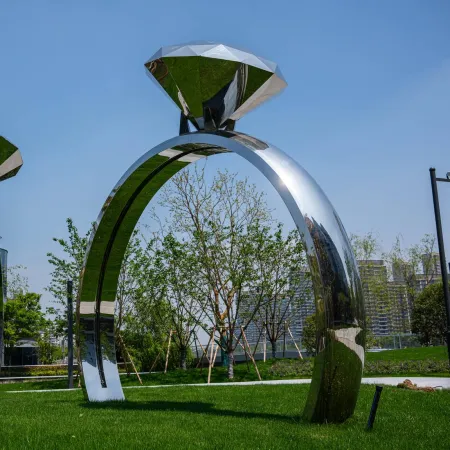
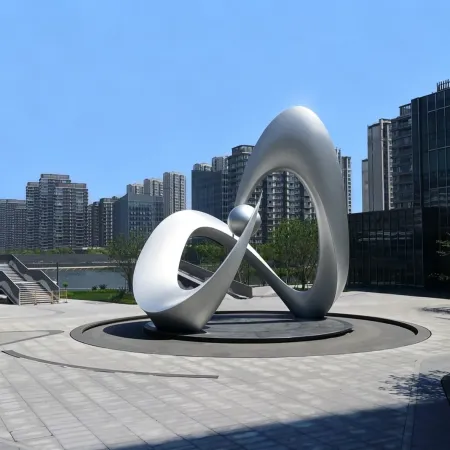
See Wind Sail as a large-scale metal form engineered in our workshops, study Summit of Nine Peaks as a multi-part monumental composition, and explore our large-scale fabrication services for the full capability list.
What "Factory" Must Mean at This Scale
The word factory is thrown around loosely in the sculpture trade, so a large-scale metal sculpture factory should be held to a stricter definition. A genuine factory owns a covered plant where the work is actually built, employs its own fabrication workforce and controls the processes that determine quality, rather than coordinating workshops it does not own. For large-scale work this distinction matters more than ever, because a ten-metre sculpture cannot be quietly moved to another shop when problems appear, and the factory that takes the order must be the factory that can finish it.
Scale also changes what the factory must own. Small studios can subcontract the occasional large piece, but a genuine large-scale metal sculpture factory maintains the capacity continuously, because its business depends on it. That continuous investment shows in the plant, the machinery is present, maintained and in use, and in the workforce, the crews are employed, trained and experienced with big sections. When you visit, you should feel the difference immediately, and if you do not, you are probably not in a factory at all.
The Plant That Large-Scale Work Demands
The equipment list of a genuine large-scale metal sculpture factory is specific and non-negotiable. Plate rolling machines must be capable of curving the thick plate that large structures need, CNC cutting tables must handle full sheets with precision, and the fabrication bays must have the height and clear span to assemble sections upright rather than flat. Overhead cranes with real lifting capacity are essential, because sections weighing tonnes must be moved, turned and positioned safely throughout fabrication, and the absence of such cranes tells you the factory has never handled true large-scale work.
Finishing is the part of the plant that clients most often overlook and most often regret. Large polished stainless surfaces need enclosed finishing bays where dust and weather cannot spoil the mirror, and large painted works need controlled coating environments with the space to move and cure the sections. A large-scale metal sculpture factory that finishes in the open or in cramped corners will deliver surfaces that embarrass the design, whatever the quality of its welding.
| Facility element | What it enables | Why scale demands it |
|---|---|---|
| Tall fabrication bays | Full sections assembled upright | Large forms cannot be built flat and flipped |
| Heavy plate rollers | Thick plate curved accurately | Structure and form both depend on true curves |
| Overhead cranes | Tonnes moved and positioned safely | Big sections demand real lifting capacity |
| Enclosed finishing bays | Mirror and paint applied cleanly | Large surfaces cannot be finished outdoors |
Workforce and Craft Depth
Machinery without craftsmen is scrap, so the workforce of a large-scale metal sculpture factory deserves as much scrutiny as its plant. Ask how many welders the factory employs directly, what qualifications they hold and how much of their work is on large structural sections rather than small decorative pieces. Ask how many project managers, engineers and finishers support the fabrication crews, because at this scale the coordination between design, engineering and shop floor is as important as any individual skill.
Depth of craft shows in the details that clients discover after installation. The invisible seam that disappears into a polished curve, the weld that holds a cantilever true for decades, the finish that survives its first harsh winter, these are the products of welders and finishers who work on large sculpture every day. A factory whose crews are used to big work handles the risk naturally, because they have solved these problems many times before, and that experience is the quiet foundation of every confident delivery.
- Direct welders: count them and check their qualifications
- Engineers on site: design and shop floor must talk daily
- Experience with scale: big work is a skill, not a bigger workshop
- Finishers who care: surfaces reveal the factory's true standards
Engineering and Quality Systems
A large-scale metal sculpture factory must run on documented systems rather than memory and goodwill. Engineering calculations for wind and structure, fabrication drawings that specify welds and tolerances, quality checkpoints at cutting, forming, welding and finishing, and inspection records for every section, these systems are what allow a factory to guarantee that a ten-metre work is built exactly as engineered. When something goes wrong at scale, the documentation is also what allows the problem to be found and fixed quickly.
Ask to see the quality documentation from a completed large project, and ask how deviations are recorded and corrected. A factory with mature systems will show you checklists, reports and corrective actions as a matter of course; one without them will offer reassurance instead of records. For a client commissioning large-scale work, the records are not bureaucracy, they are the evidence that the factory builds what it engineers, and the basis on which you can safely accept the work.
From Factory Floor to Foreign Site
For international clients, a large-scale metal sculpture factory must also own the disciplines of delivery. Large sections must be crated for ocean transport with internal bracing engineered for the voyage, mirror surfaces protected with the correct film, and the sequence of delivery planned so that sections arrive in the order the erection crew needs them. Export experience is not an add-on for a factory that ships large work, it is a core competency that determines whether the landmark arrives intact.
Ask how the factory handles the full journey to your site, including customs documentation, installation drawings for your local contractor and the option of sending its own crew to supervise or perform the erection. A factory that treats the shipment as part of the sculpture will plan the crating around the finish, the route around the section sizes and the erection around the site conditions. The factories that deliver landmarks across borders have learned these lessons the hard way, and their systems show it.
- Engineered crating: bracing designed for the actual voyage
- Sequenced delivery: sections arrive in erection order
- Installation support: drawings, supervision or our own crew
- Customs experience: documentation that keeps cargo moving
Factory Capacity Checklist
Bays, rollers, cranes and finishing rooms
Direct workforce with large-scale experience
Documented engineering and quality systems
Export and erection capability that is proven
Verifying the Factory Before You Commit
Verification of a large-scale metal sculpture factory should be structured and documented. Begin with a live video walkthrough that covers every area of the plant, then request photographs of large works in progress rather than finished beauty shots, then ask for the engineering and quality documentation of a comparable completed project. If the budget and location allow, arrange a physical visit, because nothing replaces standing in the bay where your sculpture will be built and watching the crews work.
Structure your contract around the same evidence, with payments tied to documented milestones, inspection rights at each stage and the engineering deliverables listed as part of the scope. A genuine large-scale metal sculpture factory will welcome these terms, because its systems already produce the documentation the terms demand. If a factory hesitates at verification, walk away, because the risk of commissioning large-scale work from the wrong facility is measured in years and in steel, and it is never worth taking.
Frequently Asked Questions About Choosing a Large-Scale Metal Sculpture Factory
How do we know a factory can really handle large work?
Verify the plant, the direct workforce and the documentation of comparable completed projects. Tall bays, heavy rollers, real cranes and enclosed finishing rooms, plus records of large deliveries, are the evidence that matters.
Is a factory visit necessary for a large commission?
It is strongly recommended, because scale is felt as much as described. Where a visit is impossible, a structured live walkthrough plus third-party inspection at fabrication milestones provides a practical substitute.
What engineering documents should the factory provide?
Wind and structural calculations, fabrication drawings with weld specifications, material certificates and installation drawings. These documents also support permitting and give your local contractor the information for a safe erection.
Can large sections be shipped overseas without damage?
Yes, when crating is engineered for the voyage, mirror finishes are protected with the correct film and delivery is sequenced for erection. Export-experienced factories treat the shipment as part of the sculpture itself.
Who installs a large sculpture at our site?
The factory can provide installation drawings for your local contractor, supervise that contractor, or send its own crew to perform the erection. The choice depends on the site, the scope and the contract.
A large-scale metal sculpture factory is proven by its plant, its people and its paperwork, and all three must be inspected before a landmark project is entrusted to it. Verify with structure, contract with evidence and the factory will deliver the scale your site deserves.
Take a live tour of our large-scale metal sculpture factory and see the capacity for yourself.