What a Stainless Steel Sculpture Company Must Master in Grade, Weld and Finish
A stainless steel sculpture company is defined by three disciplines: choosing the right grade, welding without betraying the surface and finishing to a standard that survives both weather and scrutiny. Stainless steel rewards mastery with a beauty no other material matches and punishes carelessness with flaws that never disappear, so the studio's command of these three disciplines is everything.
Yifeng Sculpture Studio has operated as a stainless steel sculpture company since 2003, delivering more than 3000 works across 23 countries. Our workshop combines the artistic vision of sculptors trained in the China Academy of Art, the Academy of Arts & Design at Tsinghua University and the Royal Society of Sculptors with the metallurgical and polishing expertise that stainless demands in every commission.
See stainless works in our project gallery, review the fabrication services on the services overview, and study a stainless landmark such as Peach Blossom, a 20.8-metre canopy of mirror-finished petals that pushed every stainless discipline to its limit.
Why Stainless Steel Is the Signature Material of Modern Public Art
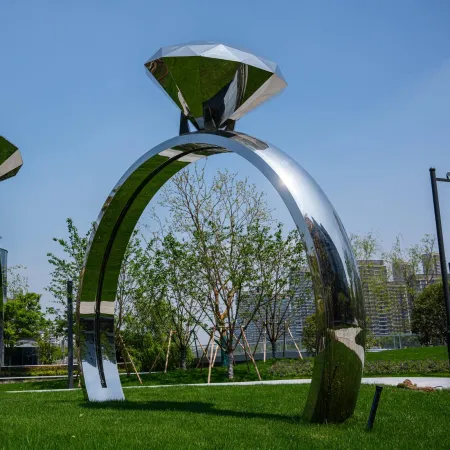
Stainless steel has become the signature material of contemporary public sculpture because it offers a combination no rival can match: a mirror finish that reflects the sky and the life of a place, corrosion resistance that suits the harshest environments and a strength that allows slender, soaring forms. Landmarks from Singapore to Chicago have chosen stainless for exactly these reasons, and its popularity is not a fashion but a consequence of its performance.
Yet the material's beauty is inseparable from its unforgiving nature. A mirror surface magnifies every ripple, every heat tint and every scratch, so the difference between an adequate stainless work and a breathtaking one is written in millimetres of craft. A stainless steel sculpture company that has mastered the material can make it appear effortless; one that has not will deliver a surface that never quite forgives.
Choosing the Grade on Evidence, Not Habit
The first discipline is grade selection, and it must follow the evidence of the site. Grade 304 stainless serves most inland public sculpture with excellent corrosion resistance and formability; grade 316 adds molybdenum to resist chlorides, making it the responsible choice for coastal sites, poolside locations and environments exposed to road salt. Within the chosen grade, the finish specification, from brushed satin to full mirror, determines the visual character and the maintenance profile of the work.
The table below summarises the stainless choices a studio typically recommends and the reasoning behind each one.
| Option | Character | When to choose it |
|---|---|---|
| Grade 304 | Excellent all-round resistance and formability | Most inland public and private sites |
| Grade 316 | Added molybdenum resists chlorides and salt | Coastal, poolside and road-salt sites |
| Mirror finish | Full reflection, alive with sky and movement | Landmarks and works meant to draw attention |
| Satin finish | Soft even sheen with lower glare | Quiet civic spaces and high-touch areas |
Welding Stainless Without Leaving a Trace
Welding is where stainless sculpture is most often compromised, because heat threatens both the surface and the metal itself. Excessive heat distorts thin sheets, creates heat tint that must be fully removed and can sensitise the metal, reducing its corrosion resistance. A stainless steel sculpture company therefore controls the welding process with fixtures that hold the geometry, heat input that is managed and welders who understand the metallurgy of the grade they are joining.
After welding, every joint must be dressed and finished so that it disappears into the surface, a task that demands patience and skill on curved mirror forms. The hidden structure behind the visible shell is equally important, engineered so that thermal movement, wind and drainage never distort the exterior or stain its finish. In stainless, the invisible work protects the visible perfection, and a studio that neglects either half will see the failure on the surface within years.
The Polishing Craft That Creates the Mirror
A mirror finish is the product of a long chain of progressively finer operations, each removing the scratches left by the previous stage until the surface reflects without distortion. The chain moves from coarse grinding through intermediate sanding to fine polishing, and the mastery lies in judging when each stage is complete. Moving too early leaves scratches that resurface at the end; moving too late wastes hours and material; and the eye that judges correctly is the product of years of practice.
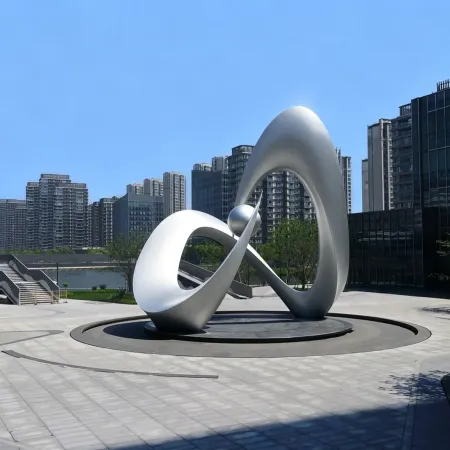
Compound curves are the hardest test of the polishing craft, because a flat wheel cannot follow a double curve without creating flats and ripples. Our polishers work curved surfaces in controlled overlapping passes, reading the reflections as they go and correcting distortion as it appears. This is the skill that most separates a genuine stainless steel sculpture company from a general metal shop, and it is the skill behind the works in our gallery that seem to glow from within.
Protecting the Surface From Workshop to Site
A stainless surface is most vulnerable after it is finished, when weeks of polishing can be undone in seconds by careless handling. Our studio protects finished surfaces with films and careful packing, plans rigging that never contacts the polished face and choreographs the installation so the mirror survives the journey. The protection plan is part of the quotation, because a finish that is damaged in transport is a finish that was never truly delivered.
On site, the reveal is managed like a ceremony: the protective film is removed, the surface is cleaned with the correct agents and any minor marks from installation are polished out by our own team before the client sees the work. That first true reflection, of the sky and the crowd and the place itself, is the moment every controlled step was protecting, and it is the moment a stainless steel sculpture company lives for.
Questions to Ask a Stainless Steel Sculpture Company
- Grade reasoning: which grade does the studio recommend for your site, and can they explain the corrosion science behind the choice?
- Curved mirror evidence: ask for compound-curve mirror works, not only flat panels, because curves are where the real craft is proven.
- Welding control: how is heat managed, and how are welds inspected before polishing? The answer reveals the whole quality culture.
- Finish protection: how will the surface be protected through transport and installation, and who repairs any site damage?
- Aged stainless: what do the studio's stainless works look like after years outdoors, and what does their maintenance record show?
A client who asks these five questions will discover whether the studio treats stainless as a demanding craft or as just another metal, and the answer will be written on the finished surface for decades.
Delivering Stainless Landmarks Across the World
Stainless landmarks travel widely, and our delivery to 23 countries has made export a standard discipline. Sections are planned for transport, finishes are protected for ocean freight and the client receives installation drawings, handling instructions and a maintenance guide written for the work's new home. For major works our team travels to supervise the erection, because a mirror landmark deserves the presence of the people who polished it.
The maintenance story of stainless is one of its greatest gifts: with the right grade and finish, an outdoor work needs only periodic cleaning to keep its mirror alive. The studio teaches the client how to clean without scratching, which agents are safe and how often the surface should be washed, because a mirror that is cared for stays a mirror for decades. A stainless steel sculpture company that shares this knowledge is protecting both the client's landmark and its own reputation.
The Mastery Behind a Flawless Stainless Work
Grades chosen on evidence of the real site
Welds controlled, inspected and made invisible
Mirror curves polished by eyes that read reflections
Surfaces protected until the moment of reveal
Frequently Asked Questions About a Stainless Steel Sculpture Company
What is a stainless steel sculpture company?
A studio that designs, engineers and fabricates sculpture in stainless steel, mastering grade selection, welding, mirror polishing and finish protection in its own workshop.
How long does a stainless sculpture last outdoors?
With the correct grade and finish system, stainless sculpture is designed to last for decades outdoors, requiring only periodic cleaning to maintain its surface.
Is a mirror finish suitable for coastal sites?
Yes, when grade 316 is specified and the finish is maintained correctly, mirror stainless performs well in coastal environments where chlorides are present.
How do I clean a stainless sculpture?
With soft cloths, mild cleaning agents and the studio's guidance, washing gently along the finish and avoiding abrasive materials that would scratch the surface.
Can stainless be combined with other materials?
Yes, stainless pairs beautifully with stone, water, glass and lighting, and the studio designs the interfaces so each material protects the other's performance.
A stainless steel sculpture company is judged in the reflection of its finished work, because mirror stainless hides nothing and rewards only mastery. Choose a studio that reasons about grade, controls its welds, polishes its curves by craft and protects its surfaces to the final reveal, and your stainless landmark will mirror its place beautifully for decades.
If you are dreaming of a stainless work that will reflect your sky and your city, tell us about the site and the concept, and we will show you how a stainless steel sculpture company would master it from grade to mirror.