How Contemporary Sculpture Design Turns a Site Into a Place
Contemporary sculpture design is where a blank site becomes a place with an identity — the discipline of giving form to the feeling a space should carry, and the process that turns that form into something buildable, safe and permanent. Design is the stage where everything is still possible and everything must be decided: the concept, the scale, the material, the finish, the placement and the engineering strategy. It is also the stage where the client's participation matters most, because a sculpture designed with its owner is a sculpture the owner will defend for decades. Yifeng Sculpture Studio has practiced contemporary sculpture design since 2003, delivering works across more than twenty countries, and this guide explains how a design commission unfolds from first conversation to approved concept.
We look at the design principles that make sculpture work in real space, the staged process of a design commission, and what clients should expect at each step.
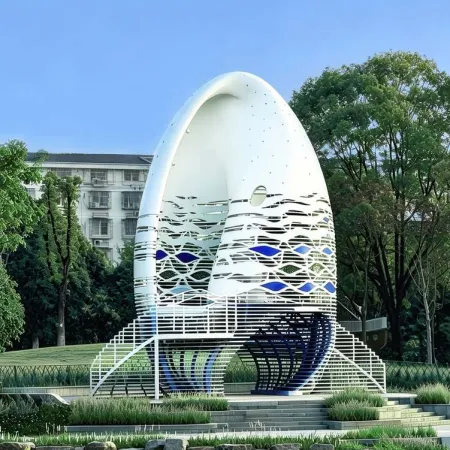
Our project archive shows the range of contemporary sculpture design we deliver, the services overview maps the full process, and the Weaving Shadows of Fishing Waves illustrates design rooted in a site's own story.
The Principles Behind Sculpture That Works in Space
Good contemporary sculpture design follows principles that hold across styles, and understanding them helps a client judge proposals with confidence. The first is context: a work must answer its place — the architecture around it, the sightlines, the way people move, the story the space already tells. The second is scale resolved honestly: proportion is tested against the real space, because a form that looks right in a rendering can vanish in a plaza or overwhelm a courtyard. The third is material truth: the material is chosen for what it genuinely offers the concept and the climate, not for fashion. The fourth is the second look: a strong work rewards at a distance with silhouette, at approach with presence and close up with detail. The fifth is longevity: the design anticipates weather, public use and maintenance from the first sketch. A proposal that honors these principles is design; one that ignores them is styling.
How a Design Commission Unfolds
A design commission is a structured dialogue, and knowing the stages lets a client participate fully. It begins with discovery — the studio visits or studies the site, learns the client's ambitions, the audience, the budget framework and the story the work should tell. Concepts follow: not a single proposal but a family of directions, each developed far enough to be judged, so the client can feel the range of what is possible rather than accept the first idea. The chosen direction enters development, where scale models, material studies, finish samples and engineering feasibility turn the concept into a buildable design. The design is then documented — drawings, specifications, engineering — and presented for final approval. Throughout, the client's approval is sought at named gates, so the process is collaborative without becoming endless. Most design commissions reach an approved, buildable design within weeks rather than months.
What the Design Process Produces
- Concept directions: a family of original ideas placed in your site
- Scale studies: proportion verified against the real space
- Material and finish samples: decisions made in the hand and the light
- Engineering feasibility: the concept proven buildable and safe
- Design documentation: drawings and specifications for fabrication
Designing With the Architect and the Landscape
The most successful contemporary sculpture design happens in dialogue with the other designers of the space. When the sculptor joins the conversation while the architecture and landscape are still being shaped, the work can be composed with the building rather than fitted to it — a curve that answers the facade, a placement that completes the arrival sequence, a scale that resolves the plaza the architect has been wrestling with. The design process therefore includes the architect, the landscape architect, the lighting designer and, for public work, the community. Our studio is experienced in this collaboration: we present to design teams in their own language, respect the larger composition, and treat the sculpture as one instrument in an ensemble rather than a solo demanding attention. The result is a space where every element supports the others — which is what visitors feel as coherence, even when they cannot name it.
| Design Partner | Shared Question | Collaborative Answer |
|---|---|---|
| Architect | How does the work answer the building? | Form, material and rhythm echo the facade |
| Landscape architect | How does the work sit in the planting? | Placement and materials harmonize with the ground |
| Lighting designer | How does the work live after dark? | Illumination designed into the form |
| Community | What story does the place need told? | Concepts shaped by local voices and memory |
Designing for Buildability and Budget
A design that cannot be built or that breaks the budget is a drawing, not a design. Contemporary sculpture design therefore carries engineering and cost thinking from the beginning: the concept is shaped with an awareness of how it will be fabricated, what it will weigh, how it will be transported and what its structure will demand. The studio's designers work beside its engineers, so feasibility is tested as the concept develops rather than discovered after approval. Material choices are made with their real cost in mind — the same form in painted steel, stainless or bronze carries very different budgets — and the client is shown options at each decision point. The result is that the approved design arrives with confidence: it can be fabricated, it can be installed, and it can be delivered within the framework the client approved. Surprises at this stage are a failure of process; the mature studio eliminates them before they happen.
What Our Studio Delivers in Design
Site study and original concepts developed as a family of directions
Scale, material and finish resolved with physical samples
Engineering and cost thinking woven into the design
Documentation ready for fabrication and approval
Design Fees and the Value They Buy
Design is the smallest part of a sculpture budget and the part that decides the value of everything else. A modest design fee buys the discipline that prevents expensive mistakes — the foundation that fits, the finish that lasts, the scale that works, the concept that is original rather than copied. Clients sometimes hesitate at paying for design when they can "buy a design" from a catalog for less, but a catalog concept arrives with none of the site thinking that makes sculpture work, and its true cost is paid later in mismatched scale, unsuitable material and a work that never quite belongs. The studio's design service is priced transparently, as a fixed scope or a stage-based fee, and it is always applied against the fabrication contract if the studio is engaged to build. Commissioning design from the studio that will build it also protects the concept: the design is documented thoroughly enough that its intent survives every later stage intact.
Frequently Asked Questions About Contemporary Sculpture Design
How many concepts will we see?
Typically three to five developed directions, each placed in your actual site context. Seeing a family of concepts rather than a single proposal lets you feel the range of possibilities and choose with confidence rather than settle for the only option.
Can we change the concept after seeing it?
Yes — refinement is part of the process. The design develops through staged approvals, and your feedback at each gate shapes the work. Major redirections are possible early; the process is structured so they become less necessary as the design matures.
Do you design to a fixed budget?
Yes — the budget framework is established in discovery and respected throughout. Material and scale options are presented with their cost implications so the design lands within the envelope you approved, without surprises at tender.
Will the design be original to our site?
By construction. Our concepts are developed from your site, your story and your brief — never from a catalog. Originality is not a claim we add at the end; it is the method we use from the beginning.
What happens after the design is approved?
The approved design moves into engineering, fabrication, finishing and installation under the same accountable roof. You receive the design documentation, and the concept you approved is the work that arrives — protected at every handoff by the record we keep.
Contemporary sculpture design is the stage where a site's potential becomes a specific, buildable, beautiful intention — and where the client's voice shapes the work that will represent them for decades. Our studio has practiced that design since 2003, delivering contemporary sculpture design across more than twenty countries with concepts that are original by method and buildable by discipline. If you have a space waiting for its form, bring us the site and the story — the contemporary sculpture design we develop together will be composed for your place, resolved in scale and material, and ready to be built into the landmark it deserves to be.
Share the site and the feeling you want it to carry, and we will return the first family of contemporary sculpture design concepts for your place — a beginning you can react to, refine and make your own.