Why a Custom Landscape Sculpture Must Be Designed With the Land, Not Just Placed on It
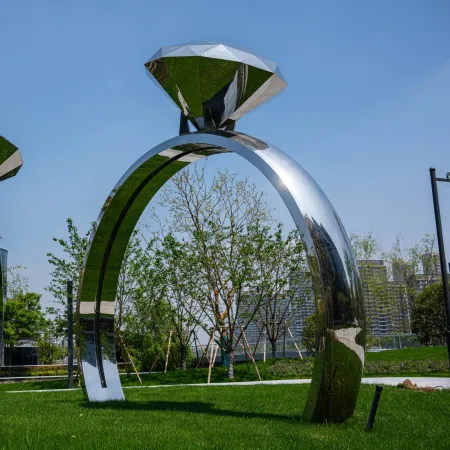
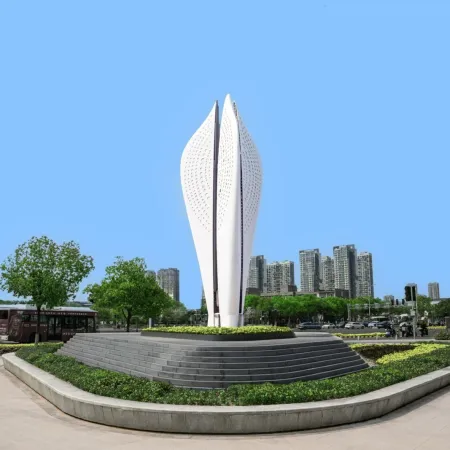
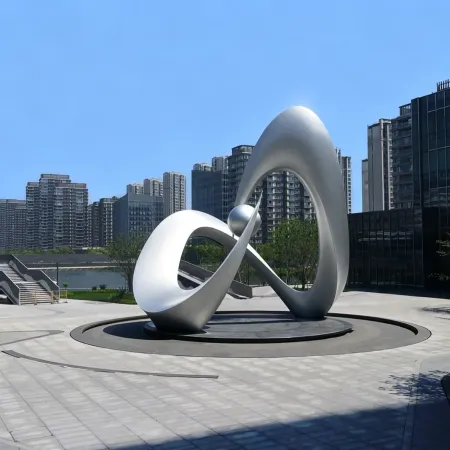
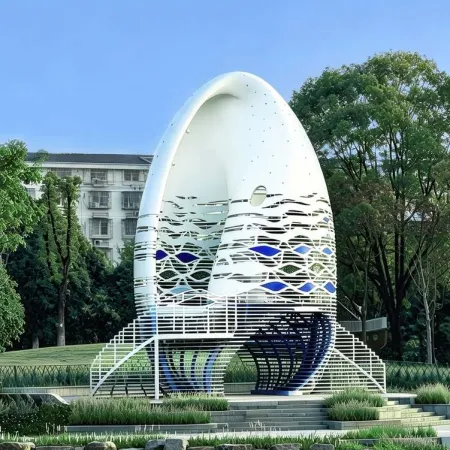
A custom landscape sculpture earns its place when it is designed as part of the land itself, responding to the topography, the planting, the water, the movement of people and the views that the landscape already offers, rather than arriving as an object that merely sits on top of it. The most memorable landscape commissions I have worked on were not the loudest forms but the ones that felt discovered, as if the site had always contained them. That quality is not accidental: it comes from a design process in which the sculpture and the landscape are developed together, and it is the reason landscape architects, developers and public agencies increasingly commission site-specific sculpture instead of choosing from a catalogue.
This guide explains how to brief a custom landscape sculpture, how it integrates with planting and terrain, what material and scale decisions matter, and how a studio collaborates with your landscape team.
Our project archive shows landscape-integrated commissions, the services overview explains our design and delivery model, and the Weaving Shadows work demonstrates how form can echo water and movement in a landscape setting.
Reading the Land Before Designing the Form
The first step in any successful landscape sculpture is not drawing; it is reading the site. A studio with genuine landscape experience will walk the land, study how people approach and move through it, note the mature trees that frame views, understand the seasonal changes and identify the moments where the eye needs an anchor. The sculpture should respond to these observations. A long reflecting form may follow the line of a path; a vertical piece may punctuate the end of a vista; a low, textured work may sit among planting that softens its edges. When the form grows from the site's own logic, the sculpture and the landscape amplify each other. When it ignores the site, the result feels foreign no matter how beautiful the object is in isolation.
Collaborating With the Landscape Team
A custom landscape sculpture is almost never a solo project; it sits within a landscape designed by architects, ecologists and horticulturalists, and the sculpture studio must work as part of that team. The ideal relationship starts early, while planting plans and grading are still flexible, so the sculpture's foundation can be coordinated with the landscape works, the irrigation can be routed around the base and the surrounding planting can be chosen to complement the sculpture's colour and form. When the studio joins late, the sculpture must adapt to decisions already made, and the result is often a compromise. Ask any studio how it collaborates with landscape consultants, and look for one that treats your landscape team as partners rather than as an obstacle to be worked around.
| Landscape Element | How Sculpture Responds | Design Question |
|---|---|---|
| Topography | Follows or contrasts the land's lines | Should the piece rise with or against the slope? |
| Planting | Colour and texture dialogue with foliage | How does it read in every season? |
| Water | Reflections, edges and sound | Should water touch, mirror or avoid the piece? |
| Paths and arrival | Frames movement and views | Where does the eye meet the piece first? |
Material Choices That Age Well Outdoors
Landscape sculpture lives with weather, moisture, plant growth and public use, so material choice is a long-term decision. Stainless steel offers enduring contemporary lines and a surface that can be cleaned back to brilliance. Weathering steel develops a rust patina that harmonises with natural landscapes but needs consideration near paving and water. Bronze brings warmth and permanence and complements formal planting. Stone and cast stone sit naturally in many settings and age gracefully. Painted composite allows bold colour where the design calls for it, with finishes engineered for UV life. The studio should also consider how the sculpture interacts with its living neighbours, from the drips it casts to the maintenance access around it. The goal is a piece that looks considered on the day of unveiling and for decades afterwards.
Scale, Siting and the Approval Process
In an open landscape, scale is easy to misjudge and hard to correct. A form that looks confident in a rendering can disappear against a big sky, or overwhelm a small garden room. Professional studios test scale in the real setting, using temporary markers, scaled maquettes or accurate visualisations placed over site photographs, so the client and the design team can judge presence before fabrication. The siting should also be tested from the paths, roads and windows where people will actually see the piece, because a landscape sculpture is experienced in motion, not from a single viewpoint. The approval process should confirm the form, the scale, the material and the exact position before production begins, and changes at this stage are far cheaper than after the steel is cut or the stone is carved.
When Commissioning Landscape Sculpture, Ensure
The site is studied before the form is designed
Your landscape team is involved from the start
Scale and position are tested in the real setting
Material and finish suit years of outdoor life
Installation That Protects the Living Site
Installing a sculpture in a designed landscape is delicate work. The foundation must be engineered for the piece and the ground, but the construction must protect established trees, root zones, irrigation and new planting. Access routes must be planned so equipment does not scar the land, and the site must be restored to its finished state after the sculpture is erected. A studio that understands landscape will coordinate its installation with the landscape contractor, schedule around planting and growing seasons where necessary, and leave the ground better than it found it. This respect for the living site is one of the clearest signals of a professional landscape sculpture practice, and it protects the very setting the sculpture was designed to complete.
Sculpture That Earns Its Keep: Seating, Wayfinding and Shade
Landscape clients increasingly ask whether sculpture can do more than look beautiful, and the answer is yes: a custom landscape sculpture can double as seating, define a path, provide shade or mark a destination, earning its place in the functional life of the site as well as its visual life. A curved form that invites sitting becomes a meeting point; a tall element that orients visitors becomes a wayfinding landmark; a canopy-like sculpture offers relief from the sun while shaping the space beneath it. This multi-function approach is popular with developers and civic clients who must justify every element of the budget, because the sculpture delivers utility alongside art.
Functional sculpture demands design rigour that purely visual work avoids. Seating forms must be engineered for the loads and comfort of public use, with surfaces that shed water and resist wear; wayfinding works must be legible from the approaches that matter; shade structures must be calculated for wind and snow loads, not only for their own weight. The studio must balance the artistic ambition with the engineering reality, and the client must understand that a sculpture that is also a bench is held to the standards of both. We enjoy these commissions because they test the full range of the studio's skill, and the results are often the most loved elements of the landscape, used daily by the people the site was designed to serve.
Frequently Asked Questions About Custom Landscape Sculpture
When should the sculpture studio join the landscape project?
As early as possible, ideally while the master plan and planting design are still flexible. Early involvement lets the sculpture's foundation, scale and material be coordinated with grading, drainage and planting, which produces a far more integrated result.
How is a landscape sculpture different from a garden sculpture?
A garden sculpture typically serves a private or intimate setting and is scaled to it. A landscape sculpture operates at the scale of a designed landscape, often in public or large commercial grounds, and is integrated with terrain, planting systems and movement patterns across a wider area.
What material best suits a naturalistic landscape?
Weathering steel, bronze and natural stone all harmonise with planting and terrain, each with its own character. The right choice depends on the landscape style and the statement you want, and a good studio will advise based on your specific site and climate.
Can the sculpture incorporate water, lighting or sound?
Yes. Landscape commissions often integrate fountains, illumination and even subtle sound, adding a sensory layer that changes with time of day. These systems need coordinated engineering and clear maintenance planning, so they should be part of the design from the start.
Who maintains the sculpture after installation?
The client's landscape or facilities team usually maintains the piece, supported by a care manual from the studio. The manual should cover cleaning, seasonal checks and any lighting or water system servicing, so the sculpture keeps its quality without guesswork.
A custom landscape sculpture succeeds when the land, the planting and the form are composed as one picture, and that demands a studio that reads sites, collaborates with landscape teams and engineers for decades of outdoor life. Since 2003 our studio has delivered custom landscape sculpture and related commissions across twenty-three countries, and we bring the same site-first discipline to every project, from a corporate campus to a public park. We design with your landscape team, test scale in the real setting and install with respect for the living ground.
Share your site plans, your planting intentions and the moment you want the sculpture to create, and we will show you how a custom landscape sculpture can grow from the land you already have.