How Modern Commercial Sculpture Speaks the Language of Today's Architecture
Modern commercial sculpture is the art of the contemporary city — work that speaks the same language as the glass towers, the clean plazas and the digital-age brands it serves. It tends toward abstraction, precision and clarity: forms that echo the geometry of modern architecture, materials that reflect its surfaces, and concepts that carry meaning without needing a history lesson. For the developers, architects and brands building today's urban environment, modern commercial sculpture is how a space acquires identity in the visual language of its own time. Yifeng Sculpture Studio has created modern commercial sculpture for clients in more than twenty countries since 2003, working at the leading edge of contemporary form and fabrication.
This guide explains the character of modern commercial sculpture, how it complements contemporary architecture, and how to commission work that will still feel current in thirty years.
Our project archive shows modern works in contemporary settings, the services overview explains our design approach, and the Butterfly Dance demonstrates a contemporary kinetic form in a modern public space.
The Character of Modern Commercial Sculpture
Modern commercial sculpture is defined less by a style than by a set of instincts shared with contemporary architecture. It favors abstraction over literalism — forms that suggest rather than describe, leaving room for the viewer's own reading. It favors clarity of concept: a work that can be understood in a glance and remembered for a lifetime. It favors honesty of material — steel shown as steel, its structure and surface celebrated rather than disguised. And it favors a relationship with the viewer that is immediate and physical: to be walked around, touched, entered or photographed, not contemplated from a pedestal at a distance. These instincts make modern sculpture the natural companion to modern buildings, which share its vocabulary of light, line and material.
Completing the Architectural Composition
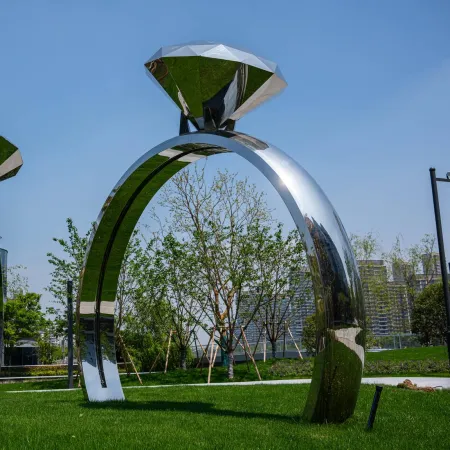
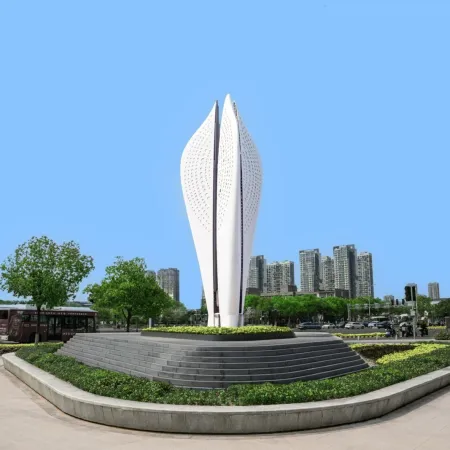
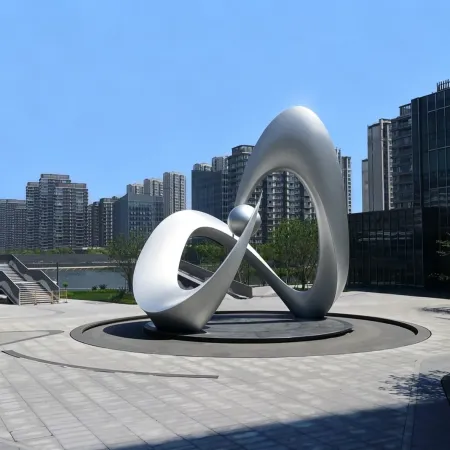
A modern building and a modern sculpture can complete each other like movements in the same piece of music. The architecture sets the theme — its geometry, its materials, its attitude to light — and the sculpture responds, echoing a line here, contrasting a texture there, resolving the composition at the human scale that architecture cannot. The most successful commissions are designed in this dialogue: the sculptor studies the building's language and answers it with a form that feels inevitable beside it. A polished stainless ribbon against a glass curtain wall; a geometric composition in the paving pattern of a plaza; a kinetic element that brings the one thing the static architecture lacks — motion. When sculpture and architecture share a language, the space between them becomes the work of art.
Design Instincts Shared With Modern Architecture
- Abstraction: forms that suggest meaning without literal description
- Material honesty: steel, stone and glass shown for what they are
- Geometric clarity: compositions that read instantly at city scale
- Light as material: reflective, perforated and illuminated surfaces
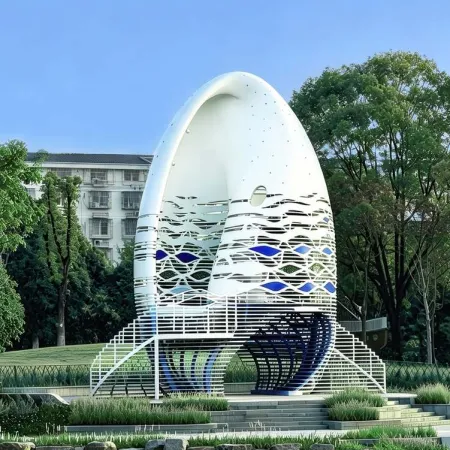
- Participation: works to be entered, touched and photographed within
Kinetic and Interactive Dimensions
Modern commercial sculpture often adds dimensions that static art lacks: motion and participation. Kinetic works — moved by wind, motors or the visitor's own touch — bring the one quality modern architecture cannot: life. A wind-driven form that shifts through the day, a surface that ripples when touched, a light installation that responds to movement: these works create the moments of surprise and delight that make a space memorable. The engineering is more demanding — mechanisms must be robust for public life and maintenance must be realistic — but the return is proportionally large: a kinetic work becomes the element people return to see, and an interactive work becomes the element people bring visitors to experience. For modern commercial spaces competing for attention, these dimensions are a decisive advantage.
Materials of the Modern Vocabulary
The modern commercial vocabulary is written in a specific set of materials, each chosen for what it contributes to the contemporary composition. Polished and satin stainless steel lead — their reflectivity echoes glass and water, and their precision matches modern detailing. Painted steel brings color as a deliberate accent against neutral architecture. Weathering steel introduces warmth and earth, grounding modern forms in landscape settings. Aluminum offers lightness for cantilevers and rooftop works. Glass, stone and water appear as complementary elements. The modern palette is disciplined — fewer materials, used with intention — which is precisely what makes modern sculpture read as cohesive beside the equally disciplined surfaces of contemporary architecture.
| Material | Modern Role | Signature Effect |
|---|---|---|
| Stainless steel | Reflective precision | Mirrors architecture and sky |
| Painted steel | Color as deliberate accent | Graphic contrast to neutral buildings |
| Weathering steel | Earth and warmth | Grounds modern form in landscape |
| Aluminum | Lightness and span | Impossible cantilevers and scales |
Designing for the Decades Ahead
The test of modern commercial sculpture is not whether it looks modern today but whether it still looks right in thirty years — and the works that pass that test share certain qualities. They are rooted in concepts rather than fashions, so their meaning does not expire with a trend. They respect their sites, so they age with the architecture rather than against it. And they are honest in material and form, so they do not depend on novelty for their effect. The modern works that date quickly are those chasing the latest visual trick; the ones that endure are those that solved a timeless problem — how to give a place identity — in the vocabulary of their time. Clients commissioning modern sculpture should ask not "is this fashionable?" but "will this still be true in thirty years?" — the studios that design for that test deliver the landmarks.
Commissioning Process for Modern Work
Commissioning modern commercial sculpture follows the same professional discipline as any serious commission, with the emphasis adjusted for the contemporary context. The discovery phase is vital: the sculptor must absorb the architecture's language, the brand's values and the site's character before proposing. The concept phase should offer genuinely different contemporary directions — a reflective statement, a kinetic presence, an interactive invitation — so the client can choose the relationship the space should have with its art. Development resolves the chosen direction with scale studies, material samples and engineering. And because modern work often lives in public or semi-public space, the approvals and stakeholder management are handled from the start. A studio practiced in contemporary commissions runs this process with the confidence that comes from having built modern landmarks before.
What Our Studio Delivers in Modern Commissions
Contemporary concepts rooted in concept, not fashion
Kinetic, interactive and light-integrated capability
Material and finish development with modern discipline
Engineering, fabrication and installation in one studio
Frequently Asked Questions About Modern Commercial Sculpture
Will abstract modern work date quickly?
The modern works that date are those chasing fashion; those rooted in concept, site and honest material endure like the architecture around them. The test is whether the idea behind the form remains true, not whether the style remains current.
Can modern sculpture include representational elements?
Yes — contemporary practice freely mixes abstraction with figurative or symbolic elements. The modern character comes from the overall concept, material and execution rather than a rule against representation. The studio designs the language that suits the brief.
How do kinetic works survive outdoor public life?
Through engineering for the real world: bearings and mechanisms rated for continuous operation and weather, materials chosen for the environment, and a maintenance program that keeps the motion alive. A kinetic work is only as permanent as its engineering and care.
What budget range does modern sculpture require?
Budgets vary widely with scale, material and complexity, so a serious studio quotes against a written scope rather than a band. The professional approach is to define the ambition, then design within the real budget — the studio advises where the money delivers the most impact.
How do we coordinate the sculpture with the architect's vision?
Through early and direct collaboration. The studio studies the architecture's language and presents concepts in accurate context, and the architect reviews the work as part of the composition. When the two disciplines share the vision, the result is seamless.
Modern commercial sculpture is how today's architecture acquires a soul — the work that completes the composition, gives the space its identity and speaks to the people who live in the contemporary city. Since 2003 our studio has created modern commercial sculpture for clients in more than twenty countries, from kinetic devices to mirror landmarks, each designed in the language of its own time and engineered to stay true for the decades after. If your project speaks modern, bring us the architecture and the ambition — the modern commercial sculpture we create together will complete your composition, capture the light and remain current long after the trends that surrounded its making have passed.
Begin by sharing the building and the space — its language, its light and the feeling it should carry — and we will show you how sculpture can complete it. That first study has begun every modern commercial sculpture in our archive, and it is the most direct way to see your architecture whole.