Why Outdoor Metal Sculpture Demands the Right Alloy, Finish and Fabrication
Outdoor metal sculpture is the workhorse of modern public art because metal can carry forms that stone cannot, mirror light as no other material does and stand for decades when it is specified and fabricated honestly. Yet the same material that rewards the careful client punishes the careless one, and the difference is decided by three choices: the alloy, the finish and the workshop.
This guide explains how outdoor metal sculpture is specified to survive its environment, how finishes are achieved and maintained, and how to choose a fabricator whose work endures.
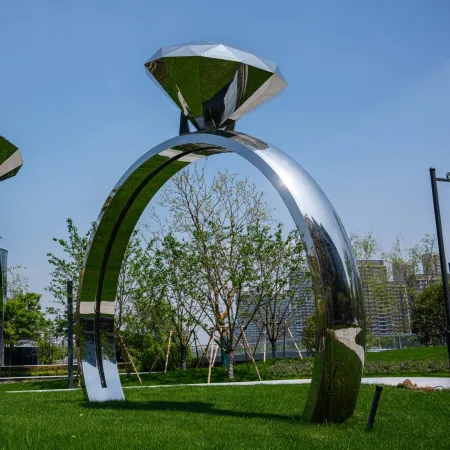
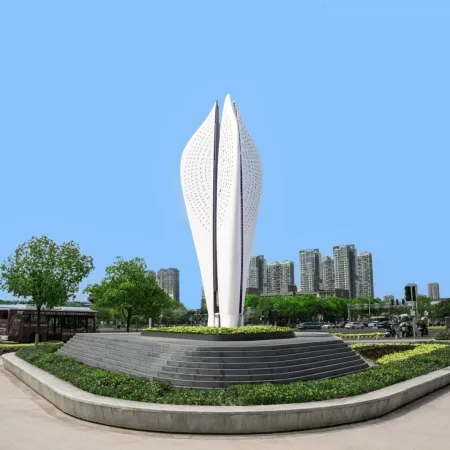
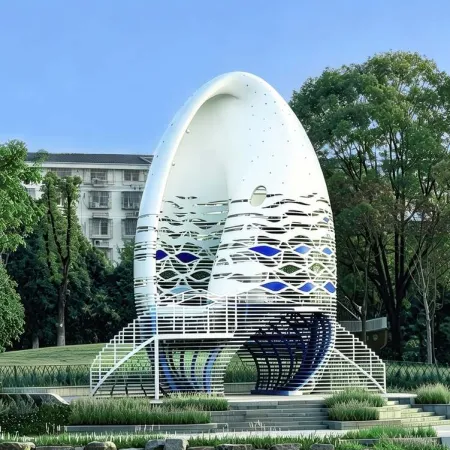
See the alloy discipline behind Wind Sail, the mirror craft of The Diamond Rings and the outdoor life of The Radiant Galaxy.
The Metals That Serve Outdoor Life
Outdoor metal sculpture is made from a small family of metals, each with its own character and its own disciplines. Stainless steel, in grade 304 for most inland sites and grade 316 for coastal and salt-exposed environments, offers the mirror brilliance and corrosion resistance that define contemporary public art. Weathering steel develops a stable rust patina that harmonises with landscape and heritage settings. Painted steel and aluminium allow full colour and light weight, and bronze carries tradition and dignity, each serving the designs it suits best.
The specification must follow the site, not the preference. A coastal commission demands grade 316 stainless or bronze rather than carbon steel; a site with industrial pollution needs alloys chosen for that atmosphere; and an inland urban setting offers the widest choice. The studio should ask about the environment before recommending a metal, because the invisible chemistry of the site will decide the visible future of the work, and the honest answer often surprises clients who assumed any metal would do.
Finishes and What They Demand
The finish of outdoor metal sculpture is its face to the world, and each finish carries its own care contract. A mirror polish gives the brilliant reflections that define stainless public art, but it must be built through disciplined polishing and protected from contamination, and it needs periodic washing to stay brilliant. A brushed or satin finish softens reflections and forgives fingerprints. A bead-blasted surface diffuses light into a quiet grey. Painted finishes offer full colour but depend entirely on the preparation and the coating system, while weathering steel asks to be left alone to develop its patina.
Clients should choose the finish with their maintenance reality in mind, not merely the photograph. A mirror surface in a coastal city will need more frequent washing than the same finish inland; a painted work in an area of heavy graffiti may need a coating system designed for cleaning; and a weathering steel piece must be detailed so its runoff does not stain paving. The studio that advises honestly on these trade-offs, rather than defaulting to the finish that sells best, is the studio that will be thanked in ten years.
| Metal and finish | Best suited to | Care expectation |
|---|---|---|
| Grade 316 mirror | Coastal and salt-exposed sites | Periodic washing |
| Grade 304 finishes | Inland urban and interior | Low maintenance |
| Weathering steel | Landscape and heritage settings | Manage runoff, otherwise none |
| Painted steel | Full-colour contemporary work | Coating inspection and repair |
| Bronze patina | Commemorative and civic work | Gentle washing and re-waxing |
Fabrication Disciplines That Protect the Surface
Outdoor metal sculpture lives or dies by fabrication discipline, because the failures that shorten a metal work's life are born in the workshop. Stainless must be fabricated in isolation from carbon steel tooling, since embedded carbon particles rust and stain the mirror for years; welds must be placed where they can be finished to invisibility and made with the correct consumables; joints must drain rather than trap water; and every hollow space must be sealed or vented so moisture cannot collect inside. These are invisible decisions, and they are precisely the decisions that separate a sculpture that stays brilliant from one that slowly fails.
The client's protection is verification. Visit the workshop, or take a live video tour, and look for the disciplines: dedicated stainless areas, clean finishing rooms, controlled welding and careful material storage. Ask how drainage, sealing and contamination are handled, and require milestone inspections with documentation of the invisible work before it is covered up. A fabricator who practises outdoor metal sculpture daily will welcome this scrutiny, because the workshop's reputation is built on exactly the details that the scrutiny reveals.
Engineering Structure and the Ground Beneath
A metal sculpture that rises several metres is a structure, and it must be engineered for the forces it will meet. Wind load grows with height and exposed area, so the internal frame, the wall thicknesses and the connections must be calculated for the site; weight must be carried safely to the ground; and the foundation must suit the real soil, which is why ground investigation matters for larger works. The engineering should be documented and shared with the client, because it is the guarantee that the sculpture will stand safely through storms and years.
Installation is the final act of fabrication. Sections must be lifted, aligned and joined without damaging the finished surface, and the work must be fixed to its foundation through systems that allow thermal movement while holding it stable. The team that fabricated the work should supervise this operation, because they know the sections intimately. When the structure, the foundation and the installation are all engineered with care, the public never thinks about them, and the sculpture stands as if it had always been there, which is the truest sign of work done well.
Commissioning Outdoor Metal Sculpture
Commissioning outdoor metal sculpture is a partnership between vision and specification, and it succeeds when both are given their due. The brief should describe the site, the story, the audience and the maintenance reality; the design should answer that brief with a form that earns its place; and the specification should translate the design into alloy, finish, structure and fabrication standards that will carry it for decades. A studio that integrates these disciplines, rather than treating specification as an afterthought, delivers work that looks as good in year twenty as on opening day.
Choose the studio with the same care you would give the metal. Ask for work in your material and environment that has stood for years, visit the workshop, interrogate the engineers and confirm the maintenance guidance you will receive. Agree the specification in writing, including grades, finishes and fabrication standards, so there is no ambiguity to exploit later. When the alloy is right for the site, the finish is right for the owner and the fabrication is right for the decades, outdoor metal sculpture delivers the brilliance, strength and permanence that make it the defining material of contemporary public art.
- Specify for the site: grade follows the environment
- Choose a finish you can keep: care follows the surface
- Verify the workshop: discipline is invisible but decisive
- Engineer the ground: foundation and structure documented
Metal That Endures Outdoors
Alloy matched to the real environment
Finish chosen for the owner's care
Fabrication isolated and disciplined
Structure engineered to the ground
Combining Metals Within One Work
Some of the most striking outdoor metal sculpture sets different metals in dialogue, letting each carry the role it performs best, and the combinations are limited only by the honesty of the engineering. A mirror stainless form may rise from a weathering steel base, setting bright reflection against warm rust; bronze elements may be threaded through a stainless structure, bringing traditional warmth to contemporary geometry; and painted steel may frame a polished core, giving colour a surface to hold and contrast a focus to sharpen. Each pairing must be chosen for how the metals behave together, because galvanic corrosion, thermal movement and staining all punish combinations that ignore the chemistry.
The detailing of mixed-metal work is where it succeeds or fails. The metals must be isolated where they would corrode each other, the junctions must allow their different rates of expansion, and the drainage must protect both surfaces, and these disciplines are exactly what a studio practising outdoor metal sculpture daily knows by heart. The visual reward of a well-composed combination is enormous, because the contrast of surfaces gives the eye a journey and the work a richness that a single metal cannot offer. When the materials are chosen with both aesthetics and physics in mind, mixed-metal sculpture becomes a signature of a confident studio and a landmark for its place.
Frequently Asked Questions About Outdoor Metal Sculpture
Which metal should we choose for a coastal site?
Grade 316 stainless steel or bronze are the strongest choices for coastal and salt-exposed environments. Their corrosion resistance suits the chlorides in marine air, and both age well with modest care.
Why does stainless sometimes develop rust spots?
Surface staining usually comes from carbon steel contamination during fabrication or from an alloy unsuited to the environment. Both are preventable through dedicated tooling, correct grade selection and disciplined finishing.
How is a mirror finish maintained outdoors?
With periodic washing using clean water and mild detergent, more often in coastal or industrial air. A written care guide from the fabricator keeps the routine simple and protects the surface for decades.
What should we check when visiting a fabricator?
Look for stainless isolated from carbon steel tooling, clean finishing areas, controlled welding and material storage, and work in progress at your scale. Ask about drainage, sealing and contamination control directly.
How long will an outdoor metal sculpture last?
With correct alloy selection, disciplined fabrication and a simple maintenance routine, a metal sculpture can serve for decades and often for a century or more. The specification and the workshop decide the lifespan.
Outdoor metal sculpture is the defining medium of contemporary public space, capable of brilliance, strength and permanence that other materials cannot match. It rewards clients who specify honestly, fabricators who work with discipline and owners who care simply, and it delivers a presence that dignifies its place for generations.
Discuss your site and ambitions with our outdoor metal sculpture specialists and specify a work built to endure.