How a Stainless Steel Water Feature Sculpture Handles Water
A stainless steel water feature sculpture faces the most demanding environment any public artwork can meet, because water is always present. Constant moisture, splash, evaporation, mineral deposits and, in many cases, chlorination or salt all attack the surface from the day of installation. The material is capable of excellent service in that setting, but only when the grade, the water chemistry, the drainage and the detailing are specified together as one system.
Yifeng Sculpture Studio has built water related stainless works since 2003 among more than 3000 delivered pieces in 23 countries, and the failures we see in water features are rarely the fault of the steel. They come from chlorinated water dosed aggressively against the wrong grade, from a basin detail that traps debris against the surface, or from a pump chamber that was never designed for maintenance. A water feature is a small piece of engineering, and it should be treated as such.
Choosing the Grade for a Stainless Steel Water Feature Sculpture
Water chemistry drives the grade decision. Plain fresh water is the mildest case and is usually handled well by a standard stainless grade. Chlorinated water, as used in most treated features, contains chlorides that attack the passive film, and the concentration and the frequency of dosing matter as much as the presence of chlorine. Salt water features, or sites where the spray carries sea salt, are the most aggressive and need the highest practical alloy along with a disciplined cleaning routine.
The design of the water path matters just as much. Water that runs as a thin film over a surface and then dries leaves mineral deposits that concentrate salts exactly where they will do most harm, and a pool that is allowed to evaporate and refill concentrates the chemistry over time. Features that keep water moving, that drain fully when switched off and that avoid standing pools against the steel will give the surface a far easier life than ones that leave wet pockets to evaporate slowly.
| Water condition | Risk to stainless | Specification response |
|---|---|---|
| Fresh water, kept clean | Low | Standard grade with regular cleaning |
| Chlorinated pool water | Moderate to high | Higher alloyed grade plus controlled water chemistry |
| Hard water | Deposits and staining | Detailing that drains fully and a scale control routine |
| Salt or seawater | High | Marine grade and frequent fresh water rinsing |
| Stagnant pockets | Crevice corrosion and debris build up | Full drainage, accessible chambers and no closed voids |
Detailing and Engineering the Water Path
Detailing a stainless steel water feature sculpture means thinking like a plumber as well as a sculptor. Every surface that water touches should drain to a defined outlet rather than finding its own way, the basin should be shaped so that debris does not collect against the steel, and the pump chamber should be accessible for cleaning and servicing without dismantling the artwork. Where water spills over an edge, the edge should be formed so the flow is even, because an uneven spill both looks wrong and concentrates flow in one place.
The electrical and mechanical systems deserve the same care. Pumps, lighting and controls must be installed so that they can be reached, isolated and replaced, and the electrical work must meet the requirements for wet locations. Water treatment should be designed with the sculpture in mind rather than applied by habit, because the dosing that suits a fountain basin may be far too aggressive for the alloy chosen. Bringing the sculpture maker and the water systems engineer together early prevents the most common and most expensive mistakes.
- Drain everything: the feature should empty completely when switched off, leaving no standing water against the steel.
- Shape the basin: direct debris and sediment away from visible surfaces and towards a cleanable sump.
- Access the plant: pumps, valves and lights reachable for service without disturbing the sculpture.
- Control the spill: weirs and edges formed so the water sheet is even and predictable at every flow rate.
- Coordinate the chemistry: water treatment specified with the alloy rather than decided afterwards.
Water Feature Essentials
Alloy chosen for the actual water chemistry
Full drainage so nothing stands against the steel
Serviceable pumps, lights and controls
A cleaning routine that removes deposits before they set
Keeping the Surface Clean in Service
Maintenance of a water feature is more frequent than for a dry sculpture because deposits accumulate quickly. Mineral scale from hard water, biological growth in warm weather and general atmospheric dirt all need to be removed before they set hard against the surface. A routine of rinsing with fresh water, cleaning with a mild detergent and, where scale is a problem, using a suitable descaler compatible with stainless will keep the appearance consistent. The chemicals used must be checked against the alloy, because some descalers are themselves aggressive to stainless.
Owners should also watch for the early signs of trouble: a change in the colour of the water, a new deposit ring at the water line, a dull patch on the surface or a pit beginning to form. Each of these has a cause, and each is far easier to address when it is noticed early. With a sensible routine and a clear understanding of the water chemistry, a stainless steel water feature sculpture can run for decades with nothing more than routine attention.
- Clean the water line: the tide mark where deposits concentrate should be dealt with first.
- Remove scale promptly: mineral deposits set hard and become much harder to remove later.
- Check descalers: confirm that any chemical is compatible with stainless before it is used.
- Service the plant: clean filters and inspect pumps and lights on a schedule, not only when they fail.
- Inspect the surface: a quarterly look for dull patches or pits catches problems while they are small.
Noise, Splash and a Stainless Steel Water Feature Sculpture
Water in a public place is heard before it is seen, and the sound it makes should be designed rather than accepted. A thin sheet of water over a stainless surface produces a quiet, continuous note; a fall into a pool produces a livelier sound that can mask traffic; a jet produces a more insistent noise that may annoy nearby residents. The stainless steel water feature sculpture and the water system should be designed together so the acoustic result suits the setting.
Splash is the other variable that must be controlled. Wind will carry water beyond the basin, wetting paving, walls and passers by, and it will deposit minerals and chlorides on surfaces that were never meant to be wet. The basin should be sized for the worst wind case, the water level set to minimise loss, and the surrounding materials chosen so occasional wetting does not cause damage or a slip hazard.
Evaporation and water loss affect both the appearance and the chemistry of the system. As water evaporates, dissolved minerals and treatment chemicals concentrate, and a feature that is topped up rather than partially replaced will gradually become more aggressive to the steel. Designing a routine that includes partial water changes, and specifying the treatment with the alloy in mind, keeps the water within a range the stainless can tolerate.
Finally, the systems should be accessible and quiet in operation. Pumps and valves that can be heard from the seating area undermine the calm the feature was meant to create, and equipment that is difficult to reach will not be maintained properly. A stainless steel water feature sculpture designed with its plant, its acoustics and its water chemistry in view is one that can be enjoyed and looked after for decades.
Frequently Asked Questions About a Stainless Steel Water Feature Sculpture
Can stainless steel be used in chlorinated water?
It can, provided a suitable higher alloyed grade is chosen and the chlorine level is controlled, because aggressive dosing will attack even good stainless over time.
Will the feature stain the paving around it?
Runoff can carry deposits onto surrounding surfaces, so drainage and splash should be designed to direct water away, and the paving should be selected with that in mind.
How often does the water need changing?
It depends on the volume, the exposure and the treatment system, but regular partial changes with top up keep the chemistry stable, which protects the stainless as much as the water quality.
Does the feature need to be drained in winter?
In freezing climates yes, because water expanding inside pipes, chambers or closed voids can cause damage, and the drainage design should make that straightforward.
Can the sculpture be lit from within the water?
Yes, and underwater lighting is common, but the fittings must be rated for submersion and positioned so they can be reached for maintenance without draining the whole feature.
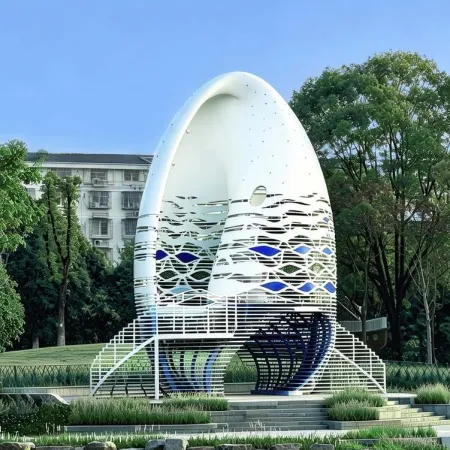
How we coordinate water features with building services is described in the services overview, and a sculptural work that engages with water and landscape is Weaving Shadows of Fishing Waves. Other landscape commissions appear in the project gallery.
Send us the water chemistry, the basin design and the site, and we will specify the alloy and the detailing together. Specified as one system, a stainless steel water feature sculpture stays clean, sound and beautiful through years of continuous operation.