How Landscape Sculpture Design Joins Art With the Living Site
Landscape sculpture design is practised in dialogue with living things, and that changes everything, because a work placed among trees, water and changing seasons must share the stage with growth rather than dominate it. The finest landscape sculptures feel less like objects set into a garden and more like presences that the garden itself has always intended.
Yifeng Sculpture Studio has practised landscape sculpture design since 2003, delivering more than 3000 works across 23 countries. Our studio works regularly beside landscape architects, and our works in parks, waterfronts and gardens have taught us that the relationship between sculpture and setting is a collaboration, not a contest.
The Landscape as Half the Artwork
In landscape sculpture design, the site is not a backdrop but a co-author. The trees that will grow and change the sightlines, the water that will reflect or move, the grass that will soften or hide the base and the seasons that will repaint the whole composition are all materials the designer must work with rather than against. A form that fights its landscape will always lose; a form that listens to its landscape becomes part of a larger work of art that the landscape itself completes.
The design must therefore think in time as well as space. The sculptor needs to know how the planting will mature, which views will open and which will close, how the light will change as the canopy develops and how the work will read in winter when the leaves have fallen. A landscape sculpture that looks right on the day of unveiling but wrong in five years has failed its medium, and avoiding that failure is the quiet craft of the discipline.
Materials in Dialogue With Nature
The table below compares how materials behave in landscape settings, helping clients and designers choose finishes that age gracefully among living growth rather than fighting it.
| Material | Landscape character | Best settings |
|---|---|---|
| Weathering steel | Roots itself in earth and time as it rusts | Prairie gardens, woodland edges, slopes |
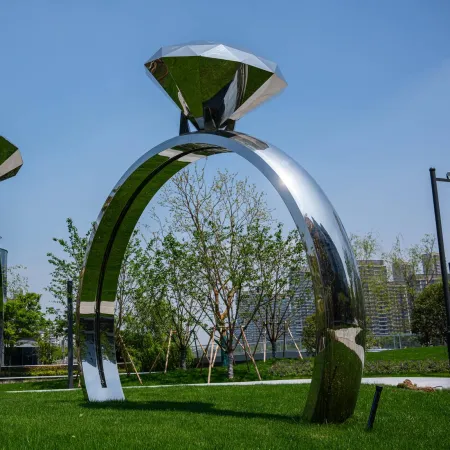
| Mirror stainless steel | Reflects the greenery and the sky around it | Formal gardens, water features, entries |
| Stone | Belongs to the geology of the place | Rock gardens, memorial groves, native planting |
| Painted metal | Adds a designed colour accent to green | Playful gardens, children's areas, seasonal displays |
| Bronze | Ages with dignity among mature planting | Historic gardens, memorial landscapes, groves |
Working With the Landscape Architect
The best landscape sculpture design emerges from a genuine partnership between sculptor and landscape architect, and the relationship should begin early enough to shape both the art and the planting. The sculpture's position may shift to protect a root zone, the planting may open a view to frame the work, the paving may be detailed to receive the base and the lighting may be coordinated so both sculpture and landscape glow together at night. When the two disciplines collaborate from the start, neither is compromised and both are strengthened.
The client's role is to create the conditions for that collaboration. Invite the sculptor into the landscape design conversations early, share the planting plans and the drainage and maintenance realities, and let the artist respond to the site's full complexity rather than to a cleaned-up summary. The sculpture that results will belong to the landscape because it was designed inside the landscape's own logic.
Designing for Water, Growth and Wildlife
- Water as a mirror: forms placed beside water should be composed with their reflections, doubling the sculpture in still moments and animating it in moving ones.
- Growth around the base: the planting should be planned to embrace the base over time, softening the meeting of art and ground without hiding the work.
- Wildlife awareness: materials, water and lighting should be chosen to coexist with the birds, insects and animals that share the landscape.
- Seasonal performance: the work must read strongly in all four seasons, including the bare months when the landscape offers it no cover.
Landscape design that respects these realities earns a place that feels native to its environment rather than imported into it.
The Sculpture the Garden Reveals
A landscape sculpture is often discovered rather than confronted, and landscape sculpture design should plan that discovery. The work may be glimpsed through trees, revealed around a bend, framed by an opening in the planting or reflected suddenly in water, and each reveal is a composed moment that rewards the walker. We design with those moments in mind, positioning and sizing the form so the garden itself becomes the gallery that presents the art.
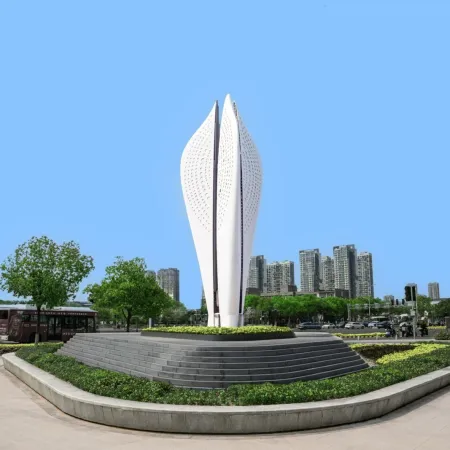
See how sculpture and landscape have been composed together across our delivered works in our project gallery, review the services that support a landscape commission on the services overview, and study a work such as Peach Blossom, whose 20.8-metre stainless petals frame a gateway between planted and built worlds.
What Landscape Sculpture Design Achieves
A work the living site completes over time
Materials that age gracefully among growth and water
Composed moments of discovery along the path
A partnership between art and landscape from day one
Commissioning Landscape Sculpture: The Essential Questions
Clients commissioning landscape sculpture design should ask how the studio will handle the realities of the living site. How will the work be anchored without damaging root zones, how will it stand in saturated ground, how will it coexist with irrigation and maintenance machinery, and how will it read when the planting matures? The answers reveal whether the studio thinks in landscape time or only in unveiling-day time, and that difference will be visible for decades in the finished place.
The studio should also be honest about maintenance. Mirror surfaces among trees need more frequent cleaning, painted works may need recoating in exposed positions, and anything beside water will face splash and humidity, so the design should match the maintenance the client can genuinely provide. A landscape sculpture that is designed for its real care regime will keep its beauty, while one designed for an imaginary regime will disappoint its owners within a few seasons.
The Seasons as Co-Designers of the Work
A landscape sculpture is actually four sculptures, one for each season, and landscape sculpture design should compose all four at once. In spring the work appears among fresh green and blossom, in summer it stands in deep foliage and long light, in autumn it is framed by colour and falling leaves and in winter it is exposed, bare and often the strongest presence in a dormant landscape. Each season changes the sculpture's scale, its colour relationships and its mood, and the designer should imagine the work through the whole cycle rather than through a single summer photograph.
That seasonal imagination shapes real decisions. The palette of the materials should answer the colours of the planting across the year, the silhouette should hold its strength when the leaves fall and the form should catch the low winter sun as rewardingly as the high summer one. The maintenance plan must also respect the seasons, scheduling the cleaning and care for the moments that suit the work and the planting. When a sculpture is designed for all four seasons, it never has an off-season, and the landscape keeps offering it to the visitor fresh throughout the year.
The maintenance conversation is part of responsible landscape sculpture design, because the work will live among planting that is itself maintained, and the two care regimes must be planned together. We agree with the landscape team how the sculpture will be cleaned, how the planting around it will be pruned to keep the views open and how the seasonal work will be scheduled, so the art and the garden are cared for as one composition rather than as separate responsibilities.
Frequently Asked Questions About Landscape Sculpture Design
What is landscape sculpture design?
The discipline of designing sculpture in dialogue with a living landscape, considering growth, water, seasons and the partnership between art and planting.
How is landscape sculpture different from plaza sculpture?
Landscape work shares its stage with growing plants, water and wildlife, so the design must think in seasons and decades rather than fixed built context.
Which materials work best in a garden setting?
Weathering steel, stone and bronze age gracefully among planting, while mirror stainless and painted metal offer reflective or coloured accents suited to their settings.
Should the sculptor work directly with my landscape architect?
Yes, early collaboration lets the planting frame the work and the work respect the planting, producing a place neither discipline could achieve alone.
How much maintenance does landscape sculpture need?
It varies by material and position; the studio should match finishes to the care regime you can provide and hand over a clear maintenance schedule.
Landscape sculpture design is the art of placing a human-made form inside a living composition, so that art and nature complete each other across the seasons. Choose a studio that thinks in landscape time, works beside landscape architects and chooses materials that age gracefully, and your sculpture will grow into the garden as if it had always belonged there.
If your landscape is ready to receive a work of art, tell us about the site, the planting and the feeling you seek, and we will show you what landscape sculpture design can grow there.