How a Large-Scale Public Art Design Supplier Delivers Monumental Works
A large-scale public art design supplier earns the word large-scale only when it can carry a monumental commission from concept to installed reality, because scale changes every rule of the game. A work of eight metres needs engineering a work of three metres never dreams of, and a supplier that has only ever made small pieces will discover the difference on your site and at your cost.
This guide explains what truly distinguishes a large-scale public art design supplier, the engineering and logistics that define the discipline, and the questions that separate suppliers who have done it from suppliers who hope to.
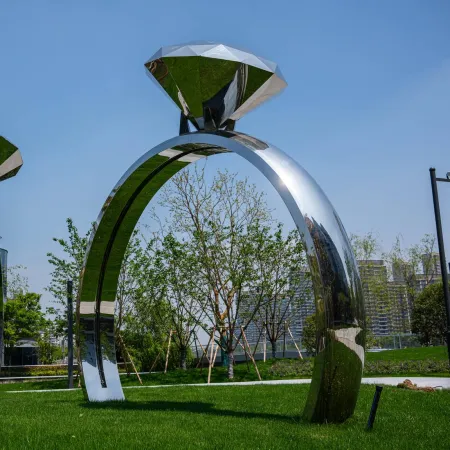
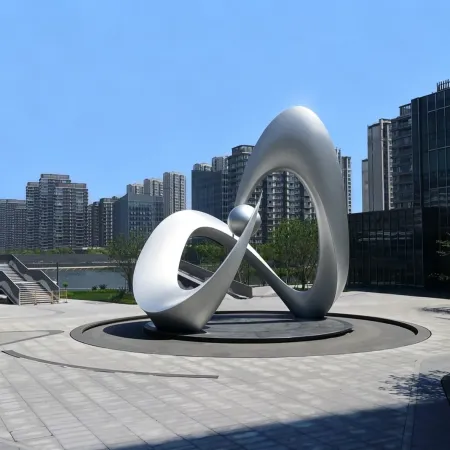
See monumental works in Fishing Net Canopy, Eye of the Phoenix and The Radiant Galaxy.
What Scale Actually Changes
Scale is not a matter of making a small design bigger, because a large-scale public art design supplier knows that size transforms the work itself. Proportions that look elegant in a one-metre model become oppressive or frail at ten metres; a surface that reads as refined up close becomes invisible from the approach; a structure that stands easily in a studio must be engineered against wind, seismic load, thermal movement and its own weight; and a form that is beautiful as a solid mass may need to become a space frame to be buildable at all. The discipline of monumental work is learning to design in the scale of the final piece, thinking in sightlines of hundreds of metres and loads of tonnes from the very first sketch.
The change is also organisational, because a monumental commission is closer to a construction project than to a studio job. The supplier must coordinate structural engineers, foundation designers, crane and transport contractors, site safety and often lighting and water specialists, and it must hold all of them to a single vision and a single schedule. A large-scale public art design supplier is therefore judged not only on the beauty of its portfolio but on its ability to manage a chain of specialists, because the failure of any link in that chain lands on the client.
| Challenge | Why scale makes it harder | The professional answer |
|---|---|---|
| Structure | Wind, weight and movement grow with size | Full structural engineering with reports |
| Fabrication | Parts exceed workshop and transport limits | Modular build with pre-assembly testing |
| Logistics | Route, crane and access limit the design | Transport study before the design is fixed |
| Installation | The riskiest day of the whole project | Rehearsed method and engineered lifting |
Engineering That Earns the Scale
The heart of a large-scale public art design supplier is its engineering, because a monumental work that fails structurally is not merely an aesthetic failure but a public danger. The supplier should produce, or commission, full structural calculations for wind load, dead load, seismic response where relevant and the local effects of the specific site, and it should be able to explain the results in language a client can judge. The foundation is part of the design, sized for the soil conditions and the local climate, and the connections between modules are engineered for assembly on site, where tolerances are wider and mistakes are harder to correct than in the workshop.
The best evidence of engineering depth is the record of completed large works, and the client should look behind the photographs at the reports that made them possible. Ask for the structural documentation of a past project, the wind study, the foundation design, the lifting plan, and ask who the engineers were and whether they are still engaged by the supplier. A supplier that treats engineering as a bought-in extra, obtained after the design is finished and applied like a bandage, is a supplier that has not understood scale; the professional integrates engineering from the first sketch, because on monumental works the structure is the sculpture.
Logistics: Designing for the Road and the Crane
A large-scale public art design supplier designs for transport as much as for the eye, because a work that cannot reach its site is a work that was never finished. The design must respect the dimensions of the road, the bridges and the corners between workshop and site; it must break into modules that the workshop can build and the trucks can carry; and it must be assembled and finished on site in a way that restores the seamless quality of the workshop build. The supplier should study the delivery route and the site access before the design is fixed, because discovering at fabrication stage that a module cannot pass under a bridge is an expensive lesson in the wrong order.
Installation is the climax of the logistics chain, and it deserves the same engineering respect as the structure itself. The lifting plan must account for the crane capacity and reach, the ground conditions, the weather windows and the safety of the public and the crew; the modules must be rigged, guided and fixed with tolerances that allow adjustment; and the final alignment and finishing must be planned down to the last weld and polish. A supplier that has installed monumental works will talk about these details with the fluency of experience, and the client should listen for that fluency, because it is the sound of a risk that has been managed many times before.
The Portfolio That Proves Large-Scale Experience
When evaluating a large-scale public art design supplier, the portfolio is the first witness, but it must be read with questions rather than admiration. Look for works comparable in scale and material to yours, not merely in beauty; ask what each work demanded in engineering, logistics and installation; ask who did the structural work, who installed the piece and what went wrong, because every honest supplier has lessons from difficult projects and the willingness to share them is a sign of confidence. A portfolio of small beauties tells you nothing about a supplier capacity for a monumental commission, while a single difficult large work, honestly told, tells you a great deal.
References complete the picture, and the client should speak to the owners of past large works rather than only to the supplier. Ask how the project ran, whether the schedule held, whether the documentation was complete, whether the supplier returned for maintenance issues and whether they would commission at that scale again. The owners of monumental works are usually proud of them and generous with the truth, and their answers will confirm or correct the impression the portfolio created, giving the client the confidence to commit to a project measured in years.
Signs of a True Large-Scale Supplier
Engineering integrated from the first sketch
Designs shaped by real route and crane limits
A portfolio of completed monumental works
Honest lessons from difficult installations
Budgeting for a Monumental Commission
Large-scale work concentrates cost, and a large-scale public art design supplier should present a budget that reflects the true geography of a monumental project. The figure must carry the engineering and the reports, the materials at the quantities a large work demands, the modular fabrication, the transport with escorts and permits where needed, the crane and the site works, the installation crew and the finishing, and it should reserve for the unexpected, because ground conditions and weather do not read budgets. Clients are often surprised that engineering and installation together can rival fabrication, and a supplier that explains this geography is helping the client budget honestly.
The payment structure should mirror the risk, with milestones tied to approvals and verified progress rather than to the calendar alone. A deposit covers the design and engineering; further stages release as the materials are certified, the fabrication is inspected, the transport is booked and the installation is completed; and a retention protects the client through the first maintenance season. Our studio has delivered large-scale works across more than twenty countries since 2003, and the monumental commissions that finished well were consistently those whose budgets and milestones were written to match the real shape of the work, with honesty about cost from the first conversation to the final invoice.
Frequently Asked Questions About a Large-Scale Public Art Design Supplier
How do we know a supplier can handle monumental scale?
Ask for completed large works, their structural reports and their owners as references. The engineering documentation and the honesty about past difficulties are the evidence that scale has been mastered.
Why does large-scale work cost so much more per square metre?
Because the cost is in engineering, transport, cranes and installation as much as in material. A monumental work is a construction project with an artist at its centre, and its budget reflects that reality.
Can a very large work be made in one piece?
Rarely. Most monumental works are fabricated in modules, tested in the workshop, transported and assembled on site. The skill is making the assembly invisible in the finished piece.
Who is responsible for the structural safety of the work?
The supplier carries that responsibility and should evidence it with full structural reports. The foundation design, wind analysis and installation method are all part of the engineered package.
How long does a monumental commission take?
Design and approvals alone often take many months, and fabrication and installation add more. A realistic schedule from a supplier who has done this work is measured in a year or more.
A large-scale public art design supplier is chosen on proof, and the proof is engineering reports, completed monuments, route studies and the honest stories of difficult installations. Scale transforms every part of a commission, and only a supplier that has lived with those transformations can carry your work safely from sketch to skyline. Choose on evidence, budget on the real geography of cost and structure your milestones around verified progress, and the monumental work you commission will stand as safely as it stands beautifully.
Trust a large-scale public art design supplier whose portfolio is measured in metres and whose reports are measured in years.